
At 6:30 a.m., the sprinklers begin their neat little routine on a suburban cul-de-sac. Water sprays into the cool morning, catching the first light, dampening fences, pavements and a distinctly unimpressed patch of brown grass. By lunchtime, the sun has wiped away any sign of that earlier “effort”, and the owners are left wondering why the water bill keeps rising while the garden still looks worn out. Next door, on the same street under the same sky, it’s a different picture: a velvety green lawn, containers spilling over with growth, and a shaded sitting spot that feels like a mini break. Same climate, same hose. A different approach.
There’s a quiet, slightly uncomfortable message some gardens seem to give.
Your garden doesn’t lack water, it lacks a game plan
Most people assume they’ve got a “dry garden problem” when, in reality, they’ve got a “watering at random problem”. They water when it crosses their mind, blast the hose until the top looks wet, then hope for the best. The outcome is usually familiar: uneven grass, the same scorched hydrangeas, and container plants that throw in the towel halfway through July.
What’s actually missing is consistency and intent. A pattern. A system that puts each drop where it will make a difference.
A landscaping firm in Arizona recently looked at two neighbouring properties. Both homeowners said they watered “a lot” during heatwaves. House A ran watering every day for 10–15 minutes. House B watered deeply twice a week, used mulch, grouped plants according to water needs, and installed drip lines through the flower beds. Three months later, House A showed bare patches and struggling shrubs. House B had a thick lawn and unexpectedly lush borders… while recording 30% less water on the meter.
Same conditions. Completely different results. That difference is strategy.
Plants aren’t impressed by how often you stand outside with a hose. What matters is root depth, soil condition and how long moisture stays available where roots can reach it. Frequent light watering encourages shallow, underprepared roots that suffer as soon as temperatures rise. Deeper watering less often pushes roots to grow downwards, into cooler layers where the sun can’t strip moisture away so quickly.
When you start treating water as a way to influence root behaviour-rather than as a magical “make it green” button-your whole approach to garden design begins to change.
The 7 strategy tips 8 out of 10 homeowners ignore
Tip one is unglamorous, which is exactly why it gets ignored: measure how long it takes to genuinely soak your soil. Don’t make assumptions. Use a small trowel, water one area as you normally would, then dig a thin section to check the depth. For lawns, you’re aiming for moisture at least 15–20 cm (6–8 inches) down; shrubs should be deeper.
If you stop the moment the surface turns dark, you’re effectively teaching plants to survive in the top 3 cm of soil. That’s like raising children who only know the fridge and never learn what’s in the cupboard.
Tip two that many forget: set one or two watering windows and keep to them. Early morning is ideal. Late evening is the back-up. Turning sprinklers on at 3 p.m. in full sun is basically paying for evaporation. Yet plenty of people hit “manual start” when they get home because they can see the garden then-and feel a bit guilty.
Be realistic: almost nobody keeps that up every day. Instead, use straightforward timers, inexpensive drip kits, or even a simple weekly reminder on your phone. The point isn’t sophistication; it’s reliability.
Tip three is the quiet divider between an average-looking garden and an outdoor space that feels properly finished: zone by thirst. Keep plants with similar watering needs together, and stop combining thirsty flowers with drought-tolerant grasses in the same beds. That mix forces you to drown some plants while starving others.
“I stopped treating my yard as one big green carpet,” says Claire, a homeowner who renovated her small city garden on a tight budget. “Once I split it into a ‘lavish watering zone’ and a ‘barely needs attention’ zone, my water bill dropped and everything started looking more intentional.”
- Zone 1: lawn and shallow-rooted flowers that need more regular moisture.
- Zone 2: shrubs and perennials with medium water needs.
- Zone 3: tough, drought-tolerant plants, gravel, and seating areas.
From ordinary yard to premium space: design with water, not against it
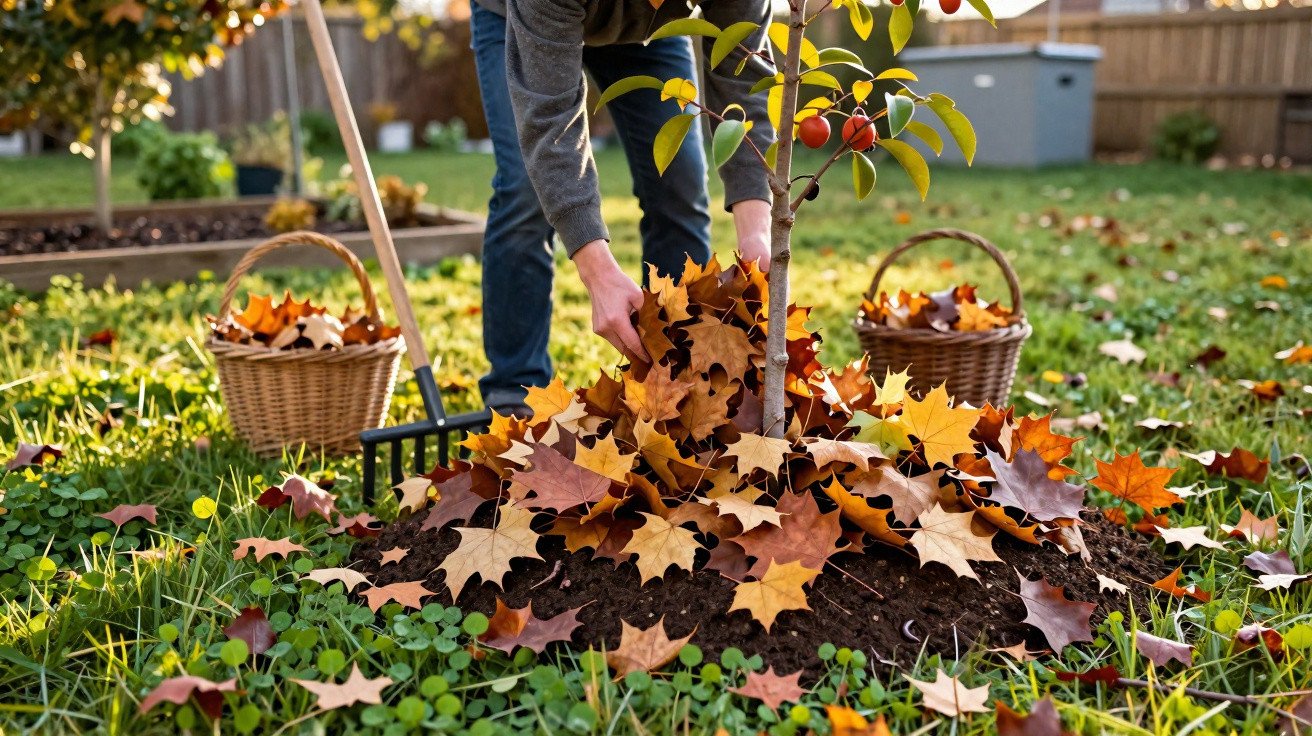
Tip four is as straightforward as it gets: don’t leave soil exposed. Bare ground is like leaving an open wallet on a park bench-sun and wind take what they can, faster than you’d expect. A 5–8 cm layer of mulch around plants and across beds helps hold water in the root zone, smooths out temperature swings, and instantly makes the space look more considered.
Choose shredded bark, compost, gravel or a combination, depending on the look you want. Even the visual consistency can make a low-cost garden feel like it belongs in a magazine.
Tip five addresses the part of the plan you can’t immediately “see”: build better soil rather than simply adding more irrigation. Hard, compacted soil sheds water like a waterproof jacket. Once or twice a year, loosen it, work in compost, and let worms and microbes do their slow, steady work. Over time, the soil acts more like a sponge and less like a slab.
Many people avoid this because there’s no instant transformation-just a messy weekend and an aching back. But this is exactly the unglamorous effort that lets you water less and still see stronger growth season after season.
Tip six is where design meets daily life: introduce shade and windbreaks on purpose. A small pergola, a well-positioned tree or even a tall screen of planters can dramatically cut evaporation in a particular spot. All of a sudden, that area works for containers, a reading chair, perhaps even a dining table.
Water strategy isn’t only hoses and sprinklers; it’s architecture and microclimate. A little shade stops pots from baking and can turn what used to be “the dead corner by the fence” into the most inviting part of the garden.
The quiet luxury move: use your budget twice
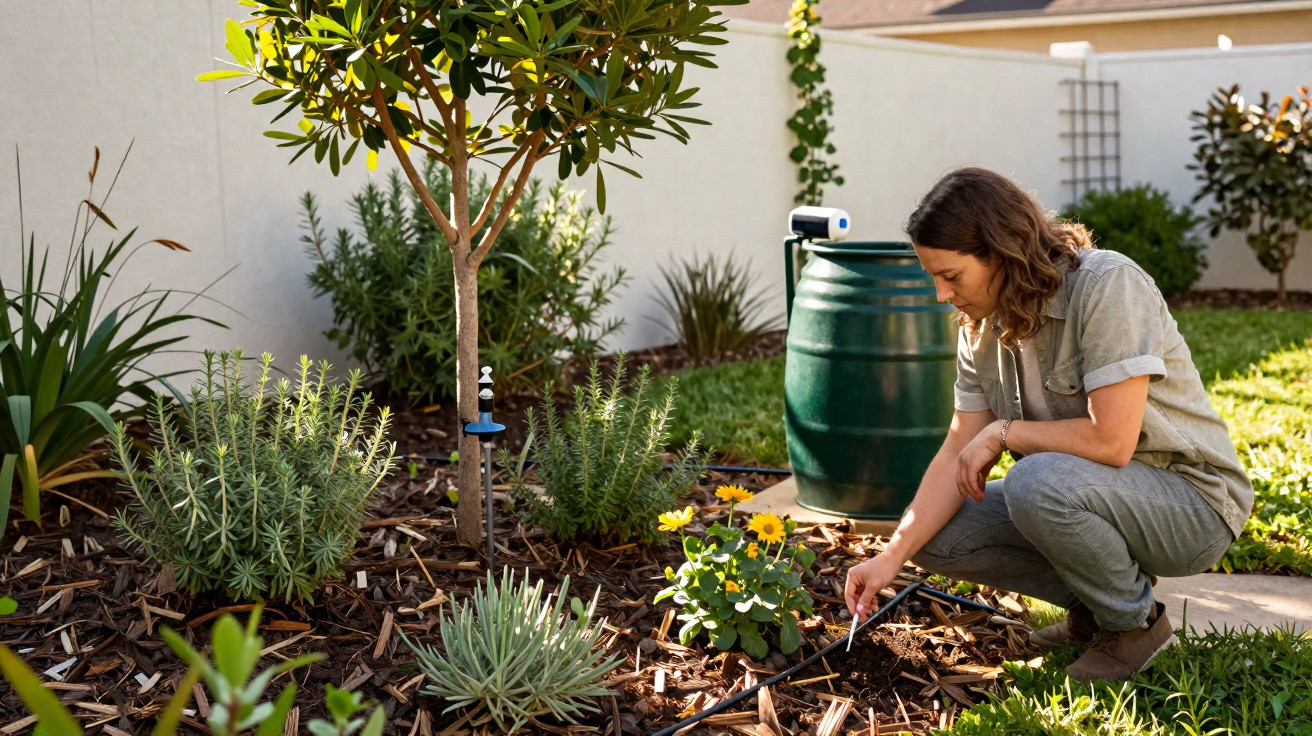
Tip seven is what nudges a garden into “premium” territory without doubling your spend: make every feature do at least two jobs. A gravel path that also channels drainage so the lawn doesn’t flood. A raised bed that doubles as a bench along the edge. A water butt that feeds a drip system.
When each decision saves water, brings order and adds beauty at the same time, the whole garden starts to look more intentional-and far more expensive than it actually was.
Most of us know the feeling: standing in the middle of an awkward garden thinking, “Do I need thousands of pounds and a landscape architect to sort this out?” You don’t. What you need is to stop making disconnected, last-minute buys and start connecting each change. Buy fewer plants, but position them in sensible zones. Put money into mulch instead of a third decorative pot. Divert one downpipe into a subtle rain chain and butt rather than installing another sprinkler head.
A garden starts to feel like it has a storyline when every improvement gently points towards the next.
This is also where strategy becomes lifestyle. Watering early turns into a reason to step outside before messages and meetings take over. A mulched, shaded corner becomes somewhere children pull out blankets, where a cheap string of lights suddenly reads as intentional ambience. The discipline you build doesn’t only protect plants; it changes how you use the space on warm evenings and fresh mornings.
A premium outdoor space isn’t defined by designer furniture or rare plants. It’s a garden that fits your climate, your timetable and your budget so smoothly that it feels effortless… well before it truly is.
Where you go from here
Go into your garden at the time you normally water and take a proper look. Where is the sun most intense? Where does water sit in puddles, and where does it disappear straight away? Which plants look quietly unhappy-not dead, just exhausted by guesswork? That quick check becomes your first map of the garden’s “strategic leaks”.
You don’t have to overhaul everything this weekend. Choose one zone and commit to it: add mulch, confirm how deep your watering actually goes, and perhaps install a drip line or a budget timer. Give it a few weeks, then see what changes. When something works, copy the method in the next zone. Over time, guilt-fuelled, last-minute watering becomes a simple routine that fits around real life.
When you notice you’re using less water, spending the same money, and the garden feels more like an outdoor room than a chore, you’ll feel the quiet strength of strategy. Not more water. Not more stuff. Just a smarter understanding of what your garden is actually asking for.
| Key point | Detail | Value for the reader |
|---|---|---|
| Water deeply, less often | Train roots to grow down by soaking soil 15–20 cm instead of daily sprinkles | Stronger plants that survive heat with less frequent watering |
| Group plants by water needs | Create zones for thirsty, medium, and low-water plants | Reduce waste, avoid overwatering, and simplify your routine |
| Use mulch and microclimates | Cover soil and add shade/wind protection in key areas | Stretch each litre of water further and make the yard feel more high-end |
FAQ:
- Question 1 How many times a week should I water my lawn?
- Answer 1 For most climates, 2–3 deep waterings per week are better than daily light sprinkles. Adjust based on heat and rainfall, but focus on soaking roots, not just darkening the surface.
- Question 2 Is mulch really worth the cost?
- Answer 2 Yes, because it works for you every single day. Mulch cuts evaporation, stabilises soil temperature, and reduces weeds, which means less watering and less maintenance over time.
- Question 3 Can I create zones without an expensive irrigation system?
- Answer 3 Absolutely. You can group plants with similar needs in the same beds and use simple tools like soaker hoses, basic timers, and labelled hoses for each area.
- Question 4 What’s the biggest watering mistake most homeowners make?
- Answer 4 Watering too often and too shallow. It feels caring in the moment, but it keeps roots at the surface and makes plants more vulnerable to heat and drought.
- Question 5 How long will it take to see a difference once I change my strategy?
- Answer 5 You’ll often notice improvements within a few weeks, especially in how long soil stays moist and how plants handle hot days. Deeper soil and root changes build up over a season or two.
Comments
No comments yet. Be the first to comment!
Leave a Comment