
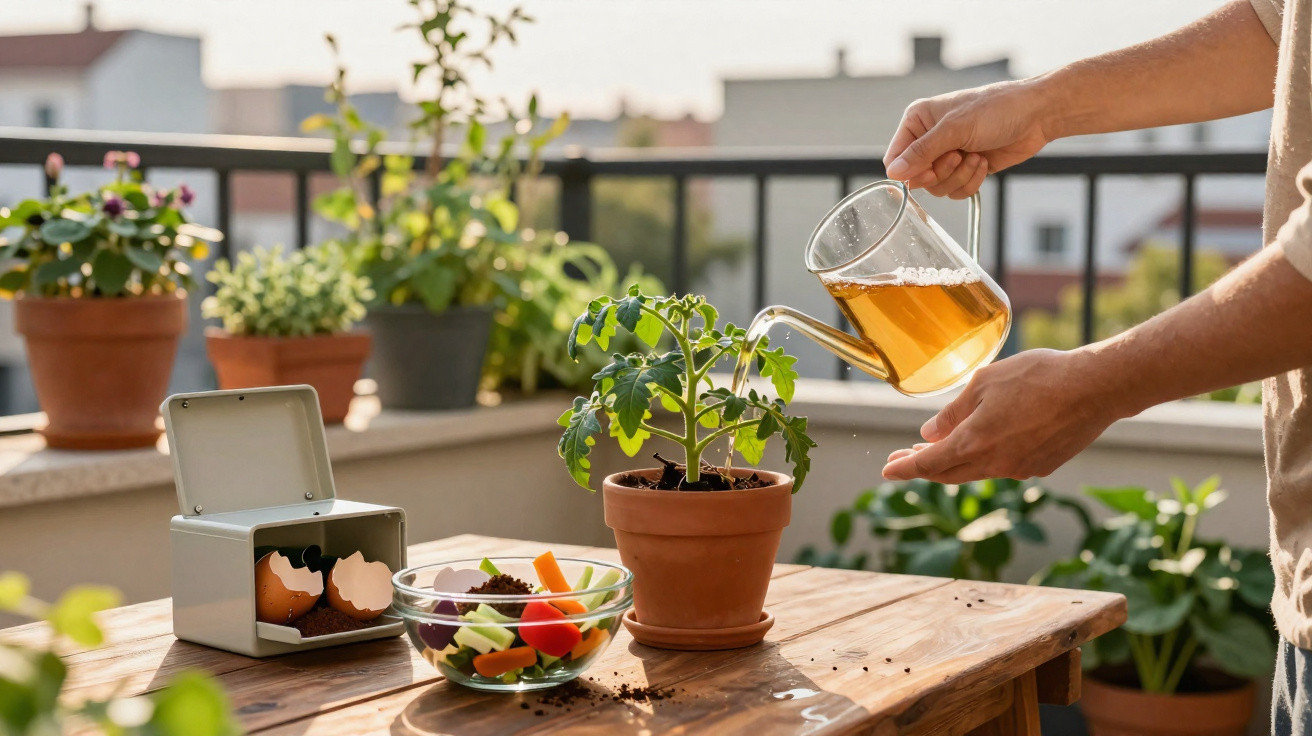
You’re back in the garden centre aisle, eyes fixed on a wall of shiny fertiliser bags. The labels promise “Turbo Growth!” and “Ultra Bloom!”, and you’re doing the sums in your head while trying not to wince at the cost. A staff member passes with a practised smile and, for a second, you nearly accept that this is simply what gardening costs these days.
Then you head home, chop vegetables for tea, and tip the peelings straight into the bin. No pause. No thought. Just a small, unseen leak of money and goodness, gone with a tap of the pedal.
Because what your plants want most is likely sitting in your kitchen, still warm.
Unassuming, free, and-let’s be honest-a bit smelly.
The free “fertiliser” you throw away every day
What plenty of gardeners quietly rely on isn’t some vivid blue powder or a mysterious liquid in a plastic bottle. It’s what you scrape off the chopping board. More specifically: vegetable peelings, used coffee grounds, tea leaves, eggshells, onion skins, and that half-carrot that went limp at the back of the fridge.
These are the leftovers you hardly glance at-yet they carry much of what pricey fertiliser is trying to mimic.
One ends up in a branded sack that sets you back £15. The other goes into a black bin bag you pay to have collected.
Spend five minutes with an older neighbour who gardens “the old way” and the contrast becomes obvious. A retired couple I met in a small town haven’t bought a single bag of fertiliser in seven years. Their tucked-away spot behind the shed looks chaotic: a tub of coffee grounds, a crate of dried eggshells, and a small compost heap gently steaming on a frosty morning.
And yet their tomato plants look as if they’ve been given performance enhancers-sturdy stems, deep green leaves, and fruit hanging like red lanterns. When I asked whether they ever use shop-bought fertiliser, the husband laughed and lifted his spoon from a mug of black coffee. “We drink it, then the plants drink the rest.”
There’s a plain, practical reason this method works. Plants depend on three key nutrients: nitrogen, phosphorus, and potassium. Those costly granules and feeds are essentially tidy, packaged versions of what your food already contains. When you cook, a lot of goodness ends up concentrated in peels, paper filters, and shells.
As these scraps break down in or on the soil, they release minerals gradually, nourish earthworms, and keep the garden’s microscopic life thriving. In turn, that living community transforms soil from lifeless dust into something that looks-and even smells-a bit like chocolate cake.
Bagged products are quick and showy. Kitchen waste is slow, steady, and quietly effective.
How to turn kitchen scraps into plant food without ruining your garden
Keep it straightforward to begin with. Choose one type of leftover you produce most days and put it to work. Drink coffee? Collect the used grounds in a tub rather than throwing them away. Once or twice a week, scatter a very thin layer around acid-loving plants such as blueberries, hydrangeas, or roses, then gently work it into the top layer of soil.
If you eat eggs, rinse the shells, leave them to dry on a plate, and then crush them by hand or with a rolling pin. Add the small pieces to pots or sprinkle them around tomatoes and peppers. Over time, they contribute calcium and can help reduce blossom end rot. What matters is the routine, not getting it perfect.
Many people try this once, decide “kitchen fertiliser” is useless, and give up-because they go full speed on day one. They bury whole potato peelings and a banana in a pot, then wonder why it smells odd and attracts flies. Ease off. Your kitchen caddy isn’t a magic portal.
Cut scraps into small bits. Blitz or finely chop banana skins before mixing them into garden soil. Leave meat, dairy, and oily foods out completely, as they attract the wrong sort of visitors. Apply scraps in thin layers-like seasoning-rather than creating a concealed rubbish heap in one place. And, honestly, hardly anyone does this without missing a day. “Regular enough” works.
“People think they need a huge compost bin and a perfect system,” says Lena, a balcony gardener in Berlin. “I just dry my coffee grounds on a tray, crush eggshells, and tuck them into my potting soil. My neighbors buy fertilizer every spring. I stopped three years ago.”
- Coffee grounds: High in nitrogen and suitable for many plants when used sparingly in thin layers.
- Eggshells: Slow-release calcium, particularly useful for tomatoes and peppers.
- Banana peels: A source of potassium; best for flowering and fruiting plants when chopped very finely.
- Onion and garlic skins: Dry and crumble them to add trace minerals and gently discourage some pests.
- Vegetable peels: Better composted or lightly buried in small pieces to avoid smells and unwanted visitors.
From garbage to gold: a quiet shift in how you see waste
When you start viewing leftovers as next season’s tomatoes rather than rubbish, something subtle but meaningful changes at home. That casual flick towards the bin begins to feel slightly wrong. You find yourself holding carrot tops and thinking, “Where would you be most useful?”
You might keep a simple jar near the sink for grounds and shells. Or you might dig a shallow trench in a quiet corner of the garden so scraps can break down out of sight. No big announcement, no dramatic lifestyle pledge-just small, repeated decisions that gradually feed what’s growing outside your door.
| Key point | Detail | Value for the reader |
|---|---|---|
| Kitchen scraps = nutrients | Coffee grounds, eggshells, and peelings contain nitrogen, calcium, and potassium | Helps cut spending on commercial fertiliser |
| Use small amounts | Thin layers, finely chopped pieces, no meat or dairy | Prevents smells, pests, and plant stress |
| Slow, steady habit | Collect scraps in a jar or bucket and add regularly to soil | Builds richer soil and healthier plants over time |
FAQ:
- Question 1 Can I just throw all my kitchen scraps directly onto the soil?
- Answer 1
- Better to chop them small, bury lightly, or compost first. Big, whole scraps break down slowly and can attract pests.
- Question 2 Are coffee grounds safe for every plant?
- Answer 2
- Used grounds are mild, but some plants dislike too much. Use thin layers mixed into soil, not thick mats, and watch how your plants respond.
- Question 3 Do eggshells really help tomatoes?
- Answer 3
- Crushed shells add calcium over time, which can reduce blossom end rot. They work slowly, so think months, not days.
- Question 4 Will this replace fertilizer completely?
- Answer 4
- For many home gardens, yes or close to it. Rich soil from organic scraps can cover most needs, especially if you also add compost.
- Question 5 What scraps should I never use?
- Answer 5
- Avoid meat, fish, dairy, greasy food, and large amounts of citrus in one spot. They smell, attract animals, and can upset soil balance.
Comments
No comments yet. Be the first to comment!
Leave a Comment