
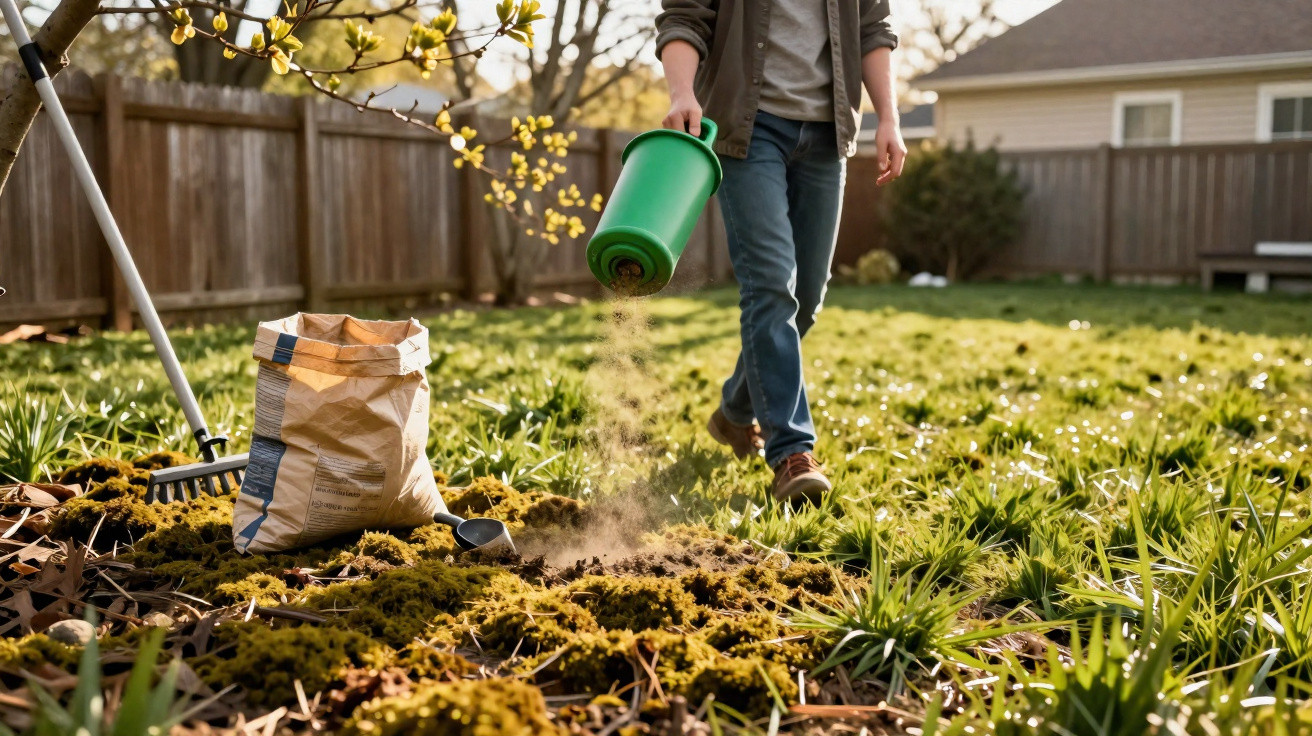
With a simple powder trick in March, you can turn things around surprisingly quickly.
Good news for garden lovers: a lush, deep-green carpet doesn’t require starting again from scratch, and it doesn’t need pricey professional treatments either. What matters most is timing - and a mineral powder that many lawn specialists use in early March as a secret weapon against moss and washed-out blades.
Why the lawn looks so battered after winter
From November to February, the lawn is under constant strain. Waterlogged ground, limited daylight and repeated frosts take their toll on grasses. The blades weaken, barely grow, and lose their strong, healthy colour.
At the same time, the soil becomes compacted. Rain, snow and simple foot traffic squeeze the pores in the ground closed. Air and water reach the roots less effectively, the turf becomes sluggish, and growth stalls.
This is exactly the environment moss enjoys. It needs very few nutrients and thrives in shade and damp conditions. The fine cushions settle between the grasses, spread quietly, and gradually push out the lawn grass.
“When the grass wants to take off again in March, moss often blocks light, air and space - leaving the lawn thin and patchy.”
As days lengthen and temperatures soften, the soil starts to wake up again in March. Lawn roots become more active and fresh shoots emerge. Professionals use this window to give grasses a powerful head start - before moss fully gains the upper hand.
The key role of iron sulphate: moss out, colour back
Many specialist contractors rely on a long-established remedy during this transition period: iron sulphate - a fine, grey-green to brownish powder made from iron compounds. It’s considered a classic moss killer, and it can also give tired-looking lawns a noticeable colour lift.
How iron sulphate works against moss
When iron sulphate is spread over the lawn and dissolved with water, it reacts directly with the moss. The plants cope poorly with the high iron content and effectively “burn”:
- within hours to a few days, the moss turns dark brown to black
- it dries out and loses its grip on the soil surface
- gaps open up between grass plants, allowing new growth to develop
Grass generally tolerates the treatment much better, provided the dose is correct and the ground is neither saturated nor frozen. After a few days the lawn may look blotchy, because black moss residues sit across the surface - but that’s the sign the next step is ready.
Why the lawn looks greener afterwards
Iron is an important building block for producing chlorophyll - the green pigment in leaves. If this trace element is lacking in the soil, lawns can look dull, patchy yellow, or generally “washed out”.
“With iron sulphate, the lawn gets a targeted dose of iron - the blades produce more chlorophyll again, and the area looks fresher and denser.”
Many amateur gardeners say the colour change is visible within a few days. A lawn that previously looked pale can appear markedly stronger and more evenly green even before the official start of spring. Compared with specialist “turbo” lawn fertilisers, this approach is often cheaper and the results show more quickly.
How to use the powder correctly in March
If you’re using iron sulphate in March, it’s worth paying attention to the conditions. Results depend heavily on choosing the right moment and applying it properly.
The ideal timing
- soil temperatures ideally above 5 °C, with no prolonged frost
- lightly moist ground, but no standing water
- ideally a dry day with little or no wind
- no rain forecast for around 24 hours
Many manufacturers advise dissolving the powder in water and then applying it with a watering can or sprayer. This typically produces a more even spread than scattering the powder dry.
A common rule of thumb is about 20 to 30 grams of iron sulphate per litre of water. For larger areas, a spreader or a backpack sprayer can be worthwhile to avoid accidental over-application.
Safety and practical application tips
Although iron sulphate is widely available to buy, it should still be handled carefully. The powder can irritate skin and eyes, and when damp it can leave stubborn rust-coloured stains.
- always wear gloves and closed shoes or wellington boots
- avoid contact with paving, patios, timber decking and pool edges
- rinse equipment thoroughly with water after use
- keep pets and children off the lawn while the product is freshly applied
“Splashes on concrete, natural stone or ceramic paving are particularly troublesome - brown stains can form quickly and are very difficult to remove.”
After applying, don’t walk on the lawn straight away. If you wish, you can give the area a brief watering after a few hours - unless you applied the mixture as a liquid in the first place.
What happens two weeks after treatment
Around 10 to 14 days after application, the most important part of the job still hasn’t been done: the dead moss often lies like a black felt over the surface and continues to restrict air exchange.
Removing moss and aerating the lawn
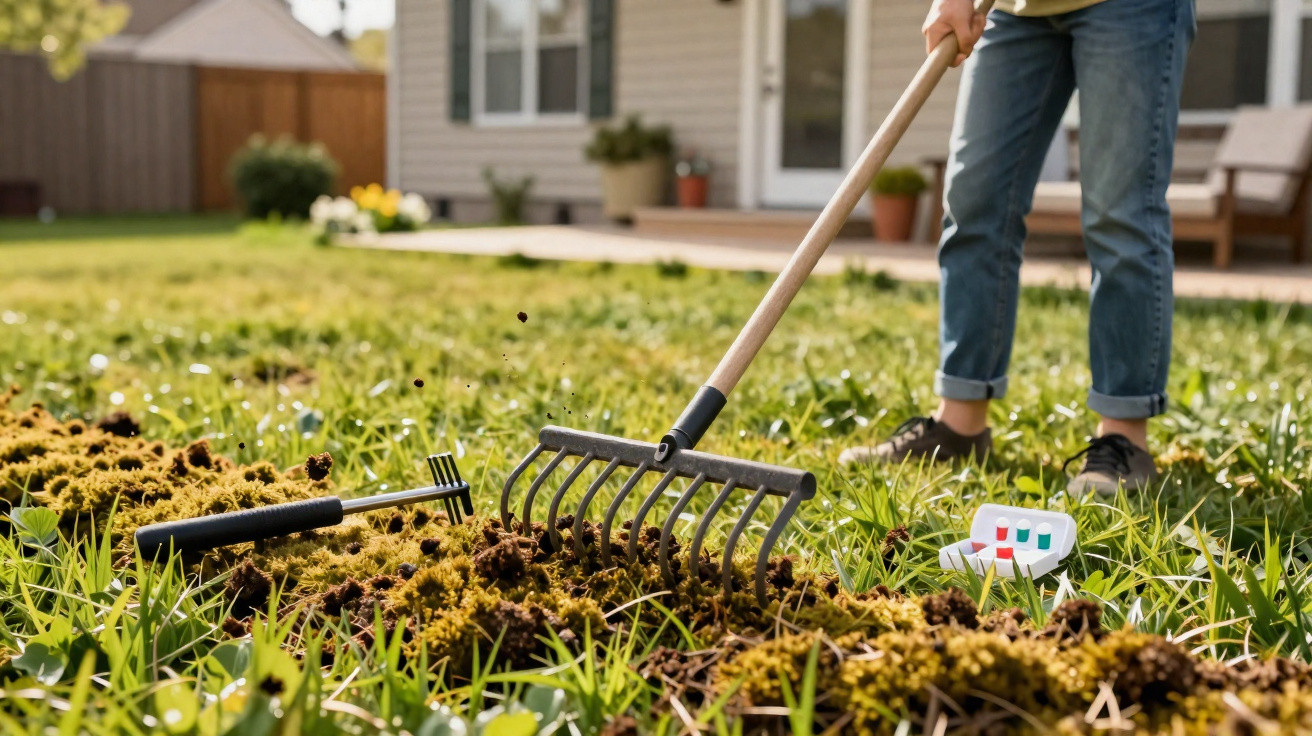
Now it’s time for the classic tool: the scarifier, whether hand-pushed or electric. Its sharp blades or tines lift the black moss layer and old thatch out of the turf.
This step brings several benefits at once:
- moss residues are removed completely
- the soil surface is loosened
- new shoots gain light and room to grow
- heavy rain drains away more easily instead of sitting on the surface
If you don’t own a scarifier, a specialist lawn rake can work for smaller areas. It takes more effort, but the principle is much the same.
Closing gaps so moss doesn’t return
After scarifying, the lawn usually looks quite torn up. That’s exactly when a targeted restart on thin areas pays off:
- overseed sparse patches with suitable lawn seed
- lightly rake in the seed or cover with a thin layer of soil
- keep evenly moist for the first few weeks
- optionally work in an organic slow-release fertiliser
A dense, vigorous lawn suppresses moss over the long term better than any single measure. The goal is a closed, resilient sward that can cope well with shade, moisture and foot traffic.
Risks, alternatives and sensible combinations
Not every garden is suited to regular iron sulphate use. In very acidic soils, treatment can lower the pH further - which may encourage moss instead. If you’re unsure, a simple soil test kit from a DIY store can give you a reading.
If you’d rather avoid chemical-mineral moss treatments, it helps to focus more on the underlying causes:
- scarify and aerate regularly to relieve compaction
- in heavy shade, use shade-tolerant lawn seed mixes
- prevent standing water with drainage or soil improvement
- fertilise appropriately so the grass grows strongly
In many cases, the biggest improvement comes from combining steps: a one-off iron sulphate treatment in March, followed by thorough scarifying, overseeding and a considered fertilising plan. That’s how a winter-weary lawn can become a robust turf that needs noticeably less attention through summer.
Once you understand the principle, you can tailor the care routine to your own garden: sunny, dry areas need different priorities from shaded north-facing spots or heavy clay soils. But in most regions, March remains the best starting point for using a simple powder to hit the reset button for the lawn season.

Comments
No comments yet. Be the first to comment!
Leave a Comment