
It begins with a gentle hiss out on the patio.
A single leaf drops, then a handful, then suddenly a whispering slide off the oak-an entire rustling spill that lands across the grass as though someone has tipped out an enormous sack of paper confetti. You promise yourself you’ll sort it at the weekend. The dog tears through it all, towing a stream of leaves back indoors. Before long the lawn is swallowed. Borders disappear beneath a crackly, ankle-deep quilt.
By the time the first frost arrives, the garden feels less like a place you use and more like a job you’ve forgotten. Next door, leaf blowers roar into life. Wheelie bins bulge with stuffed sacks lined up on the kerb. You pause. Is leaving it being lazy… or is it simply letting the natural cycle run?
The answer is sitting quietly under that damp, rusty-coloured layer-and it isn’t what most people assume.
Autumn leaves are not the enemy
Stroll through a suburban street in late October and it’s the same picture everywhere: blazing colour overhead, chaos underfoot. People go to war with fallen leaves as though they’re an invasion force. Rakes, blowers, tarpaulins, trailers. Hours of scraping every last fleck of colour off the soil. The garden looks “tidy” again… but it also looks a touch lifeless.
Look instead at a garden where the leaves are left for a while. The surface has more give. Earthworms stitch through the top layer. Birds scuff and peck, searching for insects. Under the untidiness there’s a slow, quiet activity. This isn’t really about laziness versus discipline. It’s about wiping nature out versus working alongside it.
A Canadian study tracked how quickly leaf litter breaks down on lawns. Over the course of a season, shredded leaves effectively dissolved into the turf, boosting organic matter and improving moisture retention. Gardeners who mulched their leaves ended up with fewer bare patches and less need for synthetic fertiliser. No miracle additive-just last year’s canopy doing what forests have always done.
Picture a woodland floor. Nobody rakes beneath a beech. Leaves fall, pile up, rot down, and feed the roots again. That loop is a big part of why forests stay rich without bagged compost or pricey feeds. Your garden is the same system on a smaller, messier scale. When you strip every leaf away, you’re removing free nutrients, shelter for wildlife, and moisture protection.
The issue isn’t the leaves themselves. Trouble starts when they settle into a thick, wet blanket that never shifts. Grass can’t cope without light. Young perennials may rot beneath a soggy mat. Deep, untouched piles pressed up against stems can also give pests a comfortable place to overwinter. “Doing nothing” with leaves doesn’t mean leaving them everywhere and hoping for the best. It means not paying attention to how they behave-then wondering why the garden looks weary in spring.
What to actually do with all those leaves
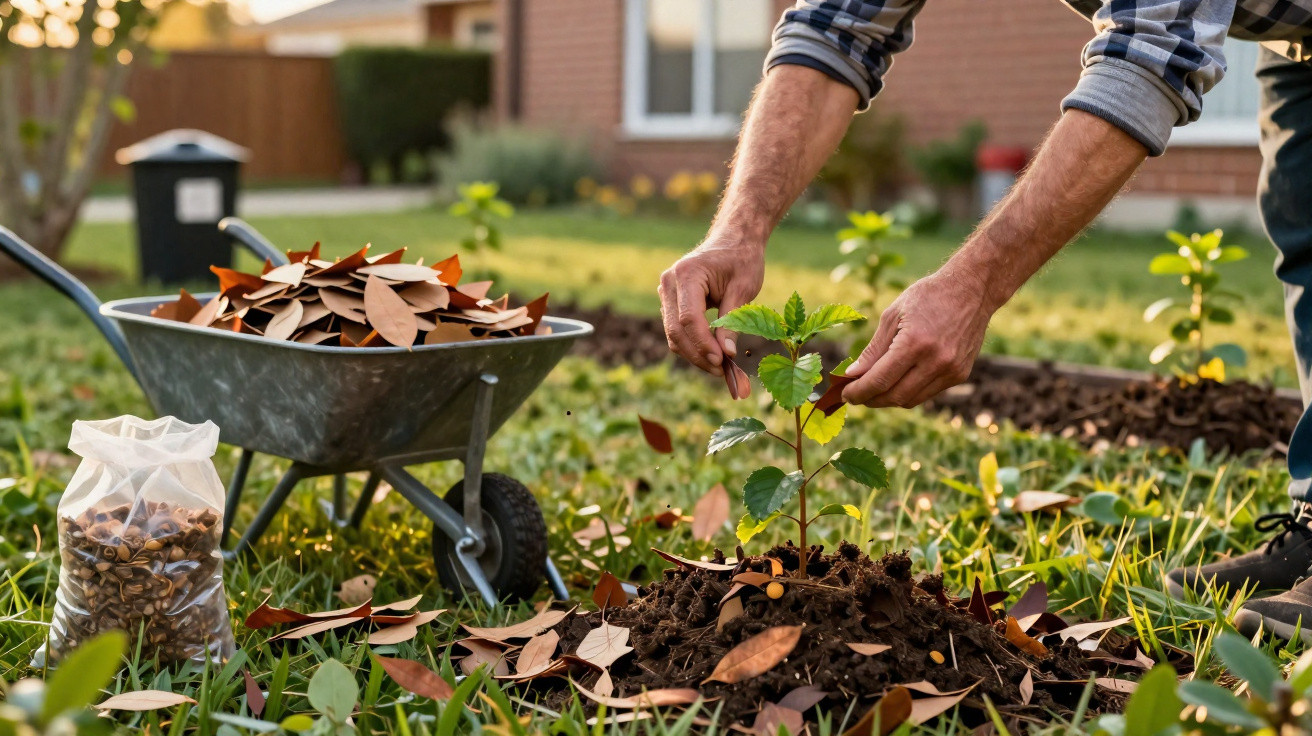
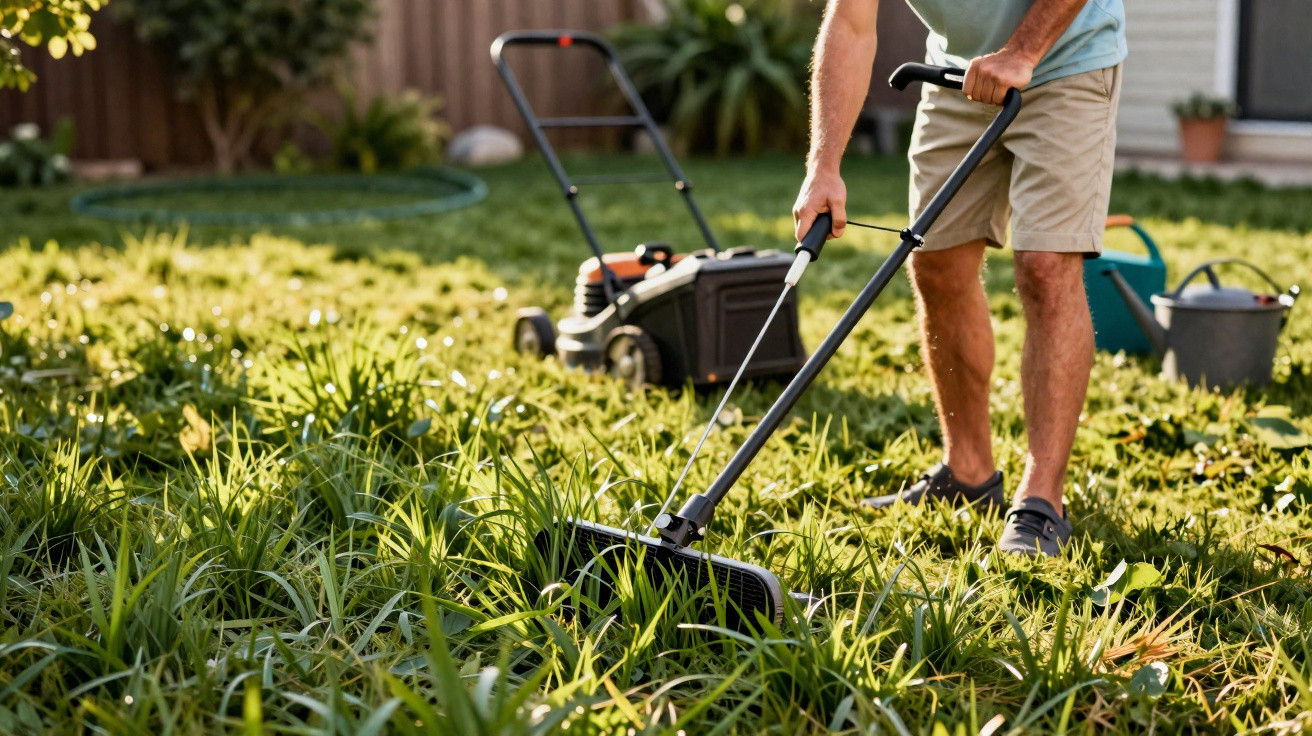
Begin by flipping the question. Not “How do I get rid of them?” but “Where will they do the most good?” On lawns, the simplest option is to run the mower over dry leaves once or twice. The blades chop them into thin flakes that sift down between the grass. Within weeks they darken, break up and vanish from view. The lawn looks neat, while underneath it’s receiving a slow-release autumn feed.
In borders, gather leaves into light, airy layers around shrubs and perennials. Keep a small gap around plant crowns and stems so air can move and rot doesn’t set in. Think of it as tucking plants in with a breathable cover, rather than sealing them up like cling film. Paths and patios are worth keeping relatively clear-not for the plants, but for your footing and your peace of mind.
A common misstep is swinging to one extreme or the other: either clearing obsessively, or dumping leaves into miserable, ignored heaps. Both options cause problems. If you bag everything up and send it away with green waste, you’re exporting what your soil would otherwise eat. If you mound leaves into a dense, wet clump against a fence, they compress into a slimy pad that keeps both air and water out.
There’s a calmer middle way. Create a leaf “bank” in a corner: pile them loosely so you can use them as mulch throughout the year. Sprinkle a little garden soil between layers to help decomposition along. Turn the heap from time to time-when you think of it. Let’s be honest: nobody truly does that every day.
On a human level, the pressure to keep a Pinterest-perfect autumn lawn is genuine. There’s a quiet sense of judgement when your garden is still speckled with colour and the neighbour’s looks like a golf green. Yet the gardeners who step away from that perfectionism often end up with richer soil, fewer weeds and more birds. The garden shifts from a polished surface into a living system-one where you manage the mess rather than fight it.
“Leaves are not garden waste. They’re the raw material of next year’s soil.”
- Sprinkle a thin layer of chopped leaves over bare soil instead of leaving it exposed to winter rain.
- Keep thick, soggy layers away from small seedlings and low, delicate plants.
- Leave a few undisturbed patches under hedges or shrubs for insects and hedgehogs.
- Use a simple wire cage as a “leaf bin” to make your own leaf mould in 12–18 months.
- Rake in short sessions rather than marathon clean-ups, so it feels manageable instead of punishing.
Your future garden starts with this year’s mess
You know the moment: the first properly cold morning, and the garden suddenly looks stripped back. The colour has dropped, stems stand exposed, and everything feels slightly deserted. That’s exactly when what you do with fallen leaves starts to matter.
If you’ve worked with them, beds look protected yet still alive. The soil is covered, like a sleeping animal wearing a soft coat. Birds flick along the edges. The lawn can still breathe. You can almost feel the quiet exchanges underneath: fungi trading nutrients, roots pushing deeper into a warmer layer, microscopic life feeding, breathing and building structure.
Do nothing at all and nature will still act, because nature always does. But you may not like what it produces. Compacted, waterlogged leaves can favour slugs over songbirds, and rot over richness. Neglect is not the same as trust. One is turning away and walking off. The other is noticing what’s happening, then choosing where to step in and where to leave well alone.
Leaving some leaves behind is a kind of faith-not the romantic, Instagram type, but the muddy-boots, slightly-chaotic, real-life sort. You accept that perfection won’t live here this autumn. You swap a spotless lawn for healthier roots. A sterile border for a winter refuge for insects. A garden that looks a bit wilder, in return for one that feels more alive.
When spring finally arrives, the reward shows itself quietly. Soil that crumbles rather than clods. Plants that return a little stronger. Fewer dry cracks when summer heat arrives. You won’t watch the work those leaves did in January rain and February frost-you’ll simply notice the garden rebounds faster than you expected.
That’s the understated truth: autumn leaves don’t ruin gardens. The real harm comes from treating them as rubbish instead of raw material-or from ignoring them until they smother what you’re trying to grow. This year the decision isn’t rake versus don’t rake. It’s collaboration versus neglect. And it begins with what you do after the very next leaf drops.
| Key point | Detail | Why it matters to you |
|---|---|---|
| Leaves as a resource | Leaves supply nutrients, organic matter and habitat | Realise you can feed your garden for free |
| Active management, not abandonment | Spread, shred and move them instead of removing everything or leaving everything | Prevent suffocated lawns and smothered borders |
| A more resilient garden | More living soil, better water retention, increased biodiversity | A garden that copes better with cold, heat and drought |
FAQ:
- Do I have to remove every leaf from my lawn? No. Shred a moderate layer with the mower and let it break down where it falls; only thick, wet mats need shifting.
- Can leaves kill my grass? They can if they form a dense, soggy carpet that blocks light and air for weeks. Thin layers-or chopped leaves-are usually helpful.
- What should I do with leaves in flower beds? Use them as a loose mulch around plants, leaving a small gap around stems and crowns so they don’t rot.
- Are some types of leaves bad for the garden? Very tough leaves, such as some oaks or magnolias, simply decompose more slowly. Mix them with other leaves or shred them to speed things up.
- How long does it take to make leaf mould? In a simple leaf cage or a bag with holes, most leaves become dark, crumbly leaf mould in 12–24 months, depending on climate and moisture.

Comments
No comments yet. Be the first to comment!
Leave a Comment