
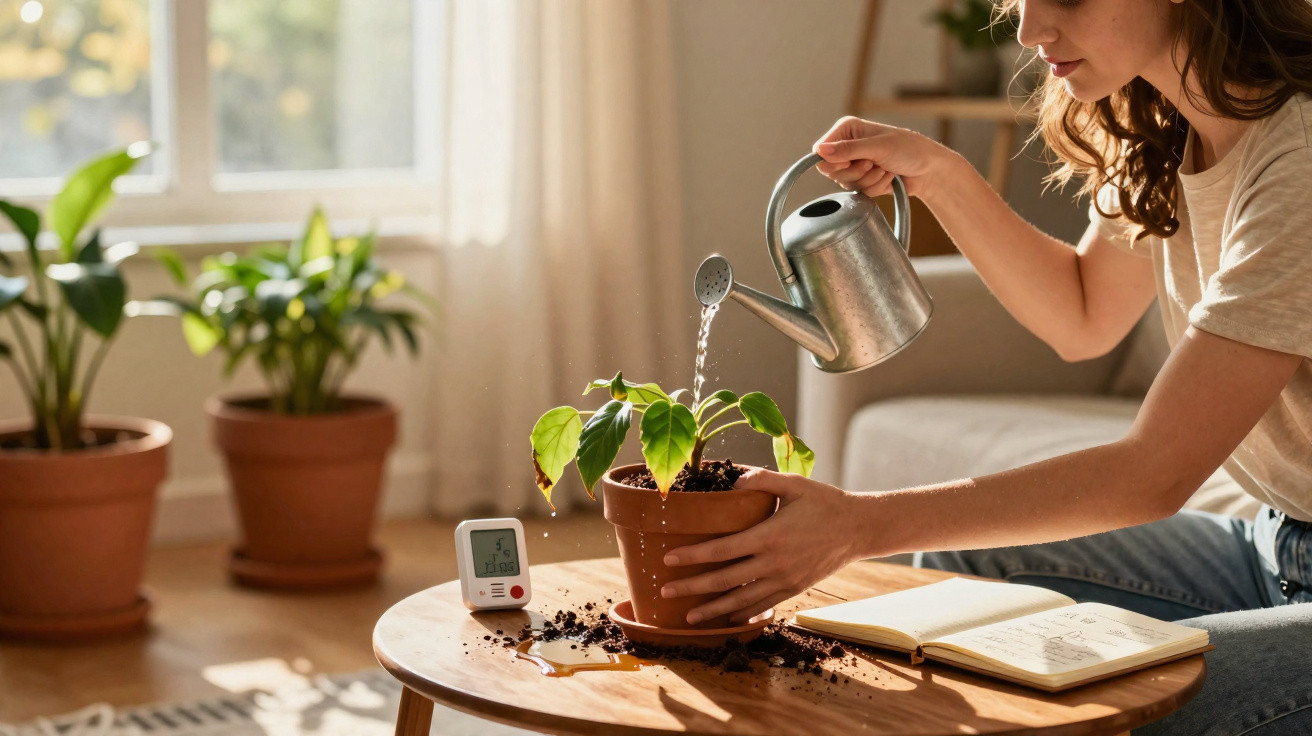
The ficus leaves caught the kitchen light, glossy and beaded with moisture from the morning mist. A jug sat on the worktop, always topped up to about halfway, waiting like a quiet reassurance. Any time the plant sagged even slightly, the answer was automatic: another pour, another small act of devotion. More water. More care. More “I don’t want you to die on me”.
A fortnight on, the yellowing began low down. Then the leaves started to fall-one at a time-landing on the floor like soft reproaches. When you shifted the pot, there was a faintly sour whiff. The compost felt dense and waterlogged, more marsh than mix. Your instinct still whispered “water it”. The truth was the opposite.
Because now and then, what feels like the gentlest care is precisely what harms a houseplant.
When “too much love” drowns your plants
Overwatering almost never announces itself with drama. There’s no obvious crash-just a gradual fade. Leaves lose their sheen. Fresh growth stalls. The plant seems worn-out in a hard-to-pin-down way, as if it’s breathing out and never quite drawing breath back in.
After you’ve watered, the compost stays dark for days. When you pick the pot up, it feels oddly weighty. Press a finger into the soil and, two or three days later, it still feels cool and damp. That permanent moisture can seem comforting, as though the plant will never be thirsty. In reality, the roots are living in conditions closer to a bog than a healthy pot.
That’s how overwatering happens: not through neglect, but through care that’s been taken a step too far.
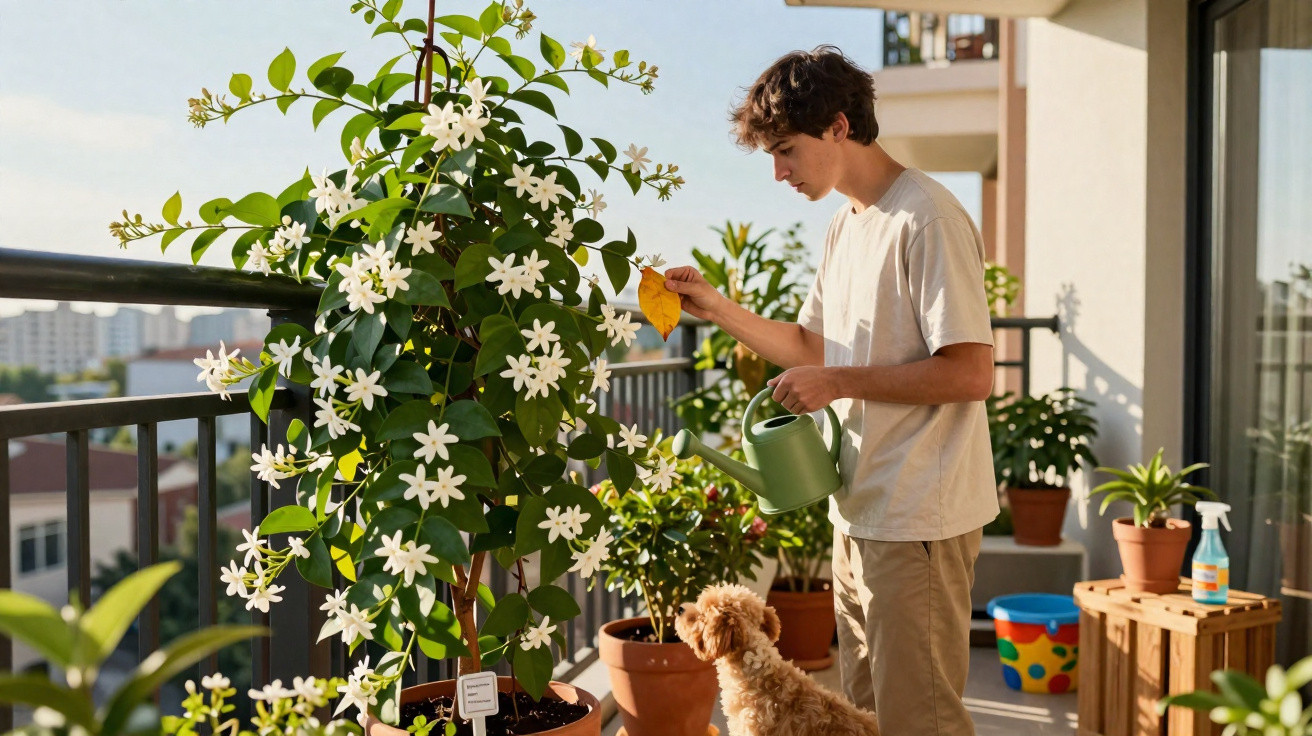
Imagine a first-time plant owner in a small flat in Manchester. They’re working from home with a laptop on the table and a monstera by the window. Every coffee break, they pass by. They stroke a leaf. They nudge a stem into place. They check the compost. It becomes a tiny routine of calm in a day filled with Slack notifications and endless tabs.
Then one day, the leaf edges start to curl. Immediate worry. A quick search. Conflicting advice. They fill the watering can and soak it thoroughly. The next day, it still doesn’t look right-so they water again. Then again. Before the week is out, the pot has had no chance to dry, and the compost hasn’t had a moment to breathe.
Three weeks later, the lowest leaves turn yellow and drop. Brown marks show up. The plant looks unwell, and the knee-jerk response is to reach for more water. The cycle is complete: affection has quietly become harm.
Plants “breathe” through their roots as much as their foliage. Roots don’t only absorb water; they also need oxygen, space, and brief dry spells between drinks. If the compost remains saturated, water fills the air gaps between particles and pushes out oxygen. The roots effectively suffocate. They begin to rot from the tips, becoming brown and soft instead of white and firm.
As the root system dies back, the plant can no longer take up nutrients properly. That’s why yellowing can appear in odd patches, or leaves can drop without an obvious pattern. Meanwhile, constantly wet compost becomes ideal for fungus gnats and moulds that thrive in persistent moisture. The pot’s whole micro-ecosystem shifts in the wrong direction.
Here’s the cruel part: overwatering can look a lot like thirst. Limp leaves, muted colour, a generally miserable silhouette. So people treat it with the very thing causing it. Watering turns emotional rather than practical.
How to water like someone who actually knows what they’re doing
Begin with one straightforward change: stop watering by date and start watering by evidence. Instead of watering every Sunday “because it’s Sunday”, use the finger test. Push your index finger into the compost up to the second knuckle. If it’s dry at that depth, water. If it still feels cool or damp, hold off.
Each plant has its own pace. Cacti typically want the compost to dry out completely before the next soak. A peace lily generally prefers conditions that stay more evenly moist. So rather than memorising a timetable, get familiar with what “ready for water” feels like for each pot. Lift it straight after watering, then lift it again when it’s fully dry-the change in weight becomes a quiet, dependable signal.
When you do water, commit to it. Pour until it runs out of the drainage holes. Don’t just wet the surface like you’re sprinkling seasoning.
Not watering can trigger a peculiar kind of guilt. The plant looks fine, but you water anyway because doing nothing feels like you’re failing it. On a tense day, watering can feel like a small, manageable win-so you repeat it. Too frequently. Too generously.
On a shelf in Leeds or London or Bristol, there’s a line of plants sharing the same unspoken problem: roots sitting in cold, stale moisture. Many are in containers with no drainage, tucked inside decorative covers that trap excess water at the bottom. Because you can’t see the soggy pool, you keep topping it up.
Let’s be honest: hardly anyone truly monitors light levels, humidity, precise compost composition and a watering log like a lab project. Real life interrupts. That’s why the best approach isn’t perfection-it’s guardrails: pots with drainage, saucers you actually empty, and a cheap moisture meter if you’re anxious.
“Most plants die not from neglect, but from kindness badly aimed,” says more than one old-school gardener, half joking, half dead serious.
Treat watering as a conversation rather than a ritual. The plant “speaks” through its leaves, stems and compost. Your role isn’t to smother it with constant responses, but to reply when it’s genuinely asking. That means you may leave it a week-sometimes two-without watering. That isn’t failing. That’s self-control.
- Let the surface of the compost dry out before you even consider the watering can.
- Always choose pots with a drainage hole, or place a nursery pot inside a decorative outer pot.
- Pick the pot up occasionally: heavy = wet, light = likely thirsty.
- Yellowing that starts from the bottom often points to too much water, not too little.
- If you’re unsure, wait 24 hours. Most houseplants recover from thirst faster than they recover from drowning.
Learning to stop “saving” plants the wrong way
Overwatering isn’t only a horticultural slip-it’s a way of thinking. It’s the same impulse that prompts one extra message when someone hasn’t replied, or another check of the front door. Doing more feels safer than doing less. With houseplants, that urge fills pots with water they never requested.
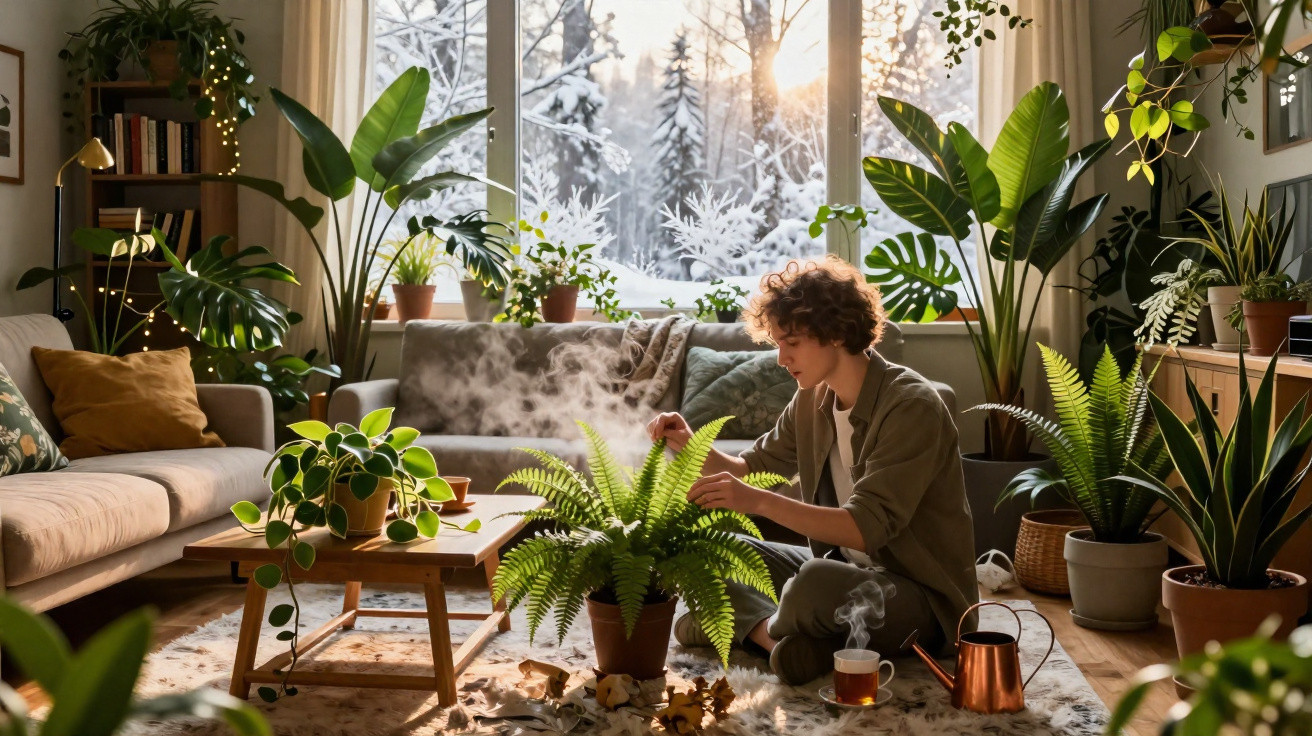
There’s a quiet courage in allowing a plant to dry slightly. In seeing a leaf droop and thinking, “Let’s see what it does tomorrow.” It’s care that’s slower and more observant-less about control, more about noticing. On a windowsill or balcony, you see the difference in small signs: new leaves emerging sturdier, compost that smells clean rather than sour, fewer baffling die-offs.
And on a human level, it helps to know you’re allowed to mess it up. Nearly everyone has a personal “plant cemetery”: basil drowned on the kitchen counter, a fern that turned into brown sludge, an orchid that dropped every last flower. On a bad day, it feels like you’ve failed. On a good day, it’s simply information.
The more you pay attention to how plants respond to water, the more you realise they’re tougher than they appear. A spider plant that’s a bit too dry will usually spring back after a proper drink. A succulent ignored for three weeks can look better within hours of a soak. What most plants don’t forgive is weeks of sitting in a wet, airless container.
Next time you pass your plants and feel that twitch-an urge to “do something”-swap the gesture. Feel the compost. Lift the pot. Check the newest leaves rather than focusing only on the old ones. Allow doing nothing to be one of the options. Give the plant room to breathe.
Some of the harder lessons houseplants teach have little to do with Latin names or compost recipes. They’re about pace, restraint, and accepting that constant intervention isn’t a requirement for growth. That small indoor jungle can act like a mirror, reflecting how you behave when you’re scared of losing something you care about.
Trading stories about drowned monsteras and revived snake plants is part of the learning. Someone you know has already killed a plant in exactly the way you just did. Saying it out loud turns shame into understanding, and understanding into better habits. It even makes the watering can feel a little lighter.
| Key point | Detail | Why it matters to you |
|---|---|---|
| Overwatering = suffocated roots | Water replaces air in the compost; roots rot and can no longer feed the plant properly. | Helps explain how a well-loved plant can decline despite lots of care. |
| Watch the compost, not the calendar | Finger test, pot weight, visible drainage instead of fixed-date watering. | Cuts mistakes by adapting to each plant and each season. |
| Less water, more listening | Accept waiting; look at the leaves, smell the compost, adjust gently. | Builds a calmer, longer-lasting day-to-day relationship with your plants. |
FAQs:
- How do I know if I’m overwatering my plant? Common signs are yellowing leaves starting from the bottom, soft or mushy stems, soil that stays wet for many days, and sometimes a sour smell from the pot. If the pot feels heavy long after watering, that’s another hint.
- Can an overwatered plant be saved? Often, yes. Let the soil dry out, remove any saucer water, and if things look severe, repot in fresh, well-draining mix and trim rotten roots. Then water less frequently and watch how it responds over a couple of weeks.
- How often should I water houseplants? There’s no single answer. Light, temperature, pot size and plant type all matter. Use touch and weight instead of the calendar: water when the top few centimetres of soil feel dry for most common houseplants.
- Are droopy leaves always a sign of thirst? No. Drooping can mean too much or too little water. Check the soil first. If it’s soggy, waiting is safer. If it’s dry and the pot is light, a deep drink will likely help.
- Do I need drainage holes in every pot? For almost all indoor plants, yes. Drainage is your best protection against overwatering. You can still use pretty decorative pots, but keep the plant in a plastic nursery pot inside, so excess water can escape.
Comments
No comments yet. Be the first to comment!
Leave a Comment