
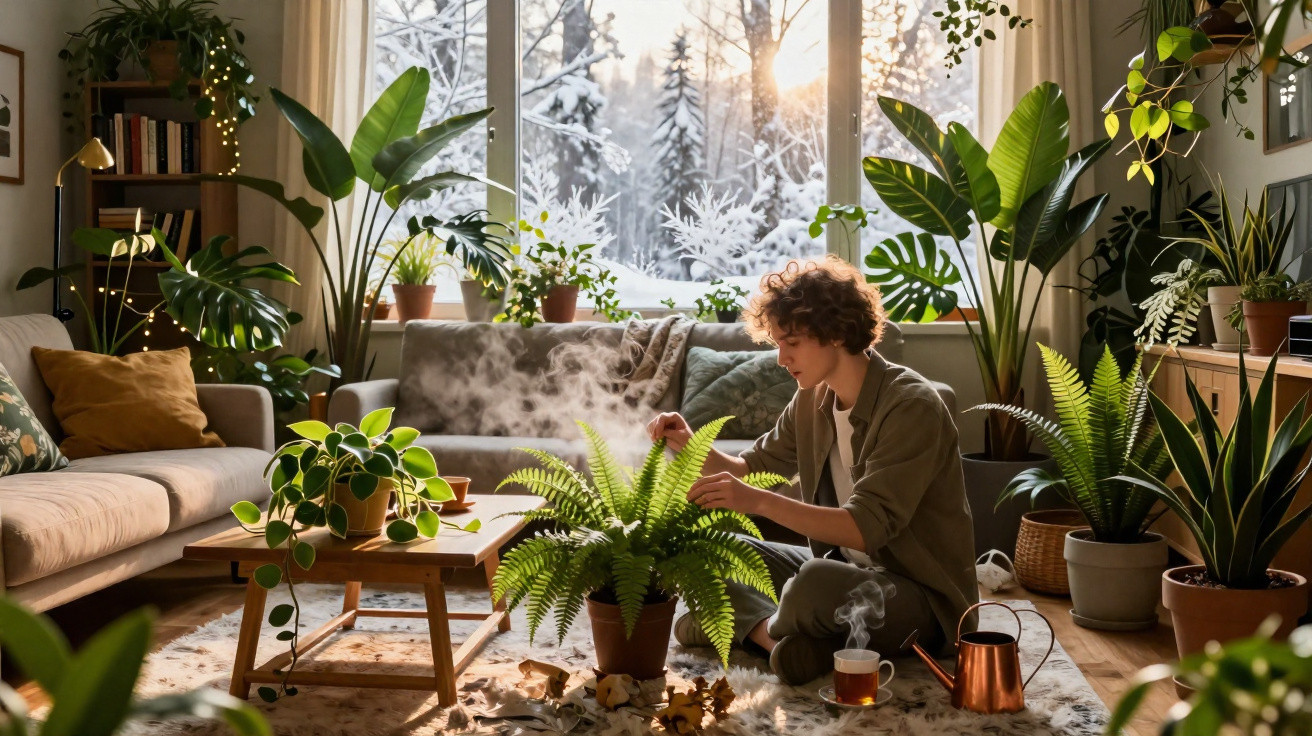
Outdoors, the branches stand stripped back and the frost has teeth.
Indoors, though, you can let something more untamed take hold: a hushed, hidden forest of foliage.
When the temperature drops and gardens go still, increasing numbers of people are turning their living rooms into green refuges. With just a small selection of houseplants, a space can shift from full “winter mode” to something nearer a storybook woodland-rich in shadow, texture and a softness the weather cannot reach.
Why a mystical indoor forest makes sense in winter
Shorter days reshape our routines at home. We stay indoors, light candles, binge-watch programmes and scroll for far too long. A thick, layered grouping of plants rewrites that pattern, bringing motion, colour and a steady, comforting pace to the room.
Creating a winter jungle is less about “having houseplants” and more about building a mood: calm, slightly wild, and just a bit surreal.
Studies into biophilic design already connect indoor greenery with reduced stress, sharper focus and greater feelings of comfort. In winter, those benefits often feel stronger. Plants interrupt harsh artificial lighting, take the edge off hard surfaces, and can make centrally heated, dry air feel less relentless.
And for city residents in small flats, there’s encouraging news: you do not need a conservatory or a dedicated sunroom. A well-lit corner, a windowsill and a few suitable species can still create that deep-forest feel-even if the view outside is a car park under a grey sky.
Seven plants that quietly turn a room into a winter forest
The aim isn’t a scatter of mismatched pots. What you’re after is a layered, slightly dusky scene: taller stems, arching leaves and texture down at floor level. The seven plants below cope well with indoor winter conditions and each adds strong visual presence.
| Plant | Winter mood | Care level |
|---|---|---|
| Ferns | Soft, dense woodland undergrowth | Medium (needs humidity) |
| Pilea | Rounded leaves with a playful feel | Easy |
| Fittonia | Detailed, moss-like ground layer | Medium |
| Calathea | Striking leaves with bold patterns | Medium to demanding |
| Dracaena | Upright structure with trunk-like canes | Easy |
| Aralia | Fine, tree-like outline | Medium |
| Aspidistra | Dark, dependable background | Very easy |
Ferns: the backbone of the winter woodland
Ferns-whether Boston ferns or maidenhair types-immediately suggest “shade, moisture and depth”. Their fronds tumble from shelves and hanging pots, taking the starkness out of corners and radiators that can look especially severe in cold months.
They do best in bright but indirect light, which suits many north-facing windows across the UK as well as colder regions of the US. Humidity is the usual sticking point. Warm, dry air can brown the tips of fronds. Clustering ferns together on a tray of damp pebbles, or using a small humidifier nearby, often keeps them steadier.
Think of ferns as the forest floor: if they look fresh and bright, the whole room feels alive.
Pilea and fittonia: small plants with strong visual impact
Pilea peperomioides-often nicknamed the Chinese money plant-carries round leaves on slender stems that catch weak winter light in a lively, graphic way. It works particularly well in modern rooms, where its clean shape pops against simple furniture.
Fittonia does the opposite: it hugs the soil surface. Its vividly veined leaves-pink, red or white-can read like a mossy carpet in pots and terrariums. When placed around taller plants, fittonias become the “moss between the roots” in your imagined woodland.
- Set pilea on a side table or desk so you can enjoy its outline against the window.
- Tuck fittonia in as underplanting beneath dracaena or aralia to build a layered look.
- Keep both away from cold draughts, as sudden temperature drops can upset them.
Calathea and dracaena: drama, stripes and height
Calatheas bring instant theatricality. Their leaves may be striped, speckled or finished with maroon undersides that glow when late-afternoon light hits them. They manage well in low to medium light, and they like reliably warm, slightly moist conditions-so they tend to be happier in living rooms than in chilly hallways.
Dracaenas add architecture. Their narrow leaves rise from cane-like stems, giving the room a sense of “tree trunks”. Pairing a tall dracaena with lower plants can feel like a small woodland clearing. They’re forgiving if watering is inconsistent and generally cope with typical central heating in the UK and US, provided you don’t perch them where they’ll bake directly above a radiator.
Aralia and aspidistra: quiet anchors for the scene
Aralia-especially Japanese aralia (Fatsia japonica)-has large, hand-shaped leaves that throw dramatic shadows across nearby walls. It tolerates cooler indoor spaces better than many tropical plants, making it a good option for conservatories and enclosed balconies where temperatures drop overnight.
Aspidistra, often called the cast-iron plant, earns its name. It copes with low light, irregular watering and temperature swings. In a mystical-forest arrangement, it acts as thick undergrowth: dark, glossy leaves that form a solid backdrop for finer, more delicate plants in front.
A winter jungle works when you combine “show-off” leaves with dependable background greenery that carries the scene on bad days.
Keeping a winter jungle thriving: light, water and air
Looking after plants in winter isn’t the same as in summer. Growth slows, daylight is limited and central heating alters the air. A few small changes can be the difference between a sulky assortment of pots and a genuinely thriving mini-forest.
Managing light in short, dark days
From November through to March, it often helps to shift plants nearer the window-while still keeping leaves from pressing against cold glass. Bright, gentle light from east- or south-east-facing windows suits most of the seven plants listed above.
A basic LED grow light on a timer for a few hours in late afternoon can stop plants becoming leggy and colours turning dull. Many compact versions clip to shelves and use very little electricity, which suits renters and smaller flats.
Balancing humidity and watering
Heated indoor air pulls moisture from foliage. Group plants to create a more humid microclimate, or set bowls of water between pots so evaporation gently raises humidity around them. Light misting can help ferns and calatheas, but avoid soaking leaves late in the evening to minimise fungal issues.
Water less frequently than you would in summer, but with more attention. Push a finger into the compost: if the top couple of centimetres are dry, water slowly until you see excess drain away. Don’t leave pots sitting in water-particularly aspidistra and dracaena, which dislike waterlogged roots.
Watching for winter pests and stress
Warm, dry rooms are ideal for spider mites and scale insects. Once a week, check the undersides of leaves for fine webbing, sticky patches or speckled fading. Wiping leaves with a damp cloth-and using a gentle insecticidal soap if necessary-usually keeps problems from escalating.
Treat weekly plant checks as a winter ritual: a quiet five minutes to notice new leaves, fading fronds and early warning signs.
Styling tricks that turn plants into a mystical set
How you place plants matters as much as which plants you choose. Indoor forests rely on layers, a path for the eye to follow, and a few small surprises.
Play with height, shadow and perspective
Combine floor planters with low stools, shelves and hanging baskets. Position taller dracaenas or aralias at the back, ferns and calatheas at mid-height, then keep pilea or fittonia towards the front. This creates depth-more like peering into a thicket than looking at a flat line of pots.
In the evening, try setting a lamp behind larger leaves so their silhouettes move across the wall. That single adjustment can transform the feeling from a simple “houseplant corner” into something closer to a low-budget fantasy film set-in the best possible way.
Build a mini “forest room” within a room
Many people now carve out a dedicated green nook beside a window or under the stairs. Add a small armchair, a knitted throw, a slim side table for books and tea, then cluster plants around and above the seating area. In winter, it can completely change how you use that part of the home.
A rug in deep greens or a textured jute mat suggests a forest floor. Natural finishes-wood, rattan and linen-support the calm, grounded atmosphere that living greenery brings.
Beyond decor: how a winter jungle shapes habits and mood
Once plants arrive, everyday routines often shift in subtle ways. People tend to draw the curtains earlier, pay closer attention to the weather, and notice changes in indoor humidity and temperature. Those small, regular checks create a rhythm that contrasts with the blurred sameness winter can bring indoors.
In many households, plant care becomes a shared task: one person waters, another wipes dust from leaves, and a child tracks new growth with a ruler. That feeling of a joint project can carry families through darker months better than yet another streaming subscription.
Psychologists point out that caring for plants activates the same mental space as gardening: a low-pressure, forward-looking mindset. When outdoor beds are dormant in winter, an indoor forest keeps that mindset alive. Each unfurling fern frond or new pilea pup hints that spring is on its way.
For anyone working from home, a jungle corner can also serve as a video-call backdrop and a soft barrier against screen fatigue. Brief breaks spent tweaking a grow light, turning a pot, or checking compost moisture rest both eyes and mind in a way that feels different from picking up a phone.
There’s a practical benefit too: learning to handle humidity, pests and light indoors builds skills you can use outside later. The observation you develop when a calathea curls its leaves before watering can help you spot wilting signals in summer bedding plants or containers on a balcony.

Comments
No comments yet. Be the first to comment!
Leave a Comment