
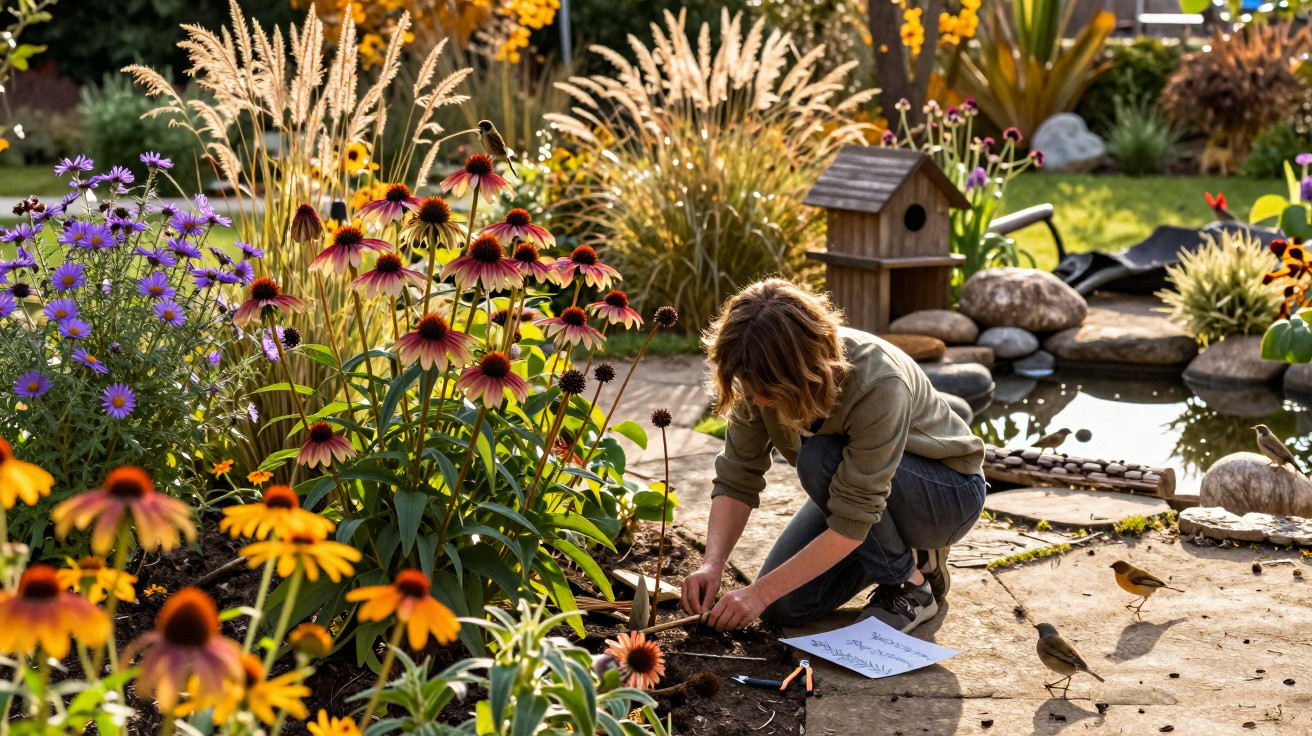
Many hobby gardeners reach for the shears on autopilot in autumn and cut everything back hard. Borders end up smoothed off, stems reduced to stubs, and not a single leaf is left behind. Yet that tidy-garden ideal strips wildlife of food and shelter precisely when it is most needed. With the right perennials - and a more relaxed approach in autumn - you can turn your garden into a thriving refuge.
Why perennials make such a difference for wildlife
Perennials are far more than ornament. Over many months they provide nectar, pollen, seed and protected nooks. The garden does not stop working in September simply because we prefer it to look neat.
A large number of classic summer-flowering perennials form impressive seedheads once they finish blooming. If you leave those standing, finches, tits and sparrows will use them like a ready-made buffet. Through late autumn and into winter, they can still find food when fields and hedgerows have little left to offer.
"If you leave the seedheads of Echinacea, Rudbeckia or daisies standing, you feed wild birds through the leanest season - without a bird feeder."
Food is only one side of the story; cover matters too. Tall, dry stems, leaf piles and dense clumps protect insects, spiders, beetles and amphibians. Hedgehogs also like to overwinter in these quiet corners, provided they are left undisturbed. At the same time, dry stems help shield the crowns of many perennials from hard frost and winter wet.
The one autumn trap that turns your garden into a desert
The familiar mistake is cutting everything down to ground level in October or November and clearing away every last leaf. The garden may look immaculate, but for animals it is effectively emptied.
"If you cut every perennial back brutally in autumn, you take two essentials away from wildlife at once: winter food and safe hiding places."
What follows is predictable: fewer birds through winter, very few insects emerging in spring, and noticeably fewer pollinators in summer. Many gardeners then wonder why there are “suddenly” fewer butterflies and bees - but the cause is often the previous year’s clean-up.
These 15 perennials turn your border into a year-round buffet
Rather than cramming in plants at random, it pays to work to a simple plan: a mix of nectar sources, seed providers, and a range of heights. The aim is that from spring right into late autumn there is always something flowering or setting seed in the garden.
The top 15 perennials for birds, insects and hedgehogs
- Purple coneflower (Echinacea purpurea)
- Black-eyed Susans / coneflowers (Rudbeckia species)
- Argentinian vervain (Verbena bonariensis)
- Lavender (Lavandula species)
- Thyme (Thymus species)
- Marjoram / oregano (Origanum vulgare)
- Yarrow (Achillea millefolium)
- Purple loosestrife (Lythrum salicaria)
- Hemp-agrimony (Eupatorium / Eutrochium)
- Oxeye daisy (Leucanthemum vulgare)
- Common foxglove (Digitalis purpurea – poisonous to humans)
- Musk mallow (Malva moschata)
- Milkweed (Asclepias species)
- Sneezeweed (Helenium autumnale)
- Autumn asters (Symphyotrichum and Aster species)
Each of these perennials does more than one job: nectar for pollinators, seed for birds, and structure that doubles as shelter. Used together, they create a tightly linked network of feeding and hiding opportunities.
| Perennial | Main benefit | Flowering period |
|---|---|---|
| Echinacea & Rudbeckia | highly popular with bees, seeds for finches & tits | summer to early autumn |
| Lavender, thyme, oregano | nectar for solitary bees, fragrant foliage, culinary herbs | summer |
| Helenium & autumn asters | late-season food for bees, butterflies and bumblebees | late summer to autumn |
| Purple loosestrife, hemp-agrimony | nectar for day-flying butterflies, structure in damp spots | summer |
| Daisy, yarrow, mallow | wide range of insects, natural meadow look | early summer to summer |
How to plant and combine these perennials
A wildlife-friendly “refuge” works best with layering. Tall perennials such as hemp-agrimony, Verbena bonariensis and autumn asters form the back of the planting. In front of them, place mid-height choices like sneezeweed, Echinacea and Rudbeckia. Right at the edge, use low-growing herbs such as thyme and oregano, along with yarrow and mallow.
If you create several smaller island beds rather than one large border, you spread food sources across the whole garden. That way, birds and insects benefit in the front garden as well as along the patio edge.
"The more varied the heights and flowering times in a bed, the denser the network of hiding places and food sources becomes."
A blend of sunny and part-shaded areas works well. In damp ground, purple loosestrife and hemp-agrimony thrive; on dry banks, lavender, thyme and oregano cope easily. Getting these conditions right reduces later maintenance and watering.
Autumn care: selective cutting instead of clearing everything
November is a good moment for a first check. Not everything has to stay, but far less needs to go on the compost heap than many people assume.
What you should actually cut back in autumn
- perennials with clearly diseased foliage, for example severe powdery mildew
- plants with mushy, rotting remains that encourage fungal problems
- herbaceous perennials such as phlox or hosta if the foliage is visibly infected
Cut these down to about 10 centimetres above the ground. This removes sources of infection without wiping out the entire habitat.
What should definitely be left standing through winter
Intact, dry flower stems of Echinacea, Rudbeckia, sneezeweed, asters and daisies should remain until the end of winter. The same applies to the stems of many herbs. They still hold seed and provide hollow spaces that insects can use.
"The golden rule: if it is still standing firmly and carrying seed, leave it. Only anything obviously diseased or rotten should go."
You can also leave fallen leaves deliberately around perennial clumps, especially in quiet corners. This creates snug nesting material for hedgehogs, toads and countless insects.
Final clear-up in late winter: the right time to do it
The main perennial cut-back comes later, roughly between the end of February and mid-March. By then the harshest frosts have usually eased, and you will often see the first new shoots at the base.
At that point, cut dry stems back to around 10 centimetres. You can chop up the cuttings and leave them at the base as a natural mulch.
"Mulch made from your own perennial cuttings improves the soil, retains moisture and provides an extra layer of protection for organisms living in the ground."
After the first more severe frost spell, a thin layer of shredded leaves or straw (about 5 centimetres) is worthwhile. It protects the plant crown without sealing the soil. Earthworms, beetles and spiders can still move about unhindered.
How your garden benefits from organised “fouillis”
A deliberately slightly “messier” garden quickly changes what you notice outdoors. More insects in spring, more birds feeding on perennial seedheads, and often a hedgehog snuffling through the beds in the evening. For many people, those moments land more powerfully than any evening spent watching a wildlife documentary.
At the same time, the workload drops. If you stop cutting everything down in autumn, you spread the job across the year instead. The leftover stems and leaves feed the soil, so you may also find you need less fertiliser.
What terms like “mellifer” and “biodiversity” mean in everyday gardening
The term “mellifer” describes plants that strongly attract bees and other pollinators because they provide plentiful nectar and pollen. This includes herbs such as thyme, oregano and lavender, as well as asters, coneflowers and sneezeweed.
“Biodiversity” can sound abstract, but in a garden it is very tangible: the more plant species you grow, with different flowering times and growth forms, the more animal species can establish themselves. With 15 well-chosen perennials, you can observe far more birds, solitary bees and butterflies than in a lawn with two clipped box balls.
One possible scenario: from standard border to a wildlife oasis in three years
Picture a typical new-build estate border: a cherry laurel, a strip of grass, and a few summer flowers from a budget supermarket. In the first year, you plant three to five of the perennials listed - for example Echinacea, lavender, autumn asters and thyme. And you stop cutting everything back to the bone in autumn.
In the second year, you add Rudbeckia, yarrow and sneezeweed, perhaps plus an island of purple loosestrife near the water butt. By the third year, you have a fully established perennial border that flowers from April to October and carries seedheads through winter. Without expensive specialist kit - simply by changing your autumn habits - a compact, richly structured oasis for wildlife takes shape.
If you also avoid toxic pesticides, the effect is stronger still. Beneficial species such as ladybirds, parasitoid wasps and ground beetles then keep many pests in check on their own. Well-rooted perennials that support healthy soil life usually cope far better with heat and dry spells than a sterile lawn.



Comments
No comments yet. Be the first to comment!
Leave a Comment