
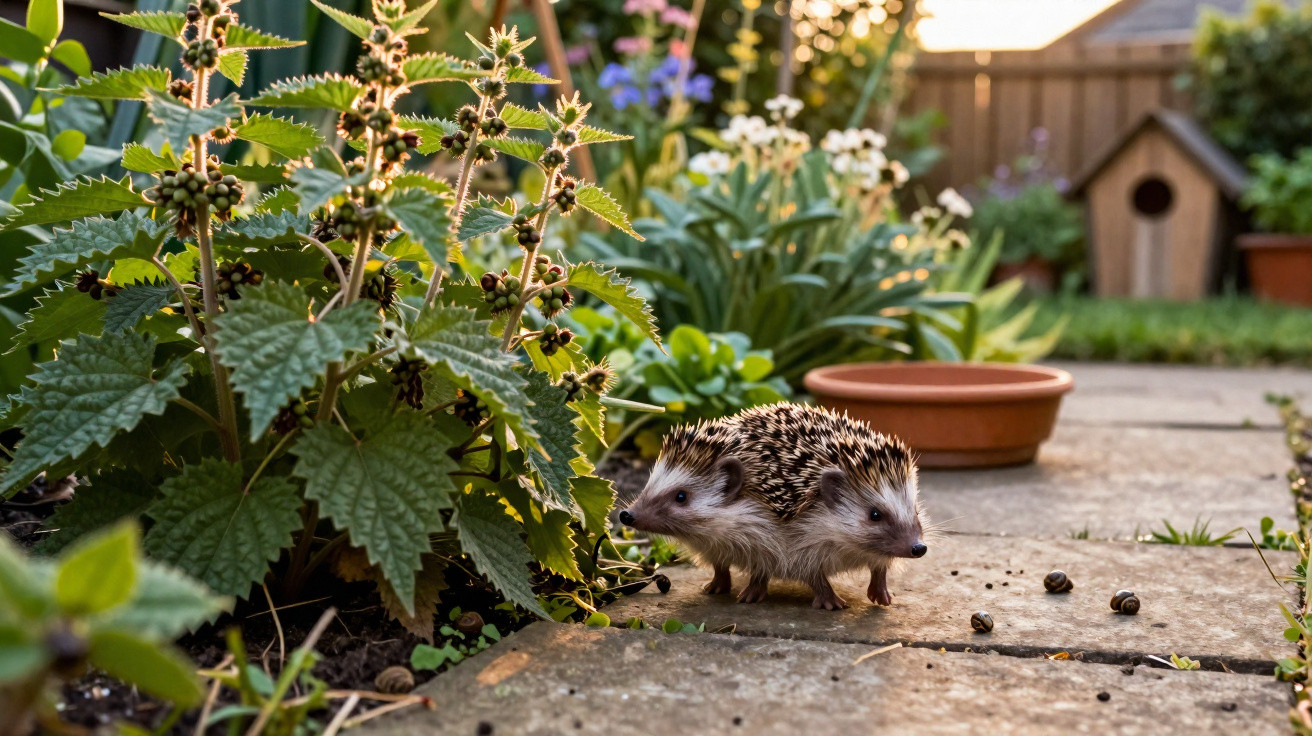
Pulling out every nettle on autopilot doesn’t just undermine your own crop; it also harms one of the garden’s most valuable allies: the hedgehog. In particular, the modest, low-growing nettle varieties can give these spiky insect-hunters cover and food - and they can noticeably cut down slugs and other unwanted visitors.
Why nettles are so irresistible to hedgehogs
Small nettles form a dense, defensive patch of greenery. Annoying for us, but a real stroke of luck for hedgehogs. The stinging hairs along the stems deter predators, creating a prickly thicket where a hedgehog feels well protected.
"A clump of nettles works like a natural protective bunker for hedgehogs - cool, safe and avoided by predators."
Among the stems, a hedgehog can find:
- Shelter from cats, martens and birds of prey
- Shady, cooler spots on hot days
- Quiet corners to raise its young
At the same time, nettles act as a beacon for insects. Aphids, caterpillars and all sorts of larvae gather there in huge numbers. For a hedgehog, it’s like an all-you-can-eat buffet: it rummages through the plants and picks up plenty of protein.
There’s also a behaviour nature watchers regularly report: some hedgehogs deliberately rub themselves against nettles. Specialists suspect this helps them shift parasites or stimulate the skin - similar to birds that sit in ant nests to “delouse” themselves.
The hedgehog: the underestimated pest-killer in the veg patch
Anyone who grows vegetables will know the disappointment: lettuce disappears, strawberries are nibbled, newly sprouting beans get chewed back. Very often, a slug outbreak is behind it all - and that’s exactly where the hedgehog really comes into its own.
What it most commonly eats includes:
- Slugs (both shell-less slugs and snails)
- Caterpillars and various larvae
- Grubs and worms
- Beetles and other insects that burrow in the soil
"A single hedgehog can eat thousands of slugs and pests over the season - with no poison and no effort."
In practice, that makes it a biological pest control method - just neater and completely free. If you encourage hedgehogs, you’ll need far less spraying and can leave slug pellets on the shop shelf. That’s kinder not only on your budget, but also on birds, pets and children playing in the garden.
How to turn your garden into a hedgehog haven
The key change is simple: stop trying to keep everything “tidy”. A flawless, closely mown lawn and meticulously cleared borders offer hedgehogs next to nothing.
A small nettle corner is more than enough
No one needs to let the whole garden go wild. It’s enough to leave a strip or a corner deliberately untouched and allow nettles to grow there. A spot at the edge of the plot is ideal - part shade, and not right next to the patio.
That area becomes even more appealing if it sits alongside natural features such as:
- A small pile of logs or brushwood
- A heap of leaves left in place over winter
- A loose hedge that isn’t constantly trimmed
This gives a hedgehog somewhere to rest, hibernate and retreat if threatened. The nettles provide a “security roof” and an insect kitchen in one.
Without gaps, hedgehogs get trapped
Many properties are now divided by solid, tight fencing. For hedgehogs, those boundaries can be as impassable as walls. Yet they need several gardens as their territory, otherwise they struggle to find enough food and mates.
The fix is surprisingly straightforward: create a hole of about 13 centimetres in diameter at the bottom edge of a fence or wall. That’s enough space for a hedgehog to squeeze through, while dogs generally still can’t.
"A single small opening in a fence can decide whether a hedgehog starves or finds enough food."
It works best when neighbours join in too. That way, a real “hedgehog network” forms through the gardens of the entire street.
Shelter and water - but please forget the milk myth
If you want to offer extra support, you can build a simple hedgehog house. A few planks, a weatherproof cover and an entrance that doesn’t face into the prevailing wind are sufficient. Inside, dry leaves or hay are all that’s needed.
Water is also crucial. In summer, a shallow dish of fresh water - topped up daily - can quickly become a lifeline. Milk, however, should be avoided completely: hedgehogs don’t tolerate it well and it can cause severe digestive problems.
Other hazards include:
- Slug pellets and insect poisons
- Leaf blowers/vacuums that destroy hiding places
- Open light wells and steep-sided ponds with no way out
Nettle: from “weed” to multi-purpose plant
This supposedly troublesome plant can do far more than simply attract hedgehogs. Gardeners have used nettles for generations to strengthen plants and improve the soil.
Typical uses in the garden:
| Use | Benefit |
|---|---|
| Nettle liquid feed | Liquid fertiliser for heavy feeders; helps plants resist disease |
| Nettle mulch | Adds nutrients and helps the soil retain moisture |
| Food plant for butterfly caterpillars | Supports insect diversity and, in turn, birds |
Nettles also earn their place in the kitchen. Young shoots work well in soups, pestos or as a spinach alternative. Once heated, the nettle loses its “sting” and tastes mild, slightly nutty. If you forage, wear gloves and only pick from clean sites - away from roads and popular dog-walking routes.
How a native herb boosts biodiversity
Nettles bridge two worlds: the maintained garden and the wildness that often gets pushed out. Clumps of stems and leaves provide shelter, food and breeding sites for countless species - from spiders and butterflies to hedgehogs.
"A few square metres of “chaos” in the garden can become a lifeline for many animals - with very little effort from people."
Especially in built-up areas where hedges vanish and gravel gardens spread, every patch left natural becomes more valuable. By allowing small wild zones, you help beneficial wildlife hold on: hedgehogs, birds, frogs and solitary bees.
In practical terms, it means not every corner has to look perfect. A wilder area with nettles, leaves and deadwood brings the garden to life. The pay-off is fewer pests, more birdsong, and the satisfaction of doing something for nature right outside your front door.
If you want to start this season, simply stop weeding out every nettle. Leave a small patch, open a passage in the fence, put out water - that’s often all it takes before the first hedgehogs appear. And once they do, a whole living network of helpers tends to follow, making the garden more stable and resilient over the long term.





Comments
No comments yet. Be the first to comment!
Leave a Comment