
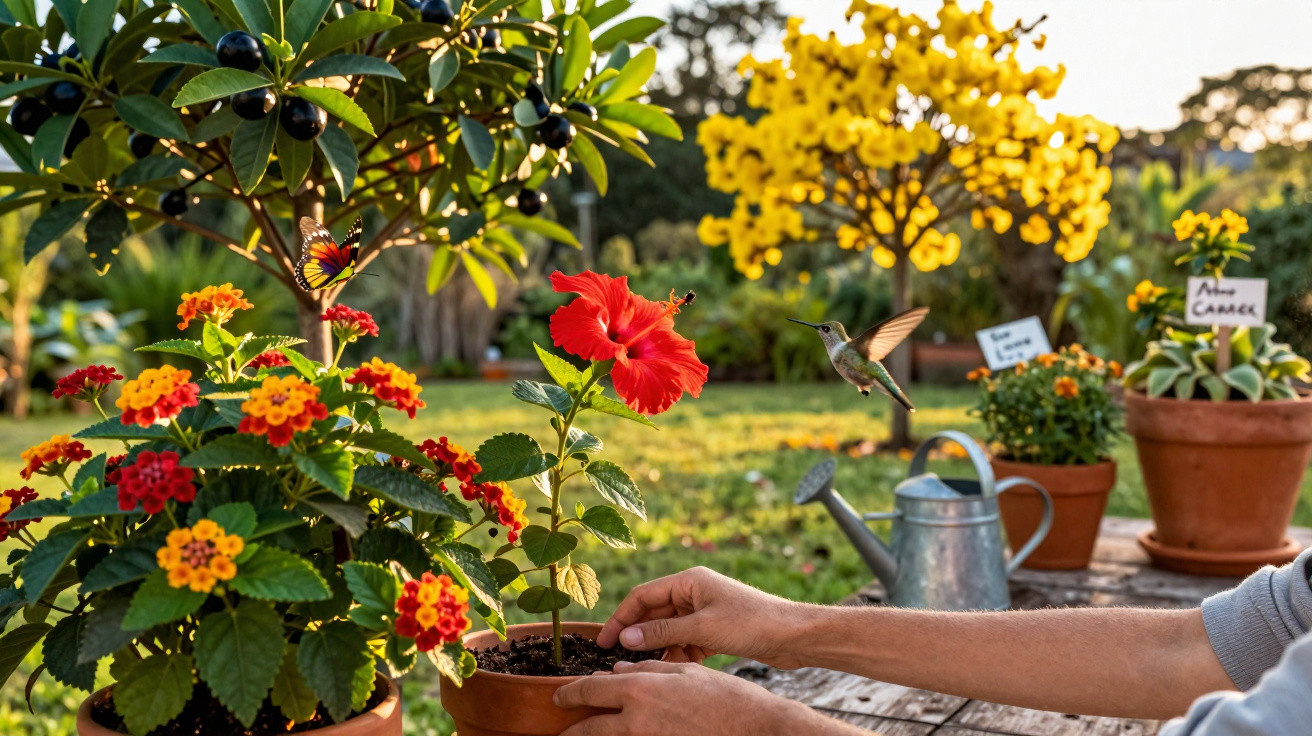
Turning a garden into a haven for birds and butterflies largely comes down to the plants you choose. Some species provide generous nectar, tempting fruit and sheltered places to rest, creating a setting where wildlife can feed and stay safe. With a few considered selections, even small spaces can see regular visits from thrushes, tanagers, hummingbirds and many kinds of butterflies, bringing natural processes closer to everyday home life-things we often only notice in parks or the countryside.
Which plants are most suitable for attracting birds and butterflies?
In ecological landscaping, five species stand out for drawing wildlife: red shrimp plant (Justicia brandegeeana), lantana (Lantana camara), hibiscus (Hibiscus rosa-sinensis), Rio Grande cherry (Eugenia involucrata) and yellow ipê (Handroanthus albus or H. chrysotrichus). Used together, they supply nectar, pollen, fruit and shelter at different heights.
The red shrimp plant is especially popular with hummingbirds because its spike-shaped blooms are rich in nectar and, in warm climates, can appear for much of the year. Lantana produces colourful flower clusters that bring in butterflies and also sets small berries enjoyed by fruit-eating birds. Hibiscus, with its large, conspicuous flowers, acts as a feeding stop for hummingbirds and pollinating insects.
Watch a video on the YouTube channel Vila Nina TV showing 6 ideal plant species for attracting butterflies:
How should you arrange plants in the garden to support wildlife?
To help the garden work as an active place for regular visits, it is worth arranging species in layers, echoing the structure of a small woodland edge. That way, different birds and insects can find food and cover at varied heights, keeping the space more lively throughout the day.
- Upper layer – yellow ipê, providing a canopy for perching, protection and light shade.
- Middle layer – hibiscus and Rio Grande cherry, offering flowers and fruit at a height birds can easily reach.
- Lower layer – red shrimp plant and lantana, forming dense planting that attracts butterflies and hummingbirds closer to the ground.
How can you grow red shrimp plant, lantana and hibiscus with minimal upkeep?
Red shrimp plant does best in partial shade or dappled sunlight, in soil that stays slightly moist and is rich in organic matter. Water regularly without waterlogging, and a light annual prune keeps it compact while encouraging fresh blooms, particularly in spring.
Lantana is hardy, thrives in full sun, copes with short dry spells and adapts to free-draining soils. Hibiscus needs direct sun for much of the day, fertile soil and consistent watering; it responds well to organic feeding every three months and to pruning at the end of winter to refresh growth and boost flowering.
How do Rio Grande cherry and yellow ipê keep the garden more alive all year round?
Rio Grande cherry is a medium-sized shrub or small tree that suits residential gardens when planted in full sun with deep, moist soil. After a few years it begins to fruit, drawing thrushes, tanagers and other birds that tend to appear more often as the fruit ripens.
Yellow ipê requires full sun and well-drained soil, with more regular watering only during its initial establishment phase. Its showy flowering in late winter or early spring provides pollen and nectar for bees and butterflies, and it also gives insect-eating birds a place to perch-helping the garden function as a small ecological corridor between urban areas and fragments of native vegetation.
Comments
No comments yet. Be the first to comment!
Leave a Comment