
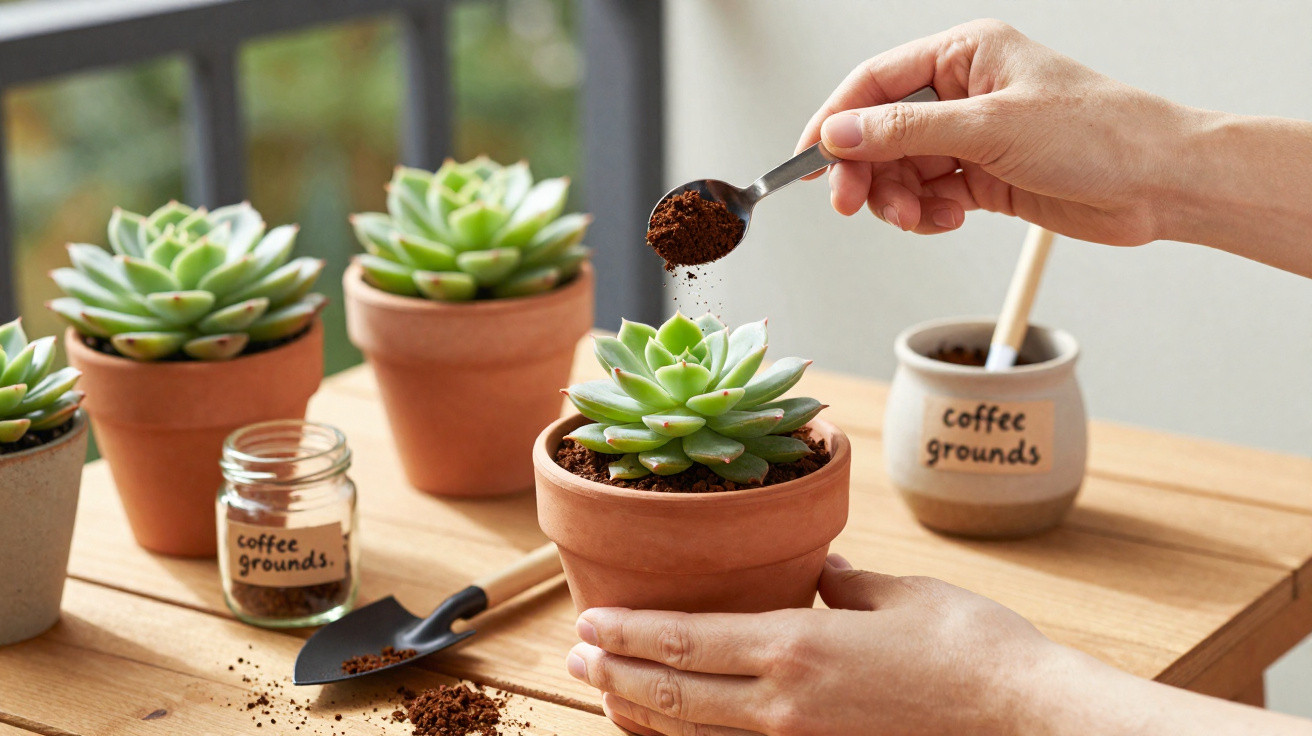
Adding coffee grounds to a succulent pot can slightly enrich the growing medium with a small dose of organic matter, but used incorrectly it causes more harm than good. These plants need a light mix, a drying period between waterings, and fast drainage; too much coffee grounds can compact the soil, hold moisture, and encourage root rot. The key is to use a tiny amount, always fully dry and mixed into the compost, never laid in a thick layer on top of the pot.
What are coffee grounds for in succulents?
Coffee grounds contain organic matter and small amounts of nutrients that can feed soil micro-organisms. In succulent pots, they only really make sense when the growing medium is extremely poor-too mineral, or with no organic fraction at all.
Any benefit tends to be subtle. Coffee grounds do not replace a proper succulent mix, and they will not fix a pot with no drainage hole. At best, they act as a light supplement to support soil life, as long as they do not increase moisture around the roots.
When can coffee grounds harm the plant?
Coffee grounds are damaging to succulents when used damp, in large quantities, or spread as a sealed top dressing. They can form a crust on the surface, reduce water and air penetration, attract fungi, and keep the potting mix wet for longer.
The main risks show up in these situations:
- A pot with no drainage holes in the bottom.
- A heavy mix with lots of ordinary soil and too little coarse sand or mineral material.
- Grounds applied while still wet after brewing coffee.
- A dark layer covering the entire surface of the pot.
- Frequent watering before the compost has dried out completely.
What is the right amount to use?
The amount should be minimal. For a small succulent pot, use just a pinch of dry coffee grounds. For medium pots, half a teaspoon is already enough. Any more than that can change the texture of the mix and make it dense.
Before applying, spread the grounds on a plate and let them dry thoroughly. Then work them into the top layer of the compost, keeping them away from the stem and without covering lower leaves. The aim is to incorporate them, not to create a “coffee lid” over the pot.
How often can you apply it without acidifying the soil?
Coffee grounds should not be added weekly to succulent pots. One application every 60 to 90 days is more than enough to test how the plant responds. In very small pots, the interval should be longer still.
To use them safely, follow this routine:
- Use only dry grounds and in a very small amount.
- Mix into the surface compost without pressing down and compacting the mix.
- Water only a few days later, if the pot is dry.
- Do not mix grounds with milk residues, sugar, or sweetened coffee.
- Stop using them if mould appears, there is a strong smell, or the leaves become soft.
What signs show too much coffee grounds in the pot?
Too much shows up when the succulent starts to feel soft, develops translucent leaves, a darkened base, or when the compost takes many days to dry. These are signs of trapped moisture, compaction, or the early stages of rot-not a lack of fertiliser.
Coffee grounds tend to work better for plants that tolerate more organic matter, such as roses, hydrangeas, ferns, pothos, and some potted herbs in large containers. With succulents, use needs to be rare and almost symbolic: a free-draining mix, little water, and good light remain more important than any homemade fertiliser.



Comments
No comments yet. Be the first to comment!
Leave a Comment