
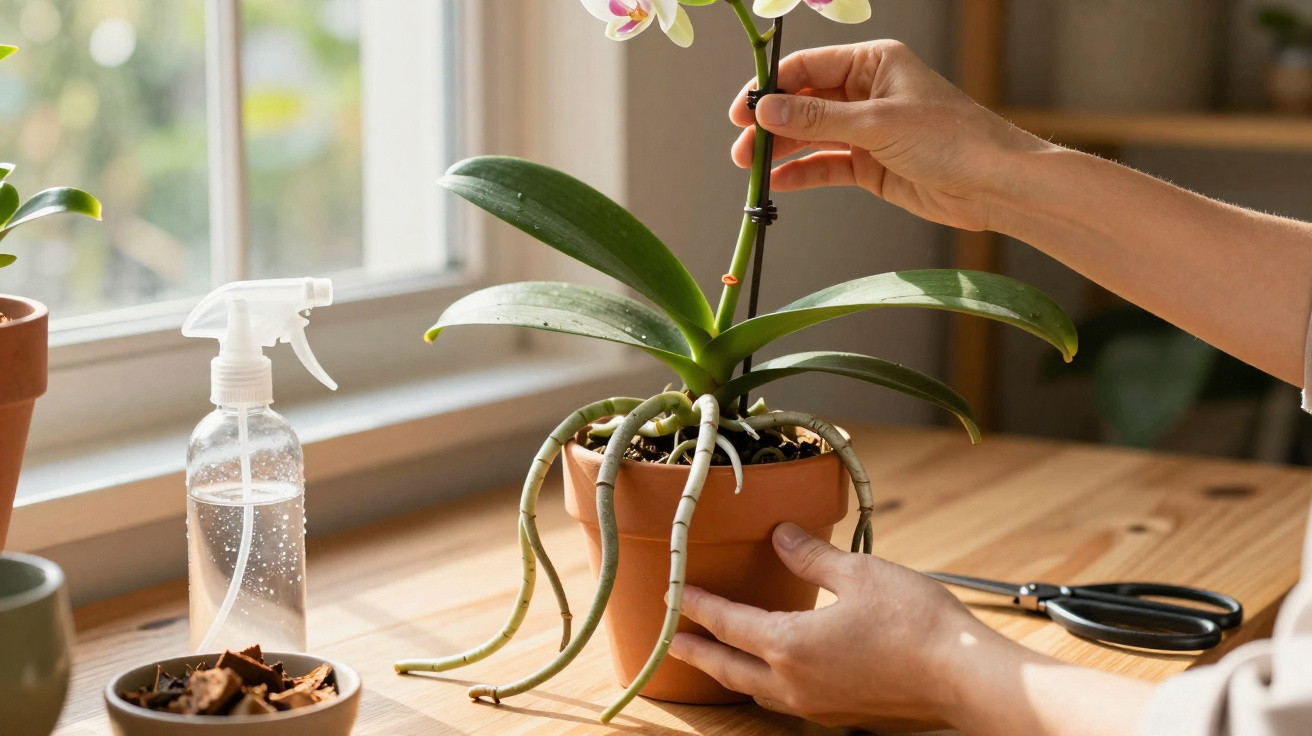
Seeing an orchid produce aerial roots outside the pot is usually a natural sign of growth, especially in epiphytic species such as Phalaenopsis. These roots help the plant take in moisture, exchange gases and anchor itself to surfaces, much as it would on tree trunks in the wild. The key detail is how they look: firm, pale or greenish roots suggest active growth; hollow, soft or dark roots need attention.
Why does an orchid produce aerial roots?
Epiphytic orchids were not designed to live buried in ordinary soil. In nature, many grow attached to trees, with roots exposed to the air, taking in moisture from rain, enjoying ventilation, and benefiting from organic debris that washes down the branches.
In a pot, aerial roots appear because the plant is still following that natural habit. It is looking for air, indirect light, ambient humidity and points of support. For that reason, seeing roots emerge from the sides does not automatically mean the orchid is “escaping” the pot.
Is this behaviour a sign of health or a problem?
In most situations, aerial roots indicate healthy development. When the root tip is green, silvery or pale and continues to extend, the orchid is showing it has the energy to form new structures.
Concern arises when many new aerial roots appear while the potting medium is old, compacted, smells unpleasant or stays wet all the time. In that scenario, the plant may be reaching outside the pot for oxygen it cannot access within it.
How can you tell whether aerial roots are healthy?
Healthy aerial roots are typically firm to the touch and have an outer layer called velamen, which looks silvery when dry and turns greenish when hydrated. This layer helps the root absorb water quickly and protects it between waterings.
Check these signs before deciding what to do:
- A firm, silvery or green root indicates good activity.
- A green or pale tip signals active growth.
- A wrinkled root may point to lack of hydration or compromised internal roots.
- A soft, dark root or one with a bad smell suggests rot.
- A potting medium that is crumbly, waterlogged or poorly ventilated indicates repotting is needed.
What should you do with roots outside the pot?
Do not cut healthy aerial roots. They contribute to hydration, respiration and the orchid’s stability. Trimming them for appearance reduces the plant’s active surface area and can delay new growth, recovery and future flower spikes.
The right care is straightforward:
- Mist aerial roots only on dry days and when there is good airflow.
- Avoid leaving water sitting in the plant’s crown.
- Do not force roots back into the pot, as they snap easily.
- Use a proper orchid mix, such as bark, charcoal or other very airy material.
- Remove only roots that are dead, hollow or rotten, using a clean tool.
How does this affect the orchid’s flowering?
Well-maintained aerial roots help an orchid support leaves, new shoots and flower spikes because they increase the plant’s ability to take up moisture and stay active. They do not make flowers appear on their own, but they show the plant has the structure to use light, water and nutrients more efficiently.
Flowering depends on the whole setup: firm roots, an airy potting mix, watering without waterlogging, filtered brightness and light feeding at the right stage. When the roots outside the pot are green, firm and growing, the orchid is demonstrating vitality; your job in cultivation is to protect that structure, not hide it or cut it.


Comments
No comments yet. Be the first to comment!
Leave a Comment