
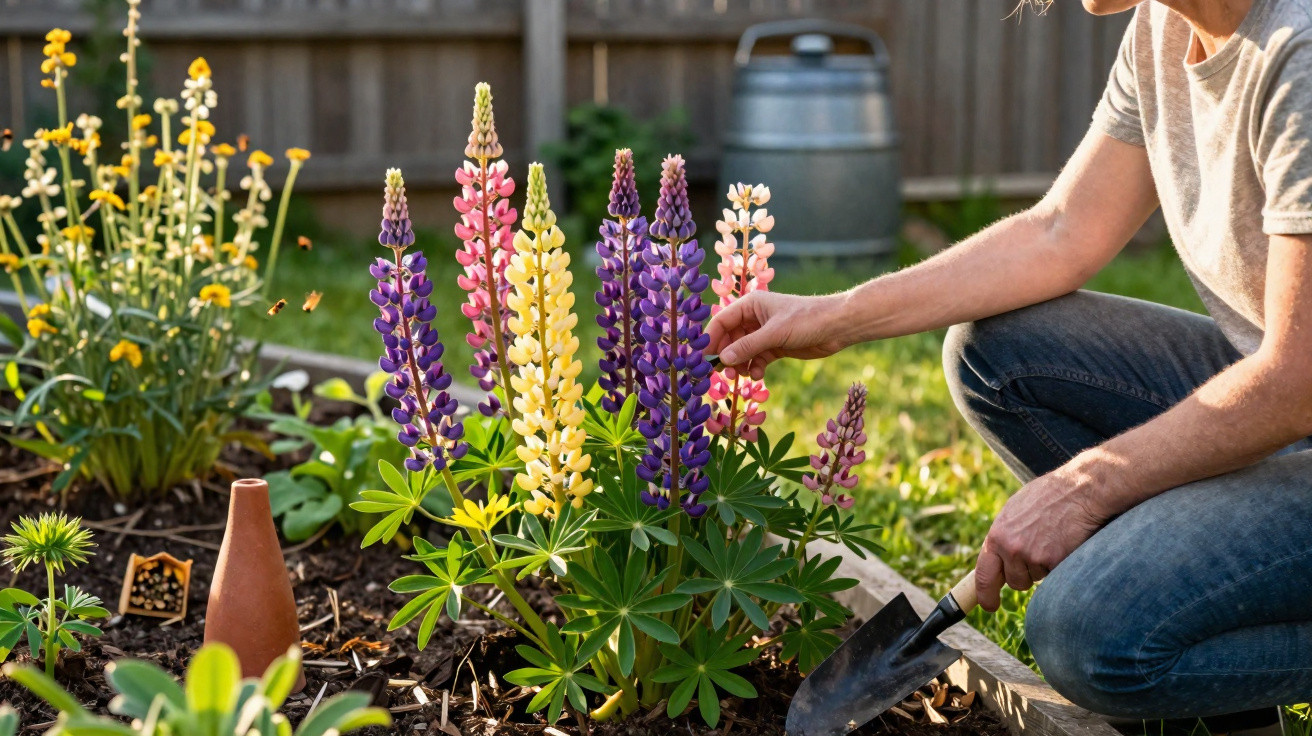
Among the various species used in home gardens, lupin has been taking on a bigger role as an option for anyone who wants a colourful space that is more sustainable and less reliant on chemical products, bringing together good hardiness, showy blooms, attraction for pollinators and a gradual contribution to improving the soil.
What is lupin and what are its main characteristics?
Lupin (Lupinus polyphyllus) is a perennial legume-part of the same family as beans and peas-that forms clumps with leaves divided into narrow segments, resembling an open hand. Its standout feature is the elongated, spike-like flower heads, which can exceed 1 metre in height and appear in large numbers.
The flowers come in shades of blue, purple, pink, red and white, as well as two-tone combinations, creating striking focal points in the garden. In areas with mild weather, lupin can remain in the same spot for several years, as long as it receives basic care and grows in suitable soil.
Why is lupin considered hardy and sustainable in the garden?
Lupin is regarded as hardy because it contains alkaloids, such as lupanine, which act as a natural defence against certain sap-sucking insects, lowering the need for synthetic pesticides. The plant also copes with relatively poor soils, provided they are free-draining, and it performs well in sunny borders.
Another key feature is nitrogen fixation by bacteria associated with the roots, which enriches the surrounding soil and supports the recovery of tired beds. Its abundant flowering attracts bees, butterflies and other pollinators, encouraging biodiversity and ecological balance in domestic gardens and landscaped areas.
What basic care does lupin need to grow well?
For lupin in the garden to reach its ornamental potential and retain its natural resilience, it is important to get the soil, light and watering right. The species prefers acidic or slightly acidic growing media that are well drained and rich in organic matter, and it may require pH adjustment in very alkaline ground.
Below are some practical steps that make it easier to keep lupins thriving through the seasons:
- Watering: keep moisture moderate, allowing the soil to dry slightly between waterings, without waterlogging.
- Soil: use an acidic, loose, free-draining medium enriched with compost or humus.
- Light: prioritise full sun; in very hot areas, provide partial shade during the strongest hours.
- Ventilation: choose airy positions to reduce the risk of fungal problems.
- Tidying prune: remove spent flower spikes to encourage new flowering in the same season.
How to include lupin in a more sustainable and interesting garden?
Using pest-resistant lupin strategically in mixed borders helps reduce chemical interventions, because when it is combined with other hardy species it creates planting schemes that are more tolerant of insects and diseases. In gardens with a naturalistic feel, planting in irregular groups produces swathes of colour that evoke meadow landscapes, with strong ecological dynamics.
One practical approach is to place lupin towards the back or centre of a border due to its height, keeping shorter flowers at the edges and weaving in species that bloom at different times. In this way, you can maintain colour for longer, support pollinators and keep an outdoor space that is more balanced, functional and visually striking over the years.

Comments
No comments yet. Be the first to comment!
Leave a Comment