
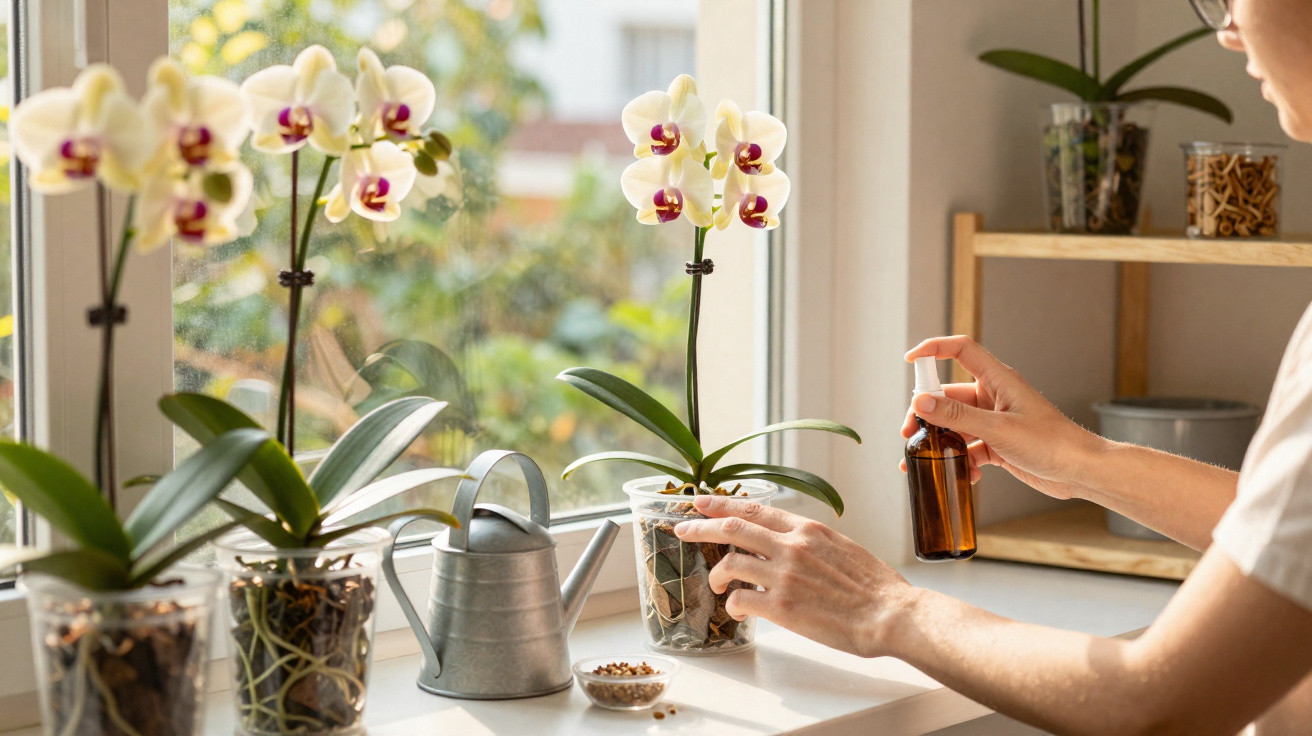
Growing flowering plants at home can feel daunting, especially when you’ve just been given a special gift. Getting to know the habits of each species is the key to keeping it healthy and thriving for a long time.
How can you stop orchids dropping their flowers soon after you receive them?
A very common mistake is leaving the original pot inside tight decorative wrapping for days or weeks. This traps heat and too much moisture, which speeds up the early loss of the beautiful petals and can seriously undermine the plant’s overall condition.
The best approach is to take the orchid out of these wrappings as soon as you’ve taken the first photos of your present. When air can move freely around the plant’s structure, it settles into its new home more easily and avoids the stress that quickly ruins flowering.
To help the plant cope well indoors, pay close attention to these immediate protections:
- Remove wrapping: Take off decorative plastics as soon as the plant arrives.
- Air circulation: Let air pass freely around the roots and leaves.
- Keep it near a window: Place the pot close to the glass so it receives bright light.
- Keep the original pot: Leave the plant in the grower’s container for up to four years.
- Smell test: Only repot if the growing medium develops a noticeably sour smell.
Why is direct sunlight so important for these plants?
Despite what many people assume, this attractive plant needs some direct natural light in order to bloom again with full strength. If it receives no sun at all, the plant’s internal structure weakens and it struggles to produce fresh, healthy new growth.
The most suitable place is right by the glass of a bright window in your home. A few minutes of gentle morning sun, or mild late-afternoon sun, supports strong leaf development and long-lasting vitality.
To see practical guidance on where to place your pots to get the right light, watch the explanations on the Minhas Plantas YouTube channel.
How do you know the exact moment to water the growing medium properly?
Incorrect watering is the leading cause of death for these species when they’re grown at home by beginners. Although orchids like moisture around their roots, water sitting at the bottom of the pot leads to fast, fatal root rot.
The Finger Test
Physical check of the growing medium
Push the tip of your finger down into the middle of the growing medium to check the true internal moisture before watering again.
If your finger comes out dirty or with particles sticking to it, the plant still has enough hydration and watering should be postponed straight away.
Forget old fixed “rules” about watering on certain days, because local conditions vary greatly. Checking by touch helps you avoid both severe underwatering stress and the harmful build-up of excess moisture inside the pot.
Follow these effective watering guidelines:
- Water thoroughly until it runs out through the drainage holes at the bottom.
- Wet the foliage completely, focusing on the underside of the leaves.
- Avoid wetting open flowers directly to help them last longer.
What care is needed to fertilise effectively?
Regular nutrition matters because a home environment doesn’t provide the same natural organic materials found in forests. Without steady replacement of the right nutrients, potted orchids can become severely underfed and stop flowering.
Using the complete organic fertiliser sold as bokashi addresses this need in a simple, safe way. Applying one teaspoon monthly, placed inside a porous sachet, allows a gradual release of healthy plant “food”.
Use this method to feed your orchid at home:
- Put the recommended amount of crumbly fertiliser into a small protective sachet.
- Tie the sachet and place it in one corner of the pot on top of the bark.
- Water directly over the sachet so essential nutrients are released at each watering.
When is it actually necessary to change the grower’s pot?
Many beginners mistakenly think they must replace the original container immediately after buying the plant. In reality, these species can do perfectly well in the plastic pot supplied by the grower for up to four years in a row, with no structural issues.
Only change it if the growing medium gives off an unpleasant smell, similar to sour beans left in the fridge. To protect root health at home, make sure you understand the right way to water so root rot is prevented for good.
Comments
No comments yet. Be the first to comment!
Leave a Comment