
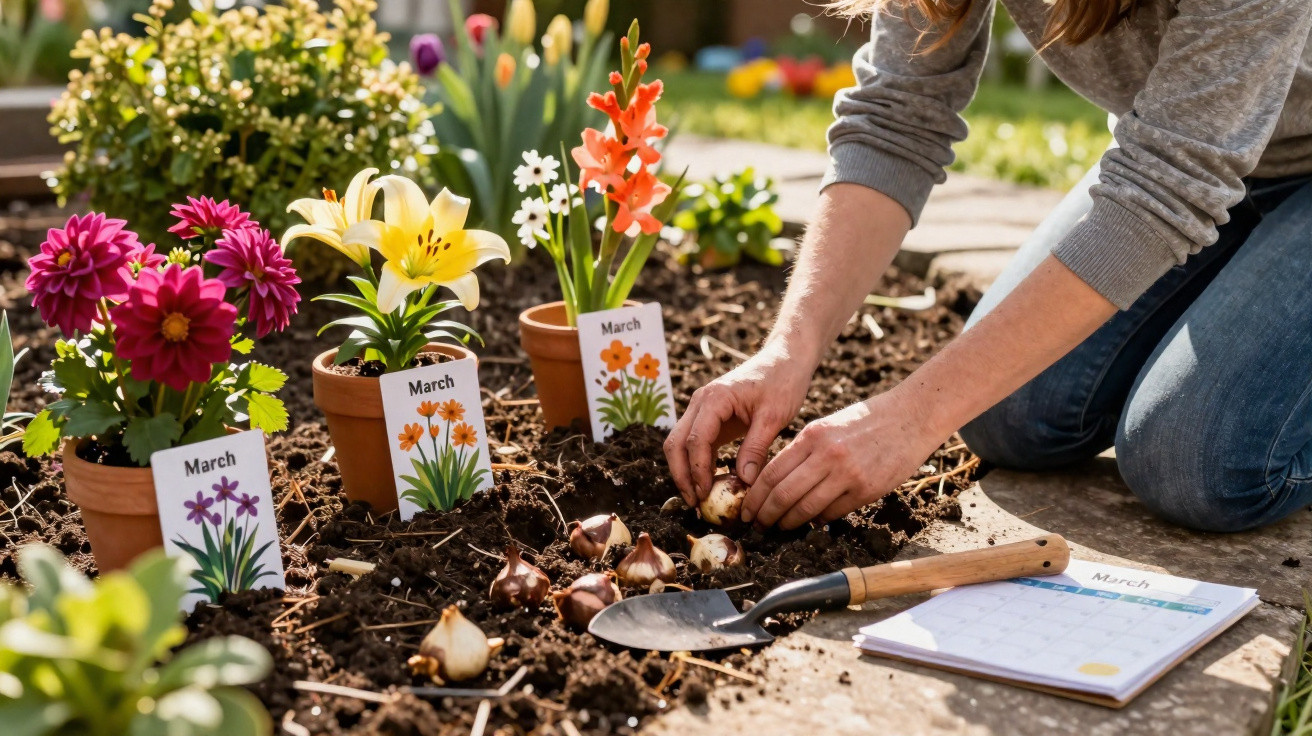
With four carefully chosen bulb and tuber plants, you can bridge that exact gap.
When daffodils and tulips finish, the mood in the garden often drops overnight. Where there was colour just days ago, you’re suddenly left with nothing but green. If you simply wait it out, you’ll be waiting a while: it’s only when roses, perennials and summer bedding finally get going that the garden feels lively again. Gardeners who put certain bulbs and tubers into the ground in March sidestep this lull and bring flowers into summer noticeably earlier.
Why March sets the timetable for summer flowering
For a garden that keeps flowering, timing is the decisive factor. Many summer-flowering bulbs and tubers need weeks to sprout, establish roots and form buds. If they only go in at the end of April or in May, the first blooms can easily slip into high summer.
"Planting in March brings flowering forward by several weeks – turning a bare June into a colourful start to summer."
In many regions, the right window begins as soon as the worst frosts have passed and the soil has warmed a little. That is usually from early to mid-March. That’s exactly when it pays to reach for four groups of plants:
- Dahlias for rich colour from early to late summer
- Begonias for shady corners and balconies
- Lilies for structural, scented highlights
- Peonies as a long-term investment for springs to come
Together, they make sure that once the spring bulbs are over, you don’t face weeks where nothing happens.
Dahlias: the fast track to early summer flowers
Dahlias are among the most popular summer bloomers full stop. They grow from tuberous root clumps and, from June right through to October, produce fresh flowers almost continuously-provided they get off to an early start.
Starting dahlias early in March
The tubers cannot tolerate frost. Putting them straight into the border too soon can backfire if temperatures drop sharply again. A two-stage approach is therefore the safest option:
- In March, place the tubers into pots filled with loose compost, covering them only lightly.
- Keep the pots bright and frost-free, for example in a greenhouse, conservatory, or a sheltered, light spot in a garage.
This lets the plants form roots and the first shoots without stress. From mid-May, once the risk of frost has passed, they can be planted out into the border with a strong head start. That advantage usually brings flowering forward noticeably-often starting in June.
Dahlias do best in fertile, free-draining soil and a position in sun through to light partial shade. Regular watering and an occasional feed in summer are rewarded with large, intense blooms. If you remove spent flower heads, the plants keep producing new buds.
Begonias: a lifeline for shady balconies and north-facing spots
A lack of full sun doesn’t mean you have to give up on flowers. Tuberous begonias thrive where other plants struggle: in partial shade to shade, on north-facing balconies, or in sheltered corners of the courtyard.
How to grow begonias from tubers successfully
In March, set the flat tubers into trays or pots with the hollowed side facing upwards. The compost should be loose, rich in humus and evenly moist, but never waterlogged. Cover the tubers only lightly-or even leave them just exposed-until the first shoots appear.
A bright, frost-free location is ideal. Once the shoots begin to grow and temperatures stay reliably mild, you can move the plants (still in their pots) out onto the balcony or patio. They will flower all summer-so long as they don’t dry out.
"Begonias close the flowering gap in shady areas where classic summer bedding rarely brings much colour."
Important: tuberous begonias are sensitive to cold. In autumn, lift the tubers, let them dry in an airy place, and then store them frost-free over winter. That way, they can return year after year.
Lilies: elegant, fragrant highlights between gaps in the border
Lilies add a different dimension to planting schemes. They grow tall, carry striking (sometimes powerfully scented) flowers, and create strong vertical lines in beds and borders. Planted among lower perennials and ground cover, they bring contrast and drama.
What matters when planting lilies
Plant the bulbs in March as soon as the soil is workable. A few simple rules reduce losses:
- Planting depth: two to three times the bulb’s height
- Position: sunny to partially shaded, not too hot, not too wet
- Soil: free-draining, ideally loosened with a little sand or fine grit
Depending on the type, many varieties flower from May through to August. By combining early- and late-flowering varieties, you can extend the season so gaps in the border are kept to a minimum. Another plus: lilies make excellent cut flowers for a vase.
Peonies: plant now, be amazed in two years
Peonies are enduring garden favourites, but they don’t suit the impatient. Planting them in March is planning years ahead-yet the reward can last a very long time. Once established, they often remain in the same spot for decades and improve year after year.
Long-term planning for abundant spring display
Whether you choose herbaceous peonies or tree peonies, both prefer deep, humus-rich soil and a site from sun to partial shade. The key is not to plant them too deeply. With herbaceous peonies, the buds should sit just below the soil surface; otherwise, the plant can quickly refuse to flower.
"Peonies are considered ‘long-distance runners’ in the garden – restrained at first, then impossible to imagine without."
In the first two to three years, new plants often look underwhelming, with few flowers-or none at all. If you give them time, you’ll later be rewarded with large, sometimes strongly scented, rounded blooms that define late spring and early summer.
How to close the flowering gap with intent
These four types of plants each play a different role across the year. Combine them thoughtfully and there’s barely a moment without colour. One possible planting rhythm for a border looks like this:
| Period | Main flowering focus |
|---|---|
| March – April | Spring bulbs (daffodils, tulips, crocuses) |
| May – June | First lilies, peonies, early dahlias |
| June – August | Dahlias, begonias, various lilies |
| September – October | Late dahlias, some begonias, autumn perennials |
Planting in March sets this sequence up on time. If you only get going at the end of April, you often lose June as a flowering month because the plants simply aren’t far enough along.
Practical tips for a strong result
A handful of straightforward habits make the effort worthwhile:
- Check bulbs and tubers before planting-discard anything soft or mouldy.
- Never plant into wet, heavy soil; mix in a little sand to improve drainage.
- Consider eventual height when planting: low growers to the front, tall plants such as lilies and many dahlias towards the back.
- In pots and balcony boxes, ensure there’s enough compost volume, otherwise everything dries out too quickly.
If you’re not confident, start some tubers in pots as a trial and plant them out later. It also makes spacing easier, because you can already see the plants’ true size.
What many people underestimate: risks and opportunities in spring
March may sound like spring, but late frosts can still strike. Tubers in pots or shallow containers cool down quickly overnight. A simple horticultural fleece-or temporarily moving them into the garage-prevents damage. In the border, a thin mulch of leaves or grass clippings helps buffer the soil slightly.
At the same time, starting early brings another advantage: if you realise while planting that beds look bare or paths feel badly proportioned, you can still redesign. Perennials haven’t fully grown yet, and the space is still easy to read. Step by step, that’s how a garden develops that stays colourful from the first day of spring through to autumn-without weeks of dull in-between periods.

Comments
No comments yet. Be the first to comment!
Leave a Comment