
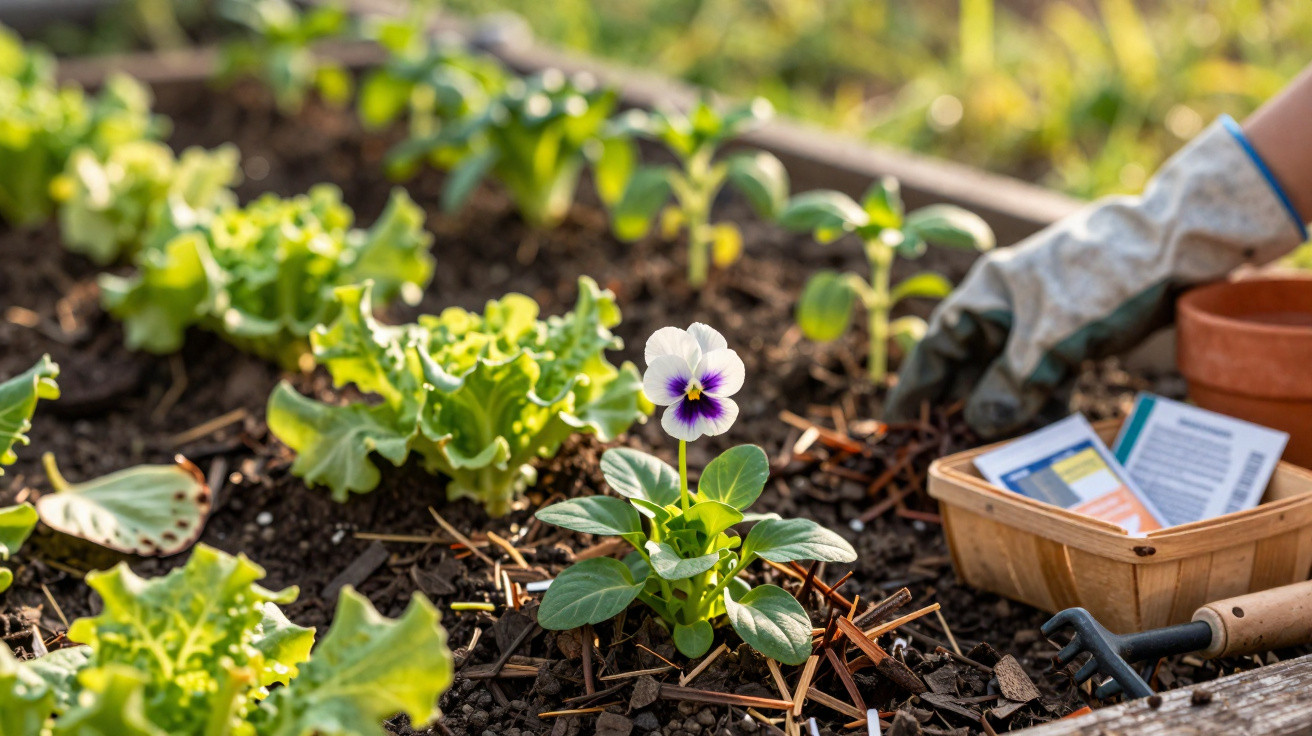
Plenty of home gardeners kick off March full of enthusiasm with tomatoes, courgettes and beans - only to wonder later why the delicate young plants end up weakened, chewed up or dead. It is not always down to bad weather or the wrong compost. Very often, what is missing is simply a “bodyguard plant” that takes the hit, diverts pests and still manages to bring in pollinators. That is exactly where nasturtium comes in.
Why March is the moment to get started
As soon as the first milder days arrive, the soil begins to warm, the sun has more strength, and beds start to dry out. If you only sow vegetables now, you miss a major opportunity - because companion plants also need time to establish so their protective effect can really work.
If you sow nasturtium at the same time as your first vegetables, it will develop alongside them. By late spring, when the first aphids and other sap-suckers appear, your bright companion plant is already in place - acting as a decoy, a barrier and a bee magnet.
Whoever sows nasturtium in March lays the foundation for a stable, almost chemical-free vegetable garden.
You can buy the seeds in any DIY store or garden centre for just a few pounds. One packet is often enough for several beds, window boxes or raised beds.
Nasturtium: the underestimated guardian in the bed
How this flower keeps pests away from your vegetables
In wildlife-friendly gardening, nasturtium is a classic “sacrificial plant”. It attracts certain pests almost irresistibly - especially black aphids. That is precisely why it is so useful.
- Aphids go for the lush leaves of nasturtium.
- As a result, they often leave beans, tomatoes, peppers and courgettes largely alone.
- The pests gather in one place where you can spot them easily.
- You can take targeted action there without having to treat the entire bed.
The result is that your vegetables stay more vigorous, grow more evenly and are less likely to become stressed. Instead of minor damage spread everywhere, the issue is concentrated in a few clearly defined spots - on the nasturtiums.
A “green insect hotel” right in front of you
Another advantage is that nasturtium does not just attract pests - it also draws in their natural enemies. Ladybirds, lacewings and parasitic wasps find plenty to eat on heavily infested leaves. With a bit of patience, part of the problem often corrects itself.
The nasturtium becomes a living trap: it gathers pests and at the same time provides food for beneficial insects.
This boosts biodiversity in the bed. A lively mix of prey and predators helps keep the system balanced - without sprays, without poisons, and without much effort.
A magnet for bees, bumblebees and more
An early food source when little else is flowering
In March and April, there is often not much in bloom, particularly in built-up residential areas. That is when nasturtium’s vivid flowers come into their own. They offer lots of nectar and pollen, are easy to see, and are simple for insects to access.
For bees and bumblebees, this means a quick energy boost after winter. For you, it means more pollinators in the garden just as the first fruit trees, berry bushes and later cucurbits begin to open their flowers.
More flower visits, better yields
Vegetables such as courgettes, pumpkins and cucumbers - as well as strawberries and many fruit trees - rely on pollination. The more often insects visit the flowers, the more reliably fruit will set.
- More pollinators in the garden
- A higher chance of full pollination
- Larger, more evenly shaped fruits
- Fewer “stunted” fruits or empty flowers
Think of your garden as a small network: tomatoes, beans and lettuces sit at the centre, while orange, yellow and red nasturtiums glow between them and around the edges. Every time a bee visits a nasturtium flower, the likelihood increases that it will also stop by your courgette or apple blossom later.
Where nasturtium delivers the biggest benefit in the bed
A colourful protective wall around your vegetables
One particularly effective approach is to sow nasturtium as a kind of flowering fence around your vegetable bed. Over time, the plants form a dense, colourful ring with several benefits at once:
- the first “point of contact” for incoming aphids
- a clear visual boundary for the bed
- shade at the bed edge so it dries out less
- a decorative frame that makes the productive garden feel more welcoming
If you have an allotment or a smaller terraced-house garden, this method creates a pleasant separation between the growing area and the lawn or path.
Nasturtium right among tomatoes and beans
It can be even more effective if you also push seeds directly between your vegetable rows. These pairings work especially well:
| Vegetable | Benefit of the combination |
|---|---|
| Tomatoes | Nasturtium draws aphids away, covers the soil and helps retain moisture. |
| Beans | Protection from black aphids, plus a colourful accent on supports. |
| Courgettes / pumpkin | More pollinators around the flowers, and less bare soil. |
| Lettuce | A little shade, which helps prevent lettuce bolting too quickly in summer. |
The broad, rounded leaves provide shade, keep the soil moist for longer and reduce capping and compaction during heavy rain. This creates a kind of living mulch.
How to sow nasturtium properly
A few simple steps are enough
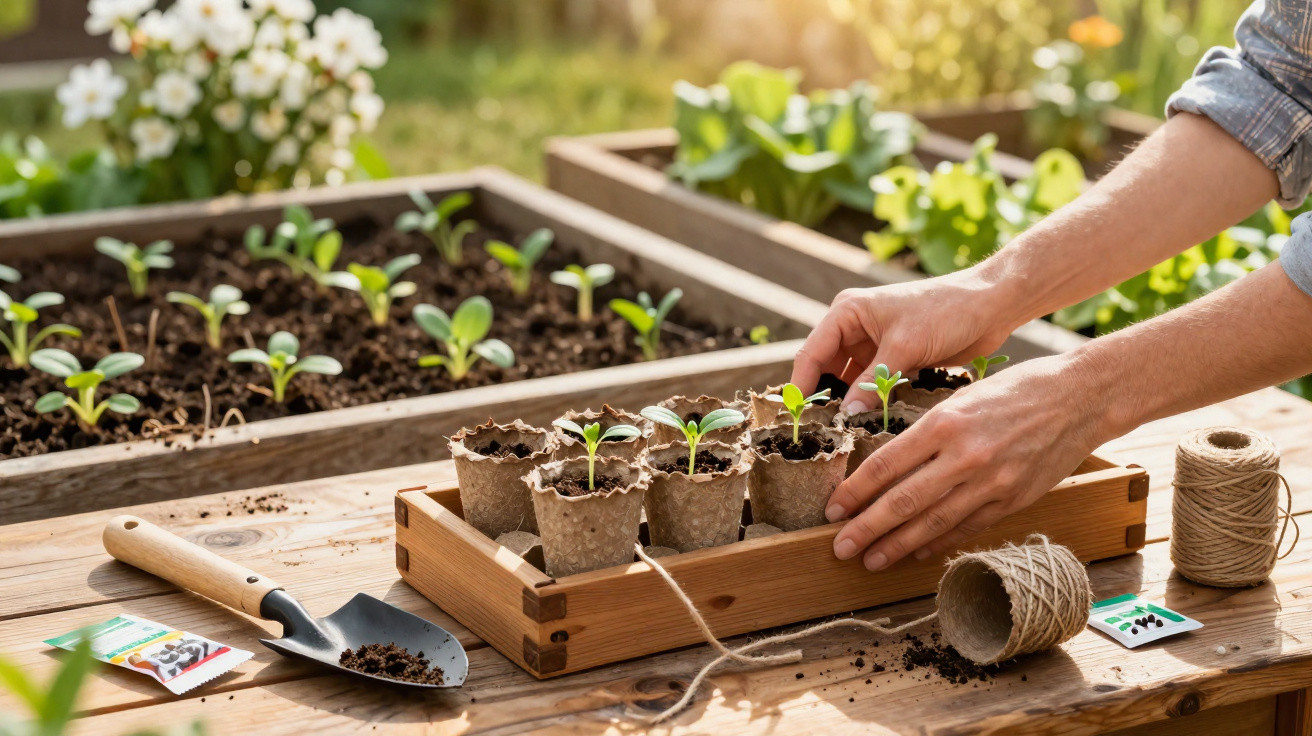
Nasturtium is one of the most straightforward plants you can grow. Even beginners usually succeed with it. You only need to stick to a few basics:
- Choose a site: Sun to partial shade, with no waterlogged soil.
- Loosen the soil: Lightly break it up with a rake or hand cultivator.
- Sowing depth: Place seeds about 2 to 3 centimetres deep.
- Spacing: Leave roughly a hand’s width between seeds.
- Water in: After sowing, water gently but thoroughly.
Germination typically happens within one to two weeks, depending on soil temperature. After that, the plants grow quickly and fill gaps in the bed in no time.
Care: little effort, big impact
Nasturtium does not ask for much:
- Water during dry spells, especially on a balcony or terrace.
- Avoid heavy feeding; otherwise you get lots of leaves but few flowers.
- If shoots are badly covered in aphids, simply cut them off and dispose of them.
- In autumn, pull up spent plants or dig them into the soil.
In milder areas, nasturtium often self-seeds. The following year, new plants may appear on their own in similar spots. If you would rather prevent that, clear beds in good time before too many seeds ripen.
Extra benefits: edible, attractive and educational
What many people overlook is that nasturtium is entirely edible. The leaves have a mild heat - like cress with a peppery note - and work well in salads or on sandwiches. The flowers make an edible garnish for summer dishes. Even the green seeds can be pickled like capers.
For families with children, it is an ideal plant. The seeds are large enough for children to sow easily, the results are quick, and the colourful flowers are impressive. At the same time, they learn in a hands-on way how beneficial insects and pests are connected.
What to watch for with companion planting and pests
Even though nasturtium catches a lot, it still pays to stay alert. If aphid pressure becomes extreme, it can help to remove badly affected plants entirely and put them in the general waste. You can then sow again, as long as the soil is warm enough.
In companion planting, nasturtium gets along with most vegetables. The main exception is placing it right next to very low-growing herbs such as thyme or lavender, as it can visually and physically overwhelm them if left there. In larger beds this is easy to avoid by positioning nasturtium along sunny edges.
For anyone wanting to avoid chemical sprays, this traditional cottage-garden plant quickly becomes a go-to tool. It combines protection, yield support and visual appeal in one inexpensive packet of seed - and a March sowing sets up a stable, lively vegetable garden through to autumn.
Comments
No comments yet. Be the first to comment!
Leave a Comment