
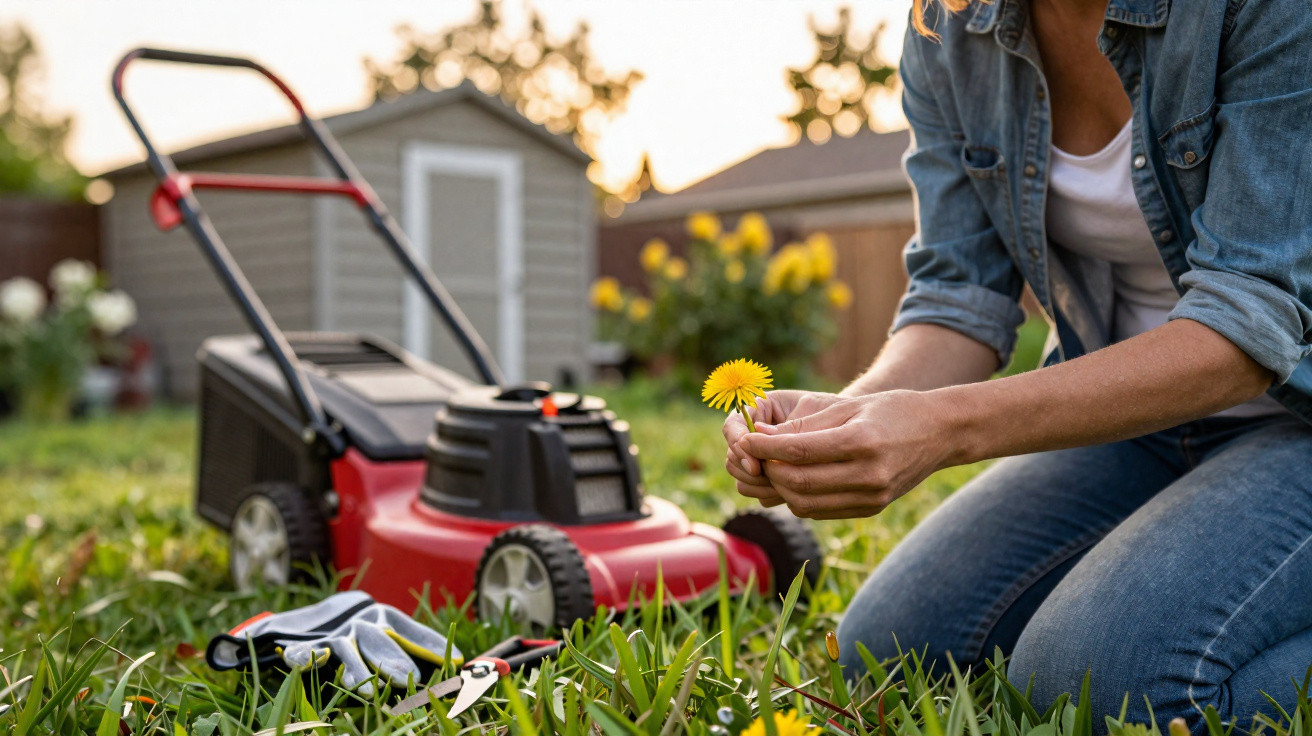
As the days stretch out again and the sun returns, many lawns look patchy and dull - and it’s hard not to reach for the mower. But getting started too early usually does more harm than good. A modest shrub with vivid yellow flowers can be a surprisingly dependable clue that the timing is finally right.
Why the timing of the first spring mow matters so much
After winter, most of what’s happening in your lawn is going on out of sight. The blades may look weak, but below ground the roots are rebuilding energy stores and branching out again.
If you mow too soon, you force the grass to divert that hard-won energy straight into producing fresh top growth. The result is a lawn that’s more vulnerable to dry spells, fungal problems and bare patches. It may look “tidier” for a moment, but over the season it often ends up thinner and paler.
"The first mow after winter determines whether your lawn stays dense, rich green and hard-wearing in summer - or quickly becomes patchy and susceptible."
Specialists offer a clear rule of thumb: for several nights in a row, temperatures should no longer be dropping below around 4°C. Once the soil reaches roughly 6°C, grass starts to grow again in a noticeable way. If it stays colder than that, using the mower mainly achieves one thing: wasted effort and unnecessary stress for the turf.
Forsythia’s yellow flowers as a natural starting signal
Rather than relying on dates in the diary, many experienced gardeners use a simple natural indicator: the ornamental shrub with bright yellow flowers - the forsythia. It blooms before its leaves appear and reacts sensitively to the weather.
When the branches are glowing a strong yellow, it’s a sign the growing season is properly getting under way and temperatures are settling at a steadier level. That’s usually the point when the first mow can be scheduled - provided conditions are suitable.
Before you make the first cut, a quick tidy-up pays off:
- Rake off leaves, small twigs and thatch
- Gently lift out any obvious moss cushions
- Set the mower to a high cutting height
- Use only sharp blades so the grass is cut cleanly
This leaves a neat surface without damaging the sward or shredding the tips.
Four simple signs your lawn is ready
If you’re not sure whether it’s time, these easy checks help:
- The forsythia in your garden (or nearby) is in full bloom.
- No night frosts have been forecast for several days, and nights feel noticeably milder.
- The ground isn’t waterlogged; you can walk on it without leaving deep marks, and the grass is dry.
- The blades feel flexible, look bright green, and you can clearly see new length growth.
When these points line up, you can go ahead - but do it gradually. Never remove more than about one third of the blade length in a single pass. For example, if the grass is 10 cm tall, the first cut should take it down to no lower than about 7 cm.
Protect spring bulbs - don’t mow them flat
In spring, leaves from daffodils, crocuses or tulips often still stand up through the grass. If possible, leave them until they die back naturally. More careful mowing makes that easier:
- Steer around clumps of bulb foliage as you mow
- If necessary, leave small “islands” and cut them later
- Mow more slowly so you can avoid plants more easily
That way the bulbs can recharge their reserves, and the spring flowers return reliably next year.
Why not every square metre needs to be short
Alongside the question of the perfect mowing date, a trend has grown in recent years towards less intensively managed lawns. The basic idea is to keep paths and high-use areas short, while allowing the rest to grow in places. The trigger was an initiative encouraging people to mow as little as possible in May.
As a result, many gardeners now cut only narrow strips to create routes, leaving the sections between - or small islands - to grow naturally. In practice, this leads to:
- significantly less time spent mowing
- more flowers within the grass
- more visits from bees, bumblebees and butterflies
- a more varied look across the garden
"Letting parts of the lawn grow gives insects food and gives you more time - without making the garden look neglected."
One homeowner who looks after around 500 square metres reports that they now keep only paths and seating areas closely cut. Everything else is allowed to stand taller, providing flowers for pollinators and still looking tidy as long as the edges are kept crisp.
Dandelions as energy bars for pollinators
Dandelion flowers are particularly undervalued. While many people remove them automatically, experts regard them as an important food source for wild bees and other pollinators - especially early in spring, when there’s often little else in bloom.
A respected horticultural association therefore recommends deliberately tolerating some plants in the lawn instead of eliminating every yellow flower immediately. Studies show that countless insect species depend on flowers, and that a large share of native wild plants reliably set seed only because insects pollinate them.
At the same time, researchers have recorded a decline in many insect populations for years. The change is gradual, but persistent. Against that backdrop, taller, flower-rich areas in gardens become far more significant - functioning as small refuge patches in built-up neighbourhoods.
How to combine lawn care with biodiversity
A short, usable lawn and a few taller zones aren’t mutually exclusive. On the contrary, the contrast can look striking. Practical options include:
- Mow paths and play areas every one to two weeks
- Cut certain strips only once a month, or even just two to three times a year
- Leave dandelions and other flowers standing in selected spots
- Remove the cuttings from taller areas so more species can establish
This keeps the garden functional, while parts of it develop into a lively meadow that supports insects and other small wildlife.
Common mistakes with the first mow - and how to avoid them
Many problems later in the year can be prevented with a few deliberate steps in spring. Typical pitfalls include:
- Cutting too short: the grass is weakened and weeds and moss gain an advantage.
- Mowing wet grass: clippings clump, the finish becomes uneven, and the smothered patches underneath can die back.
- Blunt blades: the grass tears instead of being cleanly cut, and the tips turn grey-brown.
- Driving on soft ground: wheel ruts and compaction form, water pools, and moss spreads.
If you keep these points in mind, you can often avoid expensive rescue work later with scarifiers, overseeding and fertiliser.
Developing a better feel for your own lawn
Lawns are often treated like a low-maintenance carpet that simply needs regular “shaving”. In reality, they’re a dense community of many individual plants that, like any other garden plant, have needs: adequate root length, light, air in the soil and time to recover.
With that in mind, it becomes clear why calendar dates say less than natural cues. Forsythia flowering, mild nights, firm ground and visibly growing grass together provide a very precise picture. Following those signals makes the season’s start calmer - and lays the groundwork for a resilient, dense and lively green space.



Comments
No comments yet. Be the first to comment!
Leave a Comment