
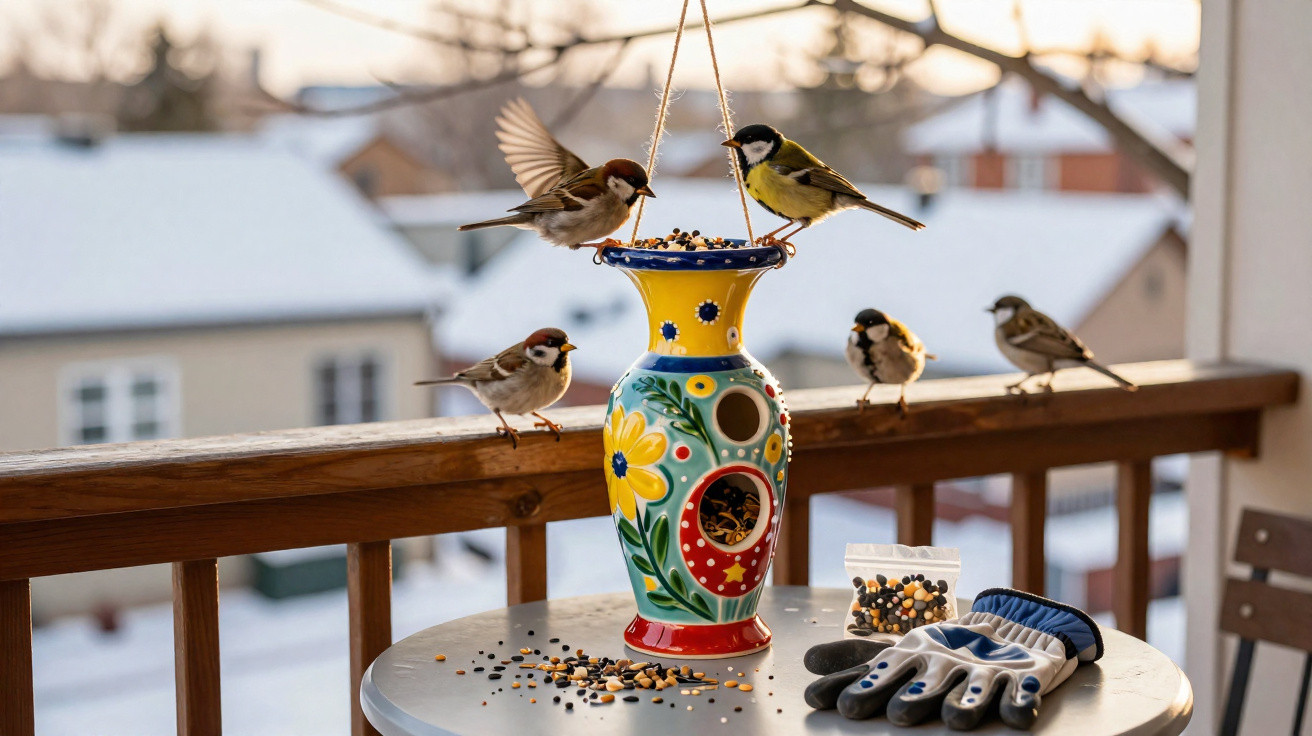
That said, in the garden this very type of kitschy vase can become a genuine lifeline for birds in winter.
Anyone who enjoys a wander around car boot sales will recognise them: heavy, glossy swan-shaped vases, usually ceramic-often laughed at and even more often left behind. The very item no-one wants on display in the living room can, in just a few steps, be turned into an attractive feeding station-helping tits, blackbirds and sparrows make it through the cold months.
Why a swan vase suddenly makes sense in the garden
In many homes, decorative swans like these end up in the cellar or go straight in the bin. Yet they offer exactly what a sturdy feeding station needs: plenty of weight, good stability, and a deep bowl that keeps seed from spilling out.
"With very little effort, a mocked-up kitsch piece becomes a long-lasting feeding station that’s useful and looks good."
In winter especially, natural food in the garden becomes scarce. Insects retreat, seeds are picked clean, and berries are quickly eaten. Feeding thoughtfully at that point doesn’t just help a few individual birds-it supports the entire small ecosystem right outside your door. Songbirds eat pests, spread seeds and help ensure the garden feels alive again in spring.
Rather than buying a plastic pedestal from a garden centre, you can build a one-off piece from a second-hand find. The basic setup is simple: the swan vase sits on a plate, the plate sits on a pole-and you have a raised, easy-to-reach feeding platform.
Materials: what you need for the converted feeding station
A lot of what you need can be found at car boot sales-or may already be sitting in a cupboard at home. For the swan mangeoire-your new bird bar-you only need a few sturdy components:
- a solid ceramic bird or swan with a sufficiently large opening
- a durable plate or flat slab to act as the base
- a small, narrow vase body or short tube to use as the connector
- a strong wooden or PVC pole (at least 1.5 metres long)
- weatherproof adhesive for ceramics; clear outdoor silicone is ideal
If you like, add a few glass pebbles or small stones to adjust the opening inside the swan or to create a little texture on the plate. That helps stop seed being blown away so easily.
Step by step: turning the find into a feeding station
1. Clean and prep
Before you glue anything, wash every part thoroughly with hot water and a little washing-up liquid, removing grease and dust, then leave everything to dry completely. Adhesive only holds long-term on clean, dry surfaces.
2. Bond the plate and connector
Place the plate upside down on a table so the underside faces up. Apply a generous bead of silicone to the centre. Press the base of the small vase piece into the adhesive, keeping it centred.
Hold it in place for a few minutes until nothing shifts, then leave it undisturbed for at least half an hour. For the best stability, allow one to two days for the joint to cure fully. If you rush this stage, you may end up with a wobbly build later.
3. Secure the swan on the plate
Once the first glued joint is firm, turn the plate the right way up again. Coat the base of the swan vase with adhesive and place it centrally on the plate. Press briefly and then leave it to cure for several hours until fully set.
"The more patience you have while it dries, the longer the bird swan will keep its guests safely fed."
4. Set the pole and mount the feeding station
Now move outside. Drive the wooden or PVC pole at least 30 centimetres into the ground where you want the feeder. If the soil is hard, a rubber mallet helps, or you can make a pilot hole first using a metal spike.
When the pole is secure, slide the small vase piece down over the pole with its opening facing downwards. Then carefully place the plate with the swan on top. The finished setup should leave the plate level and the swan stable.
The best spot for the swan mangeoire
Ideally, position the feeding station at a height of around 1.5 to 2 metres. Birds can access it easily at that level, while cats find it harder to launch an attack. The safest-feeling location is close to a dense hedge or a tree, so birds can dart into cover within seconds if startled.
A few points to help you choose the right place:
- pick a spot that’s as sheltered from wind as possible, so seed isn’t blown away
- avoid heavy direct rainfall, otherwise the food turns soggy and sticky
- don’t place it right next to windows, to reduce collisions
- keep good distance from anything cats can climb to reach it
The main season for feeders like this is roughly October to March, depending on region and weather. In snowy spells or very cold periods, birds will be especially grateful for a well-stocked bowl.
What should go on the menu-and what shouldn’t
For most common garden birds, the following foods are particularly reliable:
| Food type | Suitable bird species | Note |
|---|---|---|
| black sunflower seeds | tits, finches, sparrows, nuthatches | high energy, very popular; remove husks regularly |
| ready-made seed mixes | mixed garden bird groups | choose good-quality mixes without cheap fillers |
| fat balls or rings | tits, woodpeckers, nuthatches | ideal in hard frost; remove nets and place in holders |
| fruit pieces (apple, pear) | blackbirds, robins, thrushes | use fresh fruit only; replace regularly |
Steer clear of bread, salty leftovers, seasoned foods or heavily processed products. They can swell in the stomach, provide little nutrition and may increase the risk of disease.
Hygiene: keeping the feeding station healthy
Where lots of birds eat, droppings, husks and leftover food build up quickly. Without cleaning, the risk of infection rises. The swan vase has an advantage here: ceramic is easy to wash.
Once a month-and more often if the feeder is very busy-remove all remaining food and rinse the swan and plate with hot water. It’s best to avoid washing-up liquid or harsh cleaners, as residue may put birds off. Once everything is dry, refill with fresh food.
"Quick cleaning sessions prevent pathogens spreading and weakening whole populations."
Creative variations for keen crafters
If the first project leaves you wanting more, you’ll find countless possibilities for recycled feeding stations at car boot sales. Discarded soup bowls, old cake stands, thick-walled mugs-many items work well, as long as they’re robust and weather-resistant.
A few ideas:
- glue two plates of different sizes together to create one level for seed and one for fruit
- mount a second swan in mirror image to make a double feeding station
- paint the pole in bright colours to add a splash of colour to a bleak winter garden
The essentials never change: no sharp edges, no loose or wobbly parts, and no fragile glass within reach of children or pets.
How the swan vase is useful in summer too
In warmer months, many nature lovers feed far less-or not at all. The plate around the swan can then be repurposed easily: fill it with water and it becomes a shallow bird bath. A few pebbles in the water give smaller birds a secure footing.
That way, birds have a drinking spot that’s a little more protected from cats than a bowl on the ground. Important: change the water regularly so mosquito larvae can’t develop and the water doesn’t go stagnant.
Practical bonus: more life in the garden, more joy in watching
Once you put up a feeding station like this, you’ll often notice the garden change quickly. Species you barely saw before suddenly start appearing. Tits arrive in small groups, robins dart cautiously out from cover, and sparrows kick off noisy squabbles along the edge of the plate.
For children in particular, a recycled swan is a great invitation to get to know local birds. With a simple identification sheet, you can note down visitors and compare them over time. Many people then begin leaving more wildlife-friendly features in the garden without even thinking about it: a pile of leaves, a few wild perennials, less closely cut lawn.
What begins as a fun upcycling idea with a kitsch find can become the first step towards a genuine mini-biotope. The dusty ornament turns into a practical focal point that doesn’t just decorate, but can quite literally save lives-quietly, reliably and right in the middle of winter.
Comments
No comments yet. Be the first to comment!
Leave a Comment