
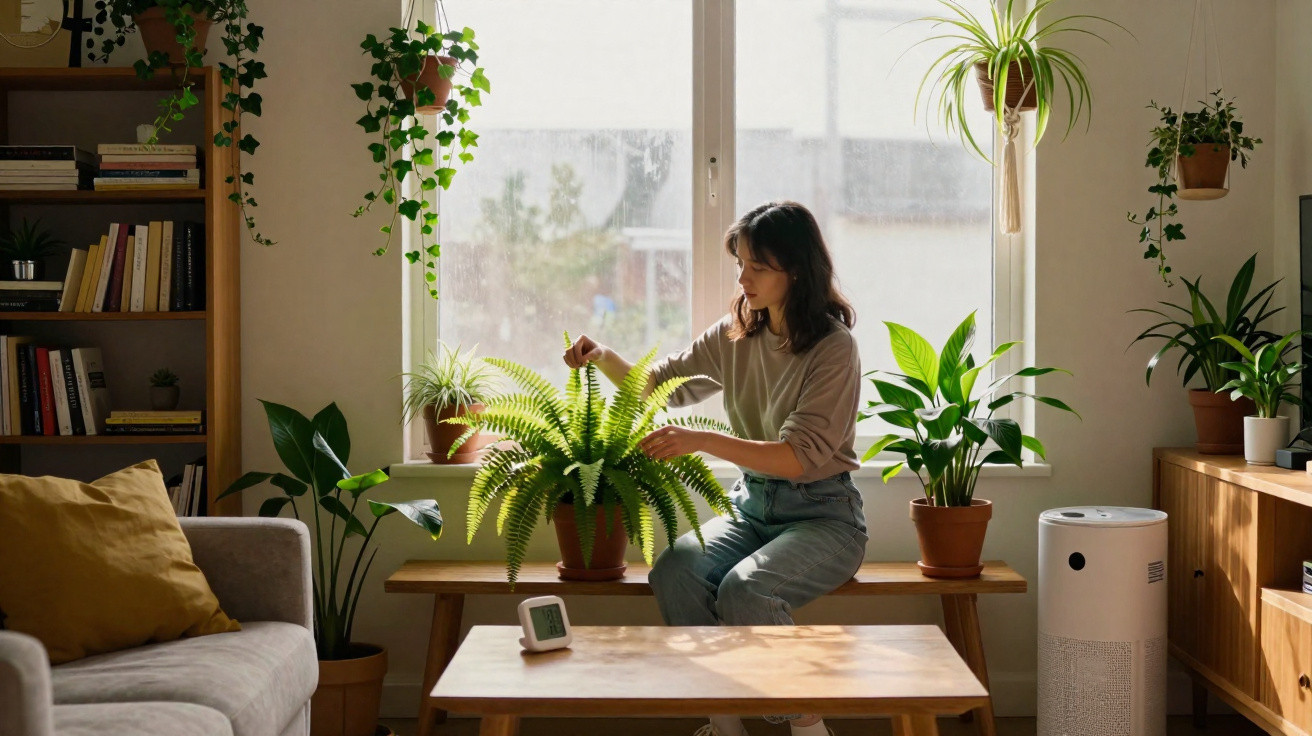
Many people will recognise the signs: windows that keep misting up, clammy corners behind a wardrobe, or small patches of mould in the bathroom or bedroom. In older properties in particular, or anywhere that isn’t aired properly, excess moisture can quickly become a real nuisance. Alongside opening the windows and heating sensibly, one approach is becoming increasingly popular: choosing houseplants that draw water from the air while also making a room look better.
How houseplants really affect indoor humidity
Overly humid air doesn’t just feel unpleasant - it also encourages mould, dust mites and that stale, musty smell. That’s why many people reach straight for an electric dehumidifier, even though they can be noisy, power-hungry and far from attractive. Some houseplants can do more than you might expect.
Plants don’t only absorb water through their roots; they can also take it in via their leaves. Through tiny pores - mainly on the underside of the leaf - they constantly exchange moisture with the surrounding air. When humidity is high, that exchange can work like a gentle pull: the plant holds on to some of the moisture and helps steady the indoor climate.
"Certain houseplants work like small, natural dehumidifiers - with no plug, no noise and no chemicals."
They can be particularly helpful in:
- internal bathrooms with no window,
- basements and utility rooms,
- bedrooms with cold external walls,
- kitchens where there’s lots of steam.
In those spaces, these green helpers can make a noticeable difference - provided they’re positioned sensibly and looked after properly.
Underestimated varieties: more than just a plant in a pot
In many homes, the same familiar choices keep turning up: rubber plant, pothos and monstera. They look great, of course - but there are also species that respond much more strongly to humidity, making them more useful than their reputation suggests.
"If you deliberately choose moisture-loving species, you don’t just improve the look - you can measurably improve the indoor climate too."
Many of these less celebrated houseplants come with an additional advantage: they cope well with awkward conditions such as dim corners, temperature swings or consistently slightly damp compost. That’s exactly why they suit bathrooms, utility rooms and cool bedrooms.
The most important “moisture killers” at a glance
Boston fern: a classic for heavy, stagnant damp
The well-known Boston fern, with its soft, arching fronds, is far more than a nostalgic decorative piece. Its very large leaf surface area gives it lots of contact with the air, so in an average-sized room it can make a tangible contribution to dehumidifying.
It’s especially well placed:
- on a high shelf in the bathroom,
- hanging in the kitchen above the sink,
- by a semi-shaded window in the hallway.
The fern likes evenly moist compost but hates sitting in water. If you give it a thorough watering about once a week, mist it lightly in between, and keep it out of direct sun, you’ll usually be rewarded with dense, fresh green growth.
Peace lily (Spathiphyllum): a humidity balancer with a bonus
The peace lily, with its white flowers, has long been a staple in offices - for good reason. Its broad, glossy leaves provide plenty of surface area to take up moisture from the air. At the same time, it can filter certain pollutants from indoor air, including those released by furniture or carpets.
Typical spots where a peace lily can really shine:
- on a bedroom windowsill where condensation often forms,
- next to the shower on a small stool or side table,
- in the entrance area, where it copes well with changing temperatures.
Care is straightforward: water once a week, remove dead leaves now and then, and add a little feed in spring. A peace lily doesn’t enjoy strong midday sun; bright, indirect light is more than enough.
Ivy, spider plant and more: quiet everyday workhorses
Alongside these two “star” plants, there are other options that get on with the job quietly:
- Ivy: can trail along shelves or up supports and helps bind moisture, particularly in older homes with cold external walls.
- Spider plant: tolerates temperature changes, produces plenty of plantlets and works well in utility rooms, narrow hallways or on windowsills above radiators.
- Calathea: striking patterned leaves; it thrives in higher humidity and, in return, helps keep levels within a comfortable range.
- Lucky bamboo: often seen as a symbol of good fortune, and also a strong “water drinker” that’s happy to work away in persistently damp corners.
If you combine several of these species, you’ll get a cumulative effect: each plant helps on its own, and together they smooth out humidity levels more evenly.
Where plants make the biggest difference to damp
| Room | Typical problems | Recommended plants |
|---|---|---|
| Bathroom with no window | shower steam, wet towels, condensation | peace lily, Boston fern, lucky bamboo |
| Bedroom | damp external wall, cool corners | ivy, peace lily, spider plant |
| Kitchen | steam from cooking and washing up | Boston fern, spider plant, calathea |
| Utility room / basement | drying laundry, poor ventilation | lucky bamboo, spider plant, ivy |
How to work plants into your décor
Strategic placement instead of “just stick it in a corner”
For these green helpers to do their job, it’s not only the species that matters - placement does too. Putting any plant anywhere can mean you miss out on most of the benefit.
"Even the ideal plant won’t do much in the wrong place - the aim is to keep it close to the moisture source."
Practical ideas:
- Hang a Boston fern up high where steam naturally rises, such as above the washing machine or bath.
- Put a peace lily on a stool or small shelf right beside windows that keep misting up.
- Train ivy across bookcases positioned against a cold external wall.
- Place a spider plant on the windowsill above the radiator to help balance the shift between damp and dry air.
A mix of hanging and floor-standing plants looks particularly good, especially when paired with simple ceramic or terracotta pots. Visually, you create a “green zone” that also tackles moisture.
Care mistakes that cancel out the effect
If you overwater, you can end up doing the opposite of what you intended: waterlogged compost encourages mould and can kill the plant - and with it, your natural dehumidifier.
Key points to keep in mind:
- Always empty any water left in the saucer after a few minutes.
- Check before watering: let the top 2 centimetres of compost dry slightly.
- Wipe leaves once a week with a lightly damp cloth so the pores stay clear.
- Turn plants once or twice a year so they grow evenly.
If central heating makes the air very dry, occasional misting of the leaves can help maintain the plant’s natural exchange with the air - without soaking the compost.
How far plants can replace technical dehumidifiers
Houseplants won’t solve severe damp caused by building defects or a burst pipe. They’re not a substitute for proper ventilation, sealing and heating - they’re one element within a broader set of measures.
"Houseplants aren’t a miracle cure, but they smooth out peaks and create a steadier, more comfortable indoor climate."
Many households notice the change mainly because:
- windows are less likely to be completely steamed up,
- laundry dries faster indoors,
- the bathroom smells less musty after a shower,
- there’s less condensation on cold surfaces.
If you also add short, wide-open ventilation sessions, keep furniture slightly away from external walls, and avoid letting damp-prone rooms get fully cold, you can create a noticeably healthier home without a huge effort.
Risks, limits and sensible combinations
If you have severe allergies or asthma, it’s worth considering pollen, scents and any risk of mould forming in pots. Hardy options such as peace lily, spider plant or fern are often considered comparatively well tolerated, but they should still be checked regularly. Dead leaves and old compost belong in the bin, not left sitting inside the decorative pot.
Plants work particularly well when combined with:
- regular rapid ventilation (several times a day, short and thorough),
- a simple hygrometer to monitor humidity (ideal range: about 40–60 percent),
- targeted heating - not too cold, not too hot.
If you find that, even with green support, readings stay consistently above 70 percent, it’s sensible to have the building fabric checked for underlying causes. In normal, everyday living conditions, however, houseplants can buffer surprising amounts of moisture - quietly in the background, with an effect you can often spot on the windows each morning.




Comments
No comments yet. Be the first to comment!
Leave a Comment