
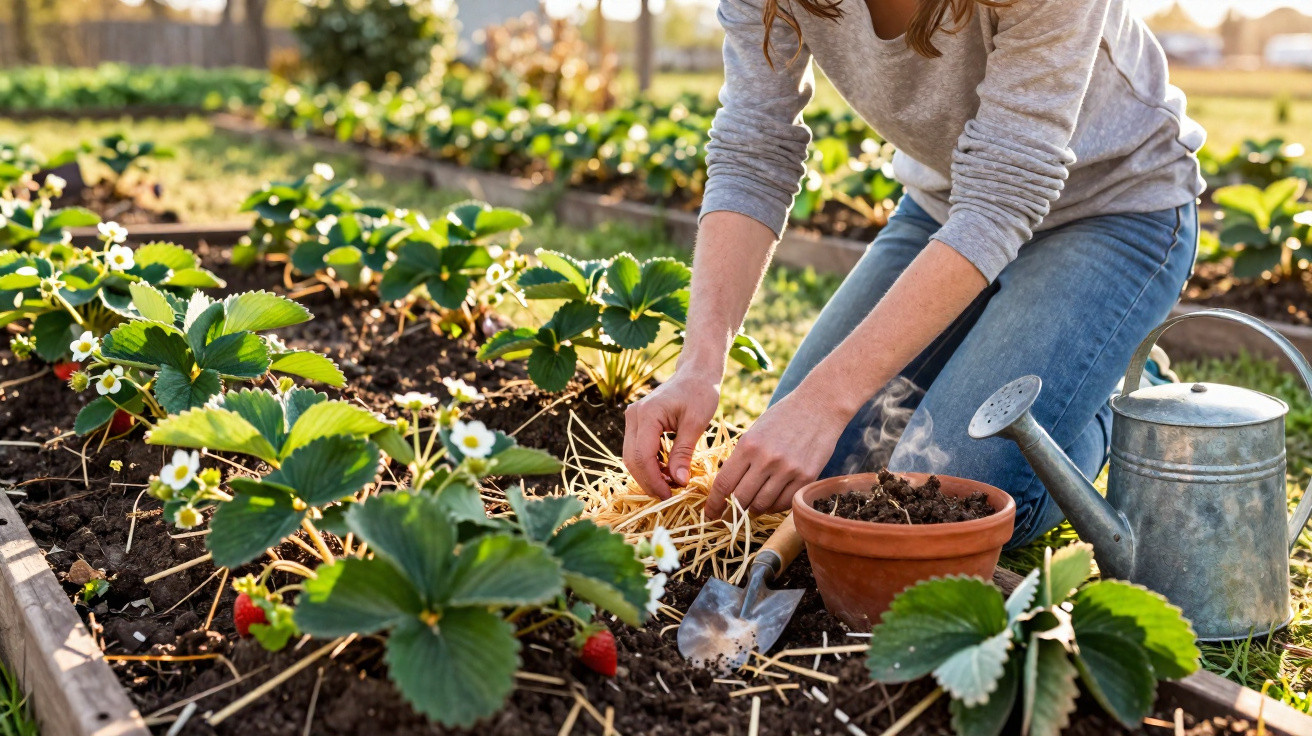
In the bed, everything can still look a bit tired after winter. The days are longer, but the soil is often heavy and cold. Right now is when you decide between a few scattered berries and neat rows of plump, red strawberries. With a targeted spring refresh before April, strawberry plants can be turned into surprisingly prolific fruit producers.
The right moment: why everything before April matters so much
Strawberry plants get going early in the season. Long before many home gardeners even think about watering or feeding, the plant’s crown is already forming the foundations for flowers - and therefore the later crop. If you help at this stage, you strengthen exactly that development.
- The plants channel their energy into new, healthy shoots.
- The soil can still be loosened and improved without fuss.
- Weeds have not fully established yet and are easier to keep under control.
The key is a mix of thorough tidying, soil care and smart protection around the roots - all done before the first flowers appear.
Spring tidy-up in the bed: old leaves have to go
After a wet, cold winter, many strawberry plants look battered: brown leaves, speckled leftovers, and soggy leaf stalks. That does not only slow growth; it also encourages fungal problems and pests.
How to cut back properly
- Use sharp, disinfected secateurs.
- Remove any brown, dry or spotted leaves close to ground level.
- Cut away rotten or discoloured leaf stalks as well.
- Always keep the heart of the plant - the small, slightly raised “knob” in the middle - completely clear.
"The heart of the strawberry plant is sacred: if you damage it or cover it up, you risk losing the entire harvest."
Once you have done this cut-back, the bed immediately looks cleaner. The plant responds quickly: more light reaches the new buds, and fresh, healthy leaves push through. Many gardeners quite rightly describe this step as a kind of wellbeing treatment for the bed.
Waking up the soil: loosen, feed, bring it back to life
Rain and snow compact the top layer of soil over winter. Fine strawberry roots then have to fight against a hard crust. The result is that water and nutrients reach the plant less effectively.
Loosen gently instead of digging over
A small hand cultivator or hoe is enough to lightly roughen the soil between the plants.
- Work only 3–5 cm deep, so you do not damage the shallow roots.
- Break up clods carefully without disturbing the plant rows.
- Remove larger stones or old plant debris.
This soil work makes it easier for air, water and soil life to penetrate - exactly what strawberries need for strong growth.
Compost: the “black treasure” for sweet fruit
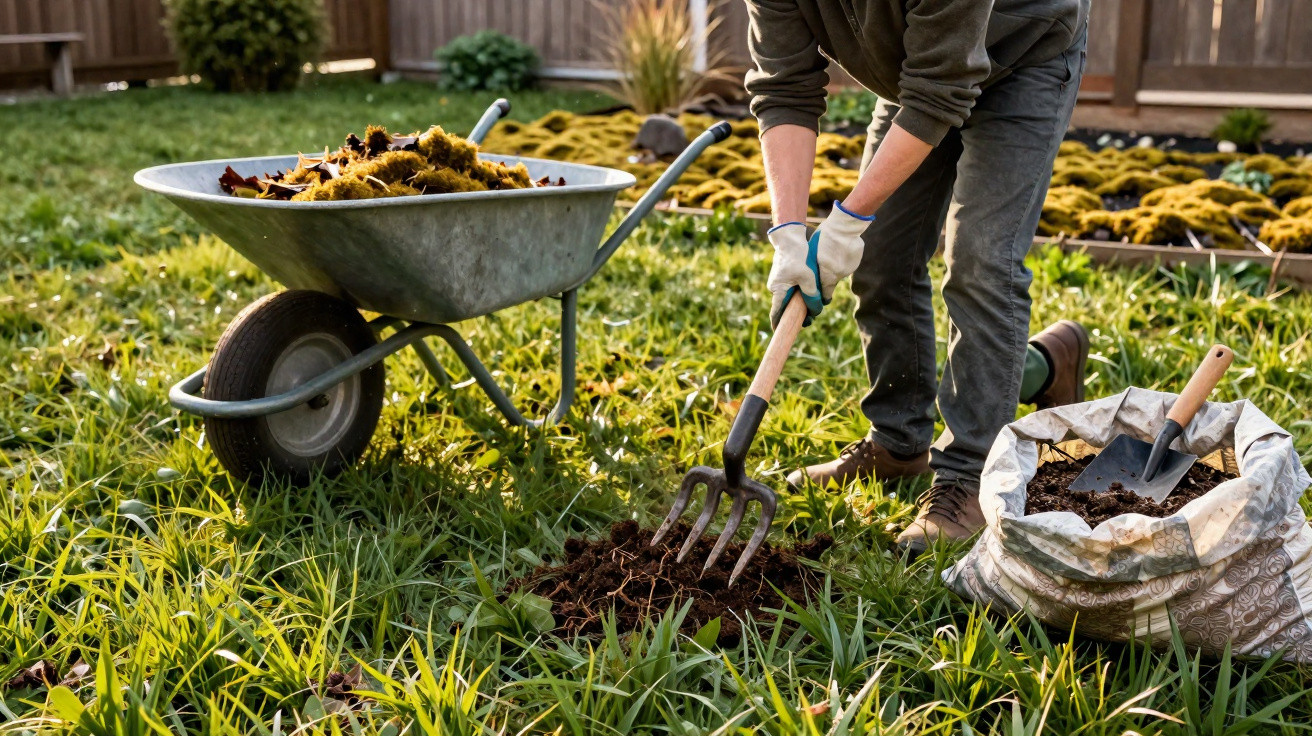
Feeding comes straight after loosening. Well-rotted compost is ideal: it should not smell strong and should crumble easily in your hand.
- Apply a thin layer of compost around each plant.
- Lightly work the compost into the top layer of soil.
- Keep the plant’s crown/neck clear so nothing rots.
If you do not have your own compost, you can use a good-quality planting compost or an organic strawberry fertiliser instead. Bone meal, guano, or an organic specialist feed for berry bushes can also supply the nutrients the soil needs.
"Well-fed strawberries don’t just produce more fruit - they also taste more intense and aromatic."
The crucial step: mulch in good time
The one trick that turns ordinary plants into real fruit machines is mulch. This protective layer sits like a natural bedding around strawberry plants and should ideally be in place by the end of March.
Which materials work best?
- Dried straw (the classic choice for strawberry beds)
- Flax or hemp shives
- Fine wood chips from untreated material
What matters is that the material stays loose and lets water through. Grass clippings are only suitable in a thin layer and well dried first - otherwise they rot.
How to lay mulch correctly
- Mulch to a depth of 3–5 cm around each plant.
- Leave a small gap directly around the plant heart.
- Fill generously between the rows - otherwise weeds will shoot up there.
"Mulch keeps the fruit clean, protects against grey mould, and saves hours of weeding."
On top of that, the layer works like a natural air-conditioning system: in summer the soil stays moist for longer and heats up less. During hot spells in particular, this protects both yield and flavour.
Watering properly: moisture yes, waterlogging no
Strawberry plants like fresh, slightly moist soil, but they do not tolerate “wet feet”. Overwatering washes nutrients out of the bed and encourages fungal disease.
The simple finger test
- Push your finger into the soil under the mulch.
- If it is still moist at about 3 cm deep, do not water.
- If it is dry and crumbly, the bed needs water.
Collected rainwater is best. It contains little limescale and is usually a comfortable temperature. Cold tap water straight from the mains needlessly stresses the roots.
Final check before flowering: are your plants ready?
Before the first white or slightly pink blossoms open, it is worth doing a quick walk-through of the bed:
- Have all old, diseased leaves been removed?
- Is the plant heart clear and well ventilated?
- Is the mulch spread evenly, without covering the plants?
- Does the soil beneath feel loose and crumbly rather than muddy?
"If you can tick off this list before April, you set things up for a noticeably larger and healthier strawberry harvest."
Why this effort pays off several times over
This spring refresh might take an hour or two for a small bed - but the benefits last all season. Disease spreads less readily, fewer fruits end up on the soil, and weeds stay manageable.
Experienced home gardeners report that after this sort of treatment they often fill far more punnets, without needing to try extra fertiliser experiments later in summer. Starting early saves time, stress and expensive specialist products.
A few extra tips for maximum strawberry power
- Replace old, heavily tired plants after three to four years.
- Use runners deliberately to raise young, vigorous plants.
- Avoid planting strawberries right next to heavy-feeding crops such as brassicas.
- From time to time, dust a little rock flour between the rows to strengthen the plants.
If you have children at home, the spring cut-back and mulching routine is easy to do together. The jobs are straightforward, and the pay-off later - picking and snacking - is even better. Step by step, you end up with a bed that in summer looks almost like a small strawberry plantation, just outside your own front door.
Comments
No comments yet. Be the first to comment!
Leave a Comment