
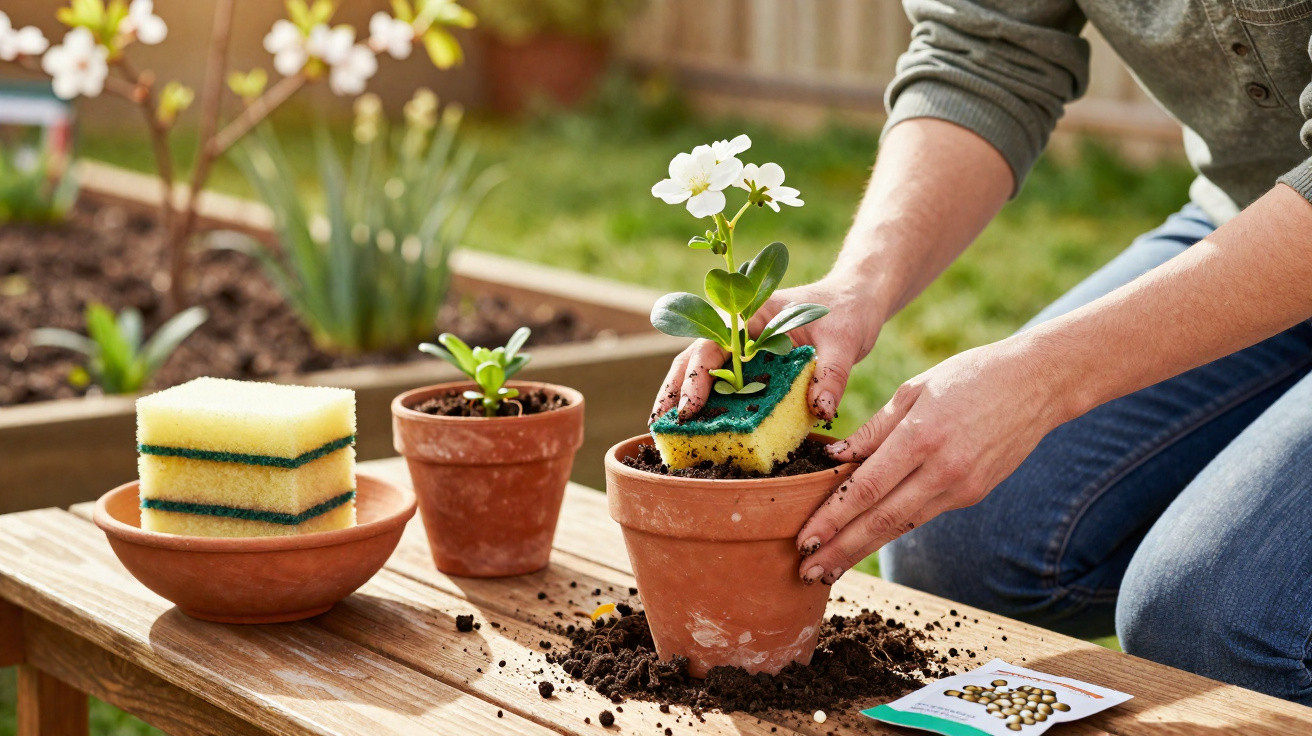
As the first mild days arrive, young plants often struggle with uneven watering and soil that dries out quickly. At the same time, a common household item ends up in the bin millions of times over - entirely unnecessarily. If you put it to work in a bed, pot or compost heap, you can give your plants a kind of mini water reservoir while cutting down on waste.
How an old kitchen helper becomes a drinks bottle for plants
The start of the gardening season can be tricky: stronger sunshine, delicate roots and changeable weather all arrive at once. That is exactly when an item most households already have - and usually throw away far too soon - can be surprisingly useful: the washing-up sponge or sponge-cloth from the kitchen.
Because it is porous, it behaves like a small water tank. If you place it at the bottom of a plant pot - above the drainage holes but below the compost - it soaks up any excess water from watering. Later on, it releases that moisture back gradually.
"This creates a buffer in the pot: the soil dries out more slowly, watering mistakes matter less, and plants are less likely to become stressed."
Window boxes and containers exposed to drying winds can benefit in particular. The surface may look dry already, but the roots can still draw on moisture from the hidden reserve.
Why old kitchen helpers should not just go in the bin
When a sponge starts to smell or looks worn, many people understandably reach for the bin. In the kitchen, it really has reached the end of its useful life - for several reasons:
- In damp conditions, huge numbers of germs can multiply within a few hours.
- Grease and cleaner residues make further use around food unappealing.
- Most of these helpers are thrown into general waste after a short time, adding to environmental impact.
A better option is to move it outdoors - provided it is cleaned first and used in the right place. Outside, most remaining germs are far less of a concern, and the porous material can do jobs that garden centres often sell specialist products for.
Natural or synthetic - what is suitable for soil and compost?
Before trying this in practice, one point matters most: what is the item actually made from? Not every type belongs in soil or compost.
| Type | Use in a pot | Use in compost | Note |
|---|---|---|---|
| Natural fibre (e.g. cellulose, loofah) | Suitable as a water reservoir | Suitable; breaks down over time | Can rot down along with the soil |
| Synthetic fibre (plastic content) | Limited use as a reservoir in a pot | Not suitable | Risk of microplastics and residues |
Natural versions made from cellulose or plant fibres can go into pots and also into the compost heap. Over time they break down, and they can also help with soil structure.
Items containing plastic should not go into compost that will later be used in the vegetable garden. Tiny particles and chemicals could remain in the soil. If you use them in a pot as a water buffer, it is best to monitor them and dispose of them later with general waste.
Getting the kitchen helper ready for the garden
Before your former washing-up helper heads to the bed or balcony, it is worth cleaning it thoroughly. That significantly reduces both germ load and detergent residues.
- Rinse under running water and squeeze firmly until you can hardly see any foam.
- Boil it in a pan of water for a few minutes or soak it with plain household vinegar.
- Optional: while still damp, give it a short burst in the microwave to kill off most bacteria.
- Then let it cool completely and use it only for garden or balcony projects from that point on.
After that, it should not go back to the sink or worktop. If you collect several, you can do the cleaning in one batch and keep a small stash ready for the season.
Four smart places to use it in the spring garden
1. A hidden water reservoir in a plant pot
For window boxes, container plants or houseplants in very free-draining compost, the old helper works well as a concealed tank:
- Cover the base of the pot with a drainage layer of expanded clay or broken terracotta.
- Place the cleaned sponge (or cut pieces) on top.
- Fill with compost and plant up as normal.
When you water, the sponge absorbs excess liquid. Later, roots can draw on that stored moisture. If you are often away, this helps reduce the risk of plants drying out during short absences.
2. A moisture booster in the compost heap
Natural versions can be cut into small pieces and mixed into compost. They take up water, help the heap stay damp for longer and introduce a bit more air into the mass.
"Well-moistened compost rots down faster, smells less strong and ultimately produces nutrient-rich humus for beds and pots."
Among grass clippings, kitchen scraps and leaves, the sponge pieces add structure to the heap and support the work of microorganisms. The key condition is that no harsh cleaning-product residues remain in the material.
3. A mini propagation station for delicate seed
If you do not have space for large seed trays, you can cut the kitchen helper into small cubes and use each cube as a germination aid. Make a small hole in each cube and press a seed into it.
The damp structure keeps seeds evenly moist without leaving them sitting in water. Once the seedlings are a few centimetres tall, the whole cube can be planted into a pot or bed. Natural materials will later break down in the soil.
4. A protective cushion and a barrier against pests
Laid flat on the soil with the softer side facing down, a sponge can soften the impact of slight cold snaps around the base of sensitive plants. A small stone can keep it in place.
At the same time, the surface can be unpleasant for some types of slugs. If you add a few drops of strongly scented plant oils (for example mint or lavender), you also create a scent barrier that can deter certain pests.
What gardeners should watch out for with this trick
Even with the practical benefits, it pays to check from time to time. Outdoors, these helpers are exposed to weather and will change as they age.
- An unpleasant smell can indicate rotting or heavy bacterial activity.
- Visible mould is a clear sign to remove the material.
- If the sponge tears, crumbles or breaks apart, it should come out of pots and beds.
If natural versions still look fine, they can be left in the soil or added to the compost. Types containing plastic should be collected completely and put into general waste to avoid microplastics in the garden and vegetable beds.
Why it works particularly well in spring
Early in the season, the weather can swing quickly: warm spells alternate with cooler periods, and it is hard to judge evaporation and rainfall. Young plants also do not yet have roots deep enough to look after themselves from lower soil layers.
An extra reservoir around the root zone helps smooth out these fluctuations. Water remains available for longer without creating waterlogging. That makes you less dependent on rigid watering schedules and helps protect seedlings when a sudden warm day arrives.
Practical add-ons and sensible combinations in day-to-day gardening
If you want to get more out of the idea, you can pair it with other simple measures. A mulch layer of grass clippings, bark pieces or leaves reduces surface evaporation noticeably and strengthens the effect of the hidden reservoir underneath.
In pots with hungry plants such as tomatoes or peppers, the sponge can help hold nutrient solution from liquid feeds in the compost for longer. Water spreads more evenly, and roots have more time to take up the dissolved nutrients.
The same approach can also work in a raised bed: beneath the top layer of soil, one or two layers of natural material provide extra buffering, especially during dry summers. If you use reusable, sturdier types, it is best to mark the spots so you can remove or reposition them deliberately when you later dig the bed over.
This turns an unremarkable kitchen helper into a versatile gardening tool - from window boxes to a full-size compost heap. If you pause for a moment before throwing one away next time, you can gain twice over: less household waste and plants that get through the season far more comfortably.

Comments
No comments yet. Be the first to comment!
Leave a Comment