
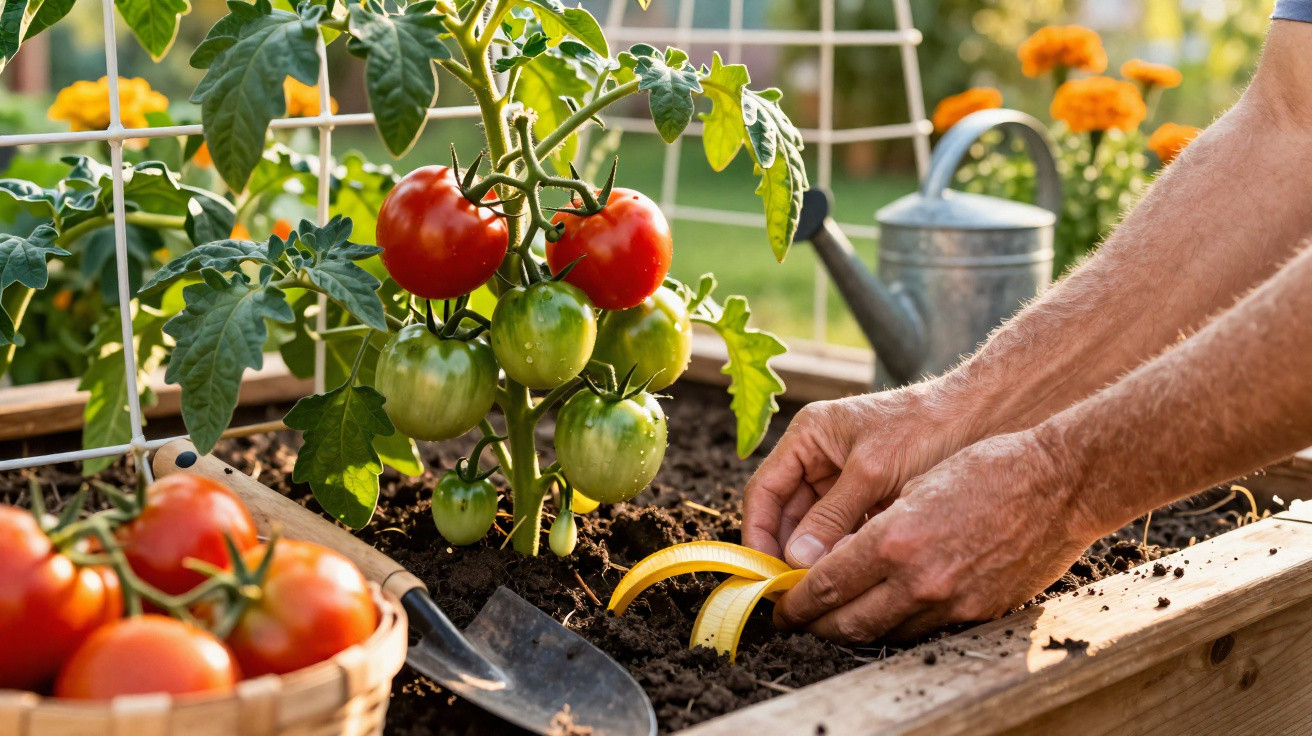
The idea is tempting: instead of buying expensive specialist fertiliser, you tuck a banana peel into the soil right beside the tomato plant. The myth is that the crop will grow faster and produce more fruit. But what is actually going on here, and where does this trick reach its limits?
Why tomatoes are so “hungry”
Tomatoes are heavy feeders. To deliver a generous harvest, they need plenty of nutrients. Alongside nitrogen and phosphorus, potassium is particularly important.
- Potassium supports flowering and fruit set.
- It helps the plant regulate water.
- It makes tomatoes more resilient to stress such as heat or short dry spells.
When potassium is lacking, plants often look weak. Leaves may yellow or curl, and the fruit can stay small or ripen unevenly. This is exactly where the banana peel enters the conversation.
What banana peels in the soil can really do
Banana peels naturally contain a relatively high amount of potassium. Once they’re in the ground, soil microorganisms break them down little by little. As decomposition progresses, nutrients move into the plant’s root zone.
“The decomposition of a banana peel mainly provides potassium and a little organic matter, which makes the soil looser and more biologically active.”
This happens gradually: moisture, soil life and temperature ensure the peel rots down slowly. It doesn’t work overnight-it takes weeks. That’s why timing matters when you decide to bury it.
Burying banana peel with tomatoes: how to do it properly
If you want to use this kitchen waste in your tomato bed, it pays to do it methodically. The approach is straightforward, but a few details make the difference.
Step-by-step instructions
- Chop up the banana peel
Cut it into thin strips or small pieces. The smaller the pieces, the quicker they break down. - Dig a hole next to the tomato plant
Make a small hole about 10–15 centimetres from the stem, roughly a hand’s breadth deep. - Add the peel pieces
Put the chopped peel into the hole, but don’t press it right up against exposed roots. - Cover with soil and water lightly
Close the hole carefully, then water well-but don’t overdo it.
If you are planting new tomatoes, you can work the peel into the soil at planting time. During summer, this method is useful once plants are actively growing and beginning to form flowers.
Benefits of the trick – and where the limits are
A banana peel is not a complete fertiliser, but it can make a noticeable contribution if everything else is in place.
| Aspect | Benefit | Limitation |
|---|---|---|
| Potassium supply | Natural source of potassium right in the root area | Not enough on its own for heavy feeders like tomatoes |
| Soil structure | More organic matter; soil becomes looser | Only a small effect in heavily exhausted soils |
| Sustainability | Kitchen waste is used sensibly | Not a replacement for long-term humus building |
If your soil is very sandy or extremely depleted, banana peels alone are unlikely to create miracles. Tomatoes may quickly respond with stunted growth. The foundation remains well-prepared soil enriched with compost.
Common mistakes when using banana peels
Most issues come not from the peel itself, but from using it poorly.
- Leaving it whole instead of chopping it: large pieces take a long time to rot down, so nutrients become available late.
- Pressing it directly against roots: fresh organic material can harm roots on contact or encourage rot.
- Simply leaving it on the surface: exposed peels can attract slugs or even mice and look unattractive.
- Relying only on banana peels: if you don’t fertilise otherwise, deficiency symptoms are likely-especially nitrogen deficiency.
“A banana peel works as an add-on, not as a complete solution for feeding a tomato plant.”
How gardeners create ideal conditions for tomatoes
For the banana approach to have any real impact, the soil needs a solid baseline of nutrition. These steps help lay the groundwork:
- Work in well-rotted compost before planting.
- Avoid planting tomatoes in the same spot every year.
- Apply mulch such as grass clippings or straw to support soil life.
- Top up several times during the season with an organic tomato fertiliser.
In that kind of setting, a banana peel provides an extra nudge. Plants receive nutrients steadily and can make better use of their potential.
Risks worth considering
If you eat bananas regularly, the question eventually comes up: can you overdo it with the peels? In a typical home garden, only a small number end up in the bed, so genuine excess is uncommon.
One point still matters: many bananas come from conventional farming. Residues of plant protection products can remain on the peel. If you want to avoid this, choose organic bananas or limit how many peels you bury.
Useful combinations with other household remedies
Banana peel pairs well with other natural helpers. A few practical examples:
- Coffee grounds: mainly supply nitrogen and a little potassium, and slightly acidify the soil-use sparingly and work in well.
- Egg shells: release lime very slowly and help stabilise pH in acidic soils.
- Nettle feed: a strong nutrient boost, especially early in growth and as flowers start forming.
If you rotate these household remedies, you feed your tomatoes more broadly and can significantly reduce the need for mineral fertilisers.
Is it worth the effort day to day?
For gardeners who already work with organic materials, this trick fits naturally. The banana peel is produced in the kitchen, doesn’t go in the bin, and supports soil life. The effect is fairly moderate, but in well-tended beds it can provide the small push that makes tomato plants look noticeably more vigorous.
If, however, you expect a single peel to turn a weak, nutrient-poor bed into a tomato paradise, you will be disappointed. It works as one component of a bigger system: fertile soil, organic fertilisers, adequate watering, a sunny position-and then the banana peel as a natural bonus in the root zone.
Comments
No comments yet. Be the first to comment!
Leave a Comment