
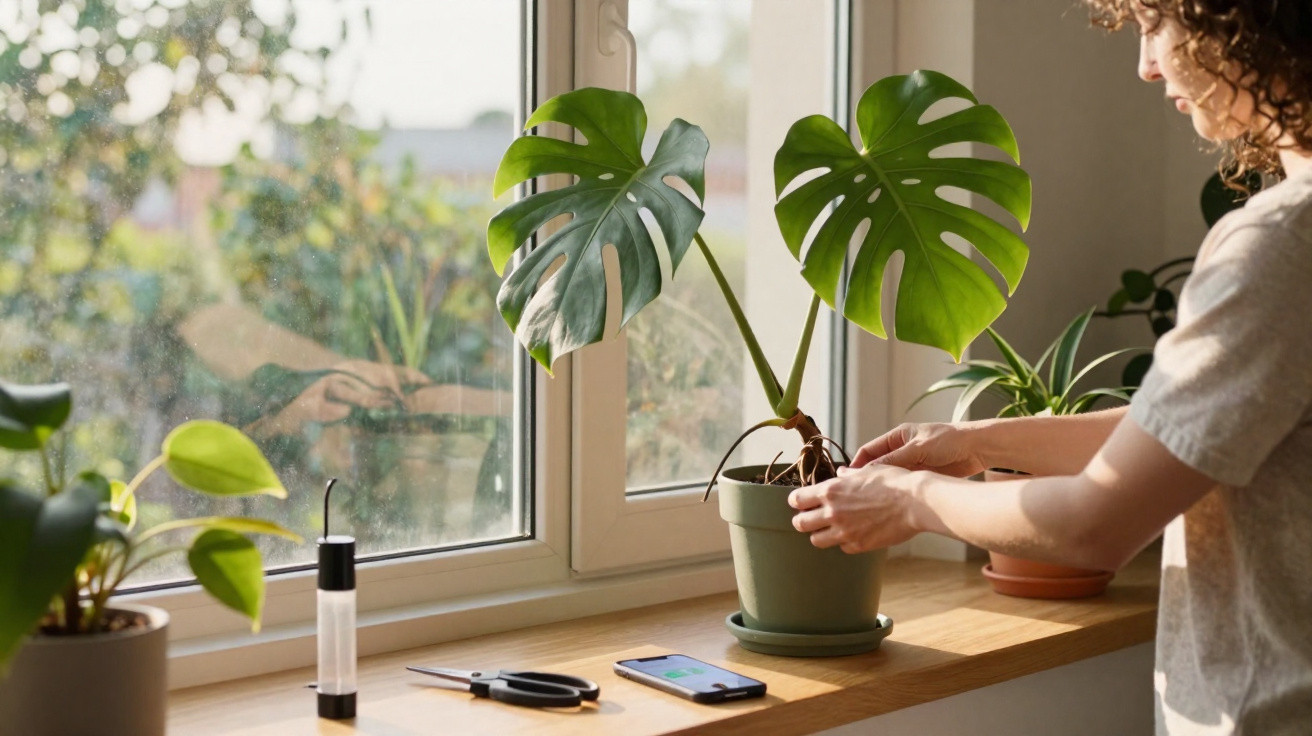
Sarah looked at her once-lush pothos and barely recognised it. Instead of a full, leafy cascade, it was now straining towards the living-room window like it was begging for rescue. In just three months, the bushy plant she’d brought home had turned into green spaghetti draped over the bookshelf. The vines were long, thin and weak, with leaves bunched at the ends and empty, bare sections in between that made the neglect feel obvious. She’d kept up the watering, and even chatted to it now and then (no judgement), yet it still ended up a poor imitation of its former self. Then it clicked with a jolt: she hadn’t been “underwatering” it at all-she’d been unknowingly depriving it of what it needed most.
The Light-Chasing Drama Unfolding in Your Home
Leggy growth in houseplants isn’t an illness or a “bad plant” trait-it’s a survival response. When indoor plants lean and stretch towards windows, they’re hunting for every photon of light they can find. This process is known as etiolation, and it shows up when light levels are too low, the light isn’t strong enough, or the plant doesn’t receive it for long enough.
Research from the University of Georgia found that when plants get under 50% of their ideal light requirement, they can lengthen their stems by as much as 300% in only six weeks. That fiddle leaf fig you bought with a neat, balanced shape? Given dimmer conditions, it may start performing an interpretive routine towards your east-facing window-trading its compact form for the chance to keep going.
Here’s what’s happening inside the plant: in low light, chlorophyll production drops, and stems extend quickly as the plant searches for better conditions. Leaves tend to shrink and become more widely spaced. In effect, the plant spends its stored energy trying to reach brighter light-often leaving you with a lanky, unfamiliar version of what you originally purchased.
The Rotation Revolution That Changes Everything
The practical fix is surprisingly simple: turn your plants every 3-7 days to stop them developing a one-sided “reach” towards the light. The most effective method is a quarter-turn-rotate the pot 90 degrees each time. This small routine helps spread growth hormones more evenly and encourages balanced development on all sides.
Realistically, almost nobody sticks to rotating plants daily. Most people remember only when their rubber tree starts leaning like it’s holding a yoga pose. A workable middle ground is to make it part of your weekly rhythm-Sunday plant turns can become as normal as a weekend coffee. Put a reminder on your phone, connect it to another habit-whatever you’ll actually keep doing.
“Consistent rotation is like giving your plant a daily dose of fairness – every side gets its moment in the spotlight, and the results speak for themselves in fuller, more balanced growth.”
Professional growers commonly follow these rotation intervals:
- Fast growers (pothos, philodendrons): every 3-4 days
- Medium growers (snake plants, rubber trees): weekly
- Slow growers (succulents, ZZ plants): bi-weekly
- Flowering plants: daily during blooming period
The Bigger Picture of Plant Happiness
Rotation is powerful, but it won’t solve legginess on its own if your plant is genuinely short on light. In that case, think about adding grow lights, moving the plant nearer to a window, or acknowledging that some spots simply won’t suit certain houseplants. The aim isn’t to force perfection-it’s to give your green companions conditions where they can thrive without twisting themselves into awkward shapes. Some plant parents also find that grouping plants with similar light needs helps create small, supportive micro-environments that encourage steadier growth. What rotation routine has worked best in your home?
| Key point | Detail | Value for the reader |
|---|---|---|
| Regular rotation schedule | Quarter-turns every 3-7 days depending on plant type | Prevents one-sided leaning and promotes even growth |
| Light assessment | Most houseplants need bright, indirect light 6+ hours daily | Helps identify if rotation alone will solve legginess issues |
| Growth monitoring | Weekly check for new stretching or uneven development | Catches problems early before plants become severely leggy |
FAQ:
- How quickly will I see results from rotating my leggy plant? Most plants show improved growth patterns within 2-4 weeks, though severely leggy plants may need pruning to encourage bushier growth from the base.
- Should I rotate flowering plants the same way? Yes, but more frequently during blooming periods. Daily quarter-turns prevent flowers from all facing one direction and extend the visual appeal.
- What if my plant keeps stretching even with regular rotation? This usually indicates insufficient light intensity. Consider moving closer to a window, adding a grow light, or choosing plants better suited to your lighting conditions.
- Can I fix a plant that’s already extremely leggy? Absolutely. Prune back the longest stems by one-third, start regular rotation, and improve lighting. New growth will be bushier and more compact.
- Do all houseplants need rotation, even slow growers? Even slow-growing plants benefit from rotation, though less frequently. Snake plants and ZZ plants still lean toward light sources over time, just more subtly.


Comments
No comments yet. Be the first to comment!
Leave a Comment