
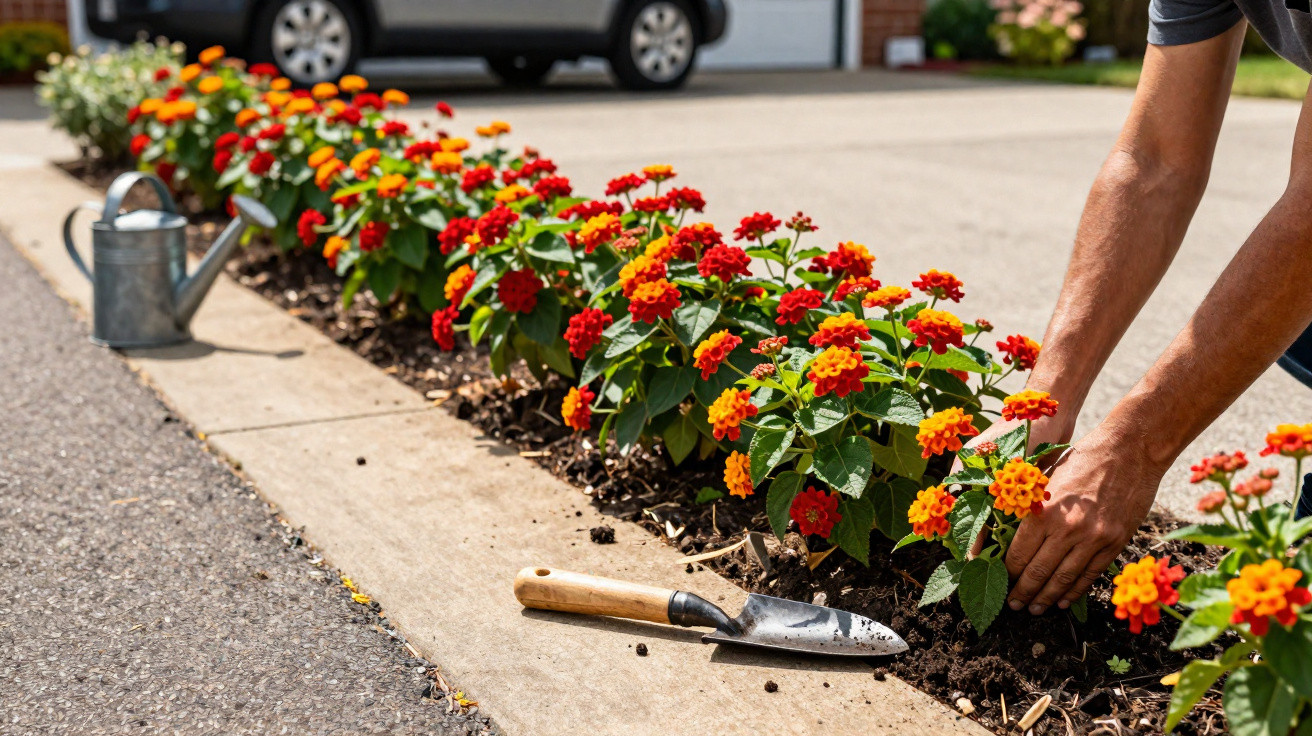
Black asphalt, heat bouncing back off the surface, tight turns, splashback and, in winter, grit salt: the edge of a driveway is one of the harshest planting spots in the garden. Plenty of plants quickly give up there. Yet one exotic flowering shrub with glowing red blooms shows exactly what it can do in this awkward strip - and, as a bonus, delivers a spectacular ribbon of colour right into autumn.
The problem spot by the drive: hot, dry and salty
Anyone who has tried to plant up the border of an access drive will recognise the headache. The ground is compacted, the sun beats down, rainwater either runs off fast or drains poorly, and car tyres can crush anything delicate. In winter, grit salt is added to the mix - something many species simply cannot tolerate.
That often leaves you with nothing more than gravel, or a narrow band of uninspiring green. Colour? Nowhere to be seen. This is precisely where the Lantana shrub shows its strengths - especially the red-flowering variety that gardeners are currently being asked for most.
"A single strip of this shrub is enough to make a drab driveway look like a Mediterranean-style front garden."
The star along the kerb: Lantana camara ‘Hot Blooded’
The cultivar Lantana camara ‘Hot Blooded’ originates from warm regions and, botanically, belongs to the verbena family (Verbenaceae). In the garden it behaves like a little sun magnet: dark, slightly aromatic foliage paired with an astonishing volume of flowers from May well into October.
What sets it apart is the colour shift within each flower head. The clustered blooms open in golden yellow, move through orange and finish in a deep, almost glowing red. Because fresh blooms keep appearing constantly, all three colours can be visible at the same time on one plant. Planted along a driveway, this creates a lively, flame-like band.
Key facts at a glance:
- Height: about 60 centimetres
- Spread: about 60 centimetres - compact, cushion-like growth
- Flowering period: May to October, and longer in mild weather
- Flower colours: yellow, orange, red - visible simultaneously
- Position: sunny to full sun, very warm
- Tolerance: drought, heat, reflected warmth, some grit salt
The shrub stays so neat that doors can still be opened easily and sightlines are not affected. That makes it ideal for garage driveways and narrow access routes where taller shrubs would get in the way.
Why gardeners particularly value this cultivar
‘Hot Blooded’ has another trait that makes it stand out from many other varieties: it is sterile. The plant does not produce viable seed, so it will not self-sow and spread into beds or neighbouring areas. That greatly reduces maintenance and helps keep a crisp, tidy edge along the drive.
At the same time, it provides plenty of nectar. Bees, butterflies and other insects visit the flowers in large numbers. So if you want to make an otherwise rather functional front garden more wildlife-friendly, this shrub offers an upgrade that is both visual and ecological.
"A colour bomb for people, a nectar source for insects - right next to asphalt and paving."
Position and climate: where this shrub really thrives
Lantana comes from warm climate zones. In mild areas it can make it through winter outdoors, whereas in colder winters it will die back. In practice, that leads to two main approaches:
- Mild areas: the shrub can stay in the border as a perennial.
- Colder locations: treat it like an annual summer plant, or grow it in a container and overwinter it frost-free.
As a general rule, below –8 °C the root zone dies off, and the leaves drop even with a light frost. If you are gardening on the borderline, you can leave it in the ground and apply a thick mulch over the roots to soften the cold.
For driveway edges, one factor matters most: sun - and lots of it. Aim for at least six hours of direct sunlight per day, and more if possible. The heat reflected from asphalt and paving is something the plant, surprisingly, tends to enjoy.
How to plant it successfully along a driveway
Soil right beside a drive is often compacted. Water struggles to penetrate into deeper layers. While lantana copes well with dryness, it is sensitive to waterlogging. A free-draining, loosened base is therefore essential.
If you want a clean, continuous planting line, it pays to do the groundwork properly:
- Dig a planting hole two to three times as wide as the rootball.
- Loosen the soil in the hole and remove large stones if necessary.
- Improve heavy soil with grit, fine gravel or expanded clay so water drains away faster.
- Set the plant so the top of the rootball sits exactly at soil level - not deeper.
- Water thoroughly to close up any air pockets.
- Finish with a mulch of coarse gravel or decorative grit - ideally matching the driveway surface in colour and texture.
For a full but not overcrowded edge, space plants about 60 to 90 centimetres apart. That way, they will later meet gently without competing too strongly.
Care through the season: low effort, high impact
The most critical period is the first year after planting, when the shrub is building its root system. Along hot asphalt or paving, soil dries especially quickly, so regular watering in the first weeks and months is very helpful.
Once the roots have gone down far enough, the plant becomes impressively undemanding. In summer it will usually cope with several weeks without rain. Reflected heat from concrete or paving causes few issues - on the contrary, it often flowers most profusely in exactly those conditions.
Worth noting for homeowners in Alpine and low-mountain regions: the shrub tolerates splashback containing a little grit salt far better than many other garden plants. Deer also tend to avoid lantana, which can make it appealing for settlement edges and rural areas.
Helping the plant through winter
How much protection lantana needs depends heavily on your location. Three common options have proved practical:
- Mild locations: cut back hard in late winter. This prevents the plant becoming woody and encourages fresh, flower-bearing shoots.
- Cooler areas: cut back close to the ground and cover the root area with a thick mulch layer (leaves, bark mulch).
- Uncertain regions: plant directly into large containers, place them along the drive in summer, then move them into a bright, frost-free space in autumn.
In a pot, lantana needs only modest watering in winter. The rootball should not dry out completely, but consistently wet compost encourages rot. In spring, move the container back outdoors, starting in a sheltered spot until nights are reliably frost-free.
Take care with children and pets: beautiful but poisonous
As appealing as the flowers are, lantana is poisonous in all parts of the plant - to both people and pets. The fruits, which appear like small berries on fertile cultivars, can cause stomach and intestinal upset and other symptoms if eaten. Although ‘Hot Blooded’ does not produce viable seed, it is still sensible to keep a safe distance as a general precaution.
If you have small children, dogs or free-roaming cats, choose the position carefully. Right by the front door, where children often play, it is a less suitable choice. Along a driveway used mainly by adults, however, it can be placed very effectively.
"Garden gloves are essential for pruning and care - not only because of the toxins, but also because the foliage can irritate the skin."
Pairings and design ideas for the driveway edge
The strong red, orange and yellow tones look most striking when paired with calmer companions. Along a drive, choose plants with similar preferences that also cope with heat and drought:
- Silver-leaved perennials such as curry plant or steppe sage
- Cushion-forming plants such as stonecrop or low thyme varieties
- Grasses with fine stems, for example compact fountain grasses
- Compact lavender varieties as a fragrant partner
A particularly effective look is an alternating pattern of lantana “cushions” and low grasses: glowing red flower mounds with quiet, swaying stems in between. For a more contemporary style, combine the shrubs with anthracite-coloured grit and crisp edging in Corten steel or concrete.
For keen gardeners who have little time during the day, there is another advantage: the shrub needs very little pruning through the season. Removing spent flower heads now and then keeps it looking neat, but it is not essential - the plant will keep flowering tirelessly either way.
Especially in new-build areas where driveways often take up a lot of space, Lantana ‘Hot Blooded’ can be a key element in making an otherwise plain front garden feel warmer and more alive. With a bit of planning, a grey asphalt edge can become a bright welcome strip that brings months of colour, insect activity and a touch of holiday atmosphere right up to the front door.

Comments
No comments yet. Be the first to comment!
Leave a Comment