
The bedroom sits in near-darkness, except for the cold blue glow of a phone screen and the router’s little light blinking away in the corner.
The window stays shut to keep out the street noise, the radiator knocks more than it warms, and the air feels… stale. You know that sensation: you wake with a dry mouth, a foggy head, and the uneasy sense you’ve spent the night breathing someone else’s leftovers. The duvet is cosy, the pillow does the job, yet the room itself feels dull and drained. You open the window for ten minutes, then abandon the idea when a scooter tears past. On the bedside table, a dusty candle sits untouched for months. Across the room, an empty plant pot waits like a gentle hint. It’s a perfectly ordinary night in a perfectly ordinary room - and that’s exactly where this begins.
How bedroom plants quietly change the air you breathe
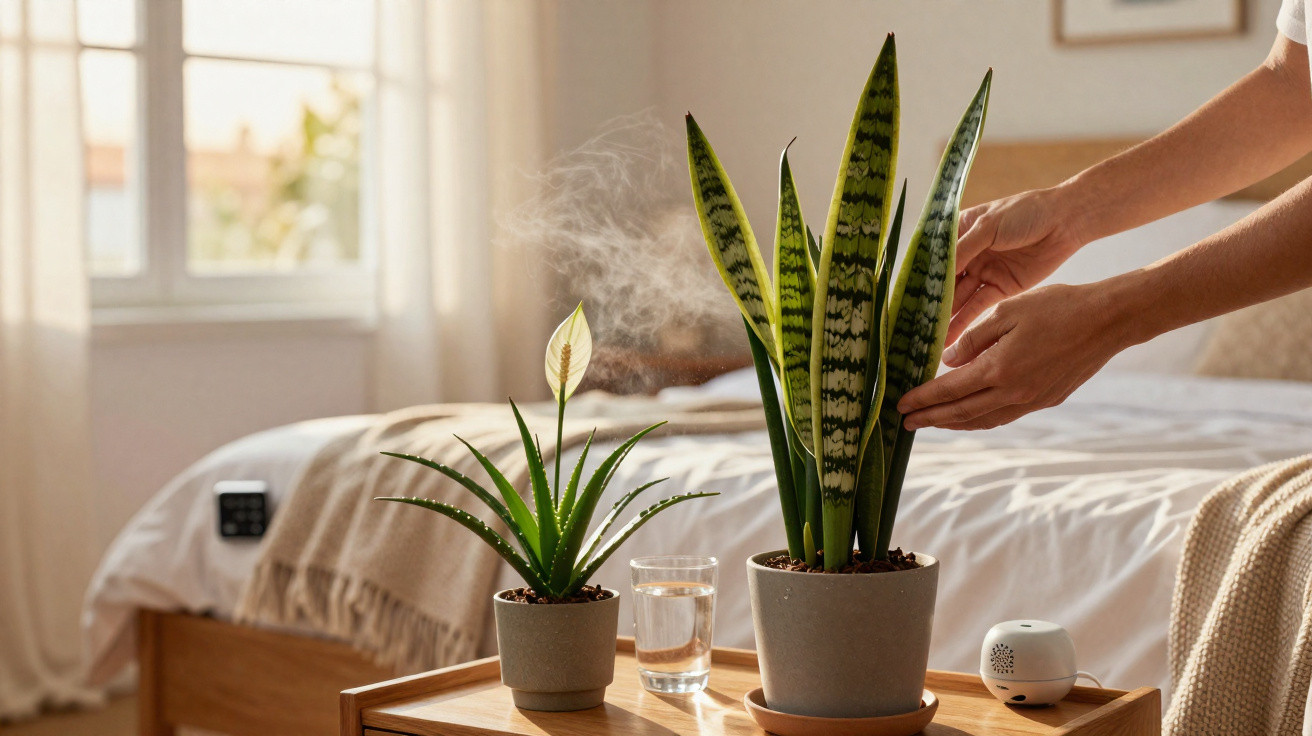
Step into a bedroom with thriving plants and you notice the difference before you can explain it. The air isn’t suddenly scented; it simply feels smoother, less harsh, less “closed”. Without thinking, you loosen your shoulders. The space looks inhabited and, at the same time, looked after - as if someone decided this room deserved more than laundry piles and forgotten chargers. A tall snake plant stands by the window like a guard. A pothos spills over a shelf in an easy cascade. The four walls haven’t moved, the mattress is the same, the curtains haven’t changed - but the atmosphere has: it feels like a place designed for rest, not just for dropping at the end of the day.
One winter evening in Berlin, a young freelancer tried it for herself. She worked from bed, slept poorly, and woke on edge. On impulse, she spent €40 on three plants: a peace lily, a spider plant and a small lavender in a chipped clay pot. That first night, nothing dramatic happened. No miracle. No movie-scene sleep. Yet a week later she noticed her morning headaches weren’t as bad. When she opened the door, the room no longer hit her with that stuffy smell. She even felt like clearing the clutter from the bedside table. A small change subtly altered how she lived in her own sleep space.
There’s a practical reason behind that gentler feel. Plants interact with indoor air: in daylight they absorb carbon dioxide and release oxygen, and many also help keep humidity on a more even keel. In controlled settings, certain species have been shown to reduce specific indoor pollutants. Meanwhile, a bedroom collects everything from dust to faint residues from cleaning products - and if the window stays closed overnight, that mix lingers. Adding plants isn’t installing a miracle purifier; it’s introducing a quiet, living stabiliser. Your room doesn’t turn into a laboratory jungle - it simply shifts a little closer to air that feels easier for your body to settle into.
Choosing and placing plants for better night air
Begin with a single plant, not an indoor rainforest. Choose a hardy, low-effort option such as a snake plant, pothos or ZZ plant, and position it where you actually sleep: within 2–3 metres of your bed. Not hovering over your pillow, and not hidden behind a wardrobe - close enough to feel part of your sleeping “bubble”. Treat it like a small breathing companion sharing the same air. A spot near a window is best for daytime light, but a bright corner can be enough. Give it a visible, almost symbolic place: here, rest matters.
A common mistake is buying the wrong plant for the wrong conditions and then taking the blame when it fails. Someone chooses a sun-loving ficus for a dim, north-facing bedroom, or squeezes a thirsty fern right beside a radiator. The plant struggles, leaves turn yellow, guilt kicks in, and the pot ends up outside in November. If that sounds familiar, it doesn’t mean you’re “bad with plants” - it means the match was wrong. Pick varieties known to cope with low light and dry indoor air: snake plant, peace lily, spider plant. And water less often than your instincts tell you. Let’s be honest: nobody truly keeps up daily.
There’s also a mental comfort that arrives as the leaves grow. A small ritual forms: checking the compost, turning the pot, snipping off a brown tip. One sleep coach I spoke to put it in a way I couldn’t forget:
“When you care for living things in your bedroom, you send your brain a simple message: this room is for recovery, not for battle.”
That change in mindset can matter as much as any effect on the air.
- Put plants at varied heights: one on the floor, one on a shelf, one by the bed.
- Leave a bit of breathing room around each pot so air can move and cleaning stays simple.
- Keep at least 30–50 cm between plants and your headboard to prevent damp, stagnant pockets.
- Use saucers under pots to catch drips and protect floors and furniture.
- If your room holds on to moisture, choose breathable pots (such as terracotta).
A new way to think about “fresh air” at night
Most of us treat night-time air comfort as a binary choice: window thrown wide open, or everything tightly sealed. Bedroom plants suggest a third option. They won’t replace proper ventilation, but they can soften the downsides of closed-window nights. You may still hear the city or the neighbour’s television, yet the air around your bed can feel less sharp, more settled. And when you wake to a living green corner instead of a tangle of cables and clothes, your first breath carries a different message: rest is something you choose on purpose, not something you stumble into by luck.
The more useful question isn’t “Do plants solve every bedroom air issue?” but “What changes in your sleep when your room stops feeling like a storage cupboard?”. We’ve all walked into a hotel room or a friend’s spare room that feels restful without making a fuss about it. Often there’s a plant somewhere in the scene: a fig in the corner, trailing ivy on a chest of drawers, even a small succulent on the sill. The signal is quiet but clear - someone thought about the air, the light, the night. That’s the same invitation you can offer yourself, evening after evening, at home.
| Key point | Detail | Why it matters to you |
|---|---|---|
| Choose the right plants | Snake plant, peace lily, spider plant, pothos, ZZ plant | Less likely to go wrong, even if you “kill” plants easily |
| Place them with intention | 2–3 metres from the bed, near a light source, without crowding the room | Improves comfort without turning the bedroom into a jungle |
| Keep care to a minimum | Light watering, a quick weekly visual check, a bit of dusting | Builds a bond with the room and supports a calmer sleep routine |
FAQ:
- Do plants really purify bedroom air or is that a myth? Some plants can reduce certain indoor pollutants in laboratory conditions, but in a normal bedroom they mainly help steady humidity and make the air feel fresher rather than acting as powerful filters.
- Is it safe to sleep with plants since they use oxygen at night? Yes. The oxygen they take in after dark is tiny compared with the amount of air in a room - far less than another person would use.
- How many plants do I need in my bedroom? Try one to three medium-sized plants to start and notice how the room feels; you can add more later if you have the light and space.
- Which plants are best if my bedroom has very little light? Snake plant, ZZ plant and pothos are reliable choices that tolerate low light and cope with fairly minimal care.
- Can plants really help me sleep better? They won’t cure insomnia, but they often make the room more comfortable, reduce the “stale air” feeling and encourage calmer bedtime habits - and together that can improve sleep quality.





Comments
No comments yet. Be the first to comment!
Leave a Comment