
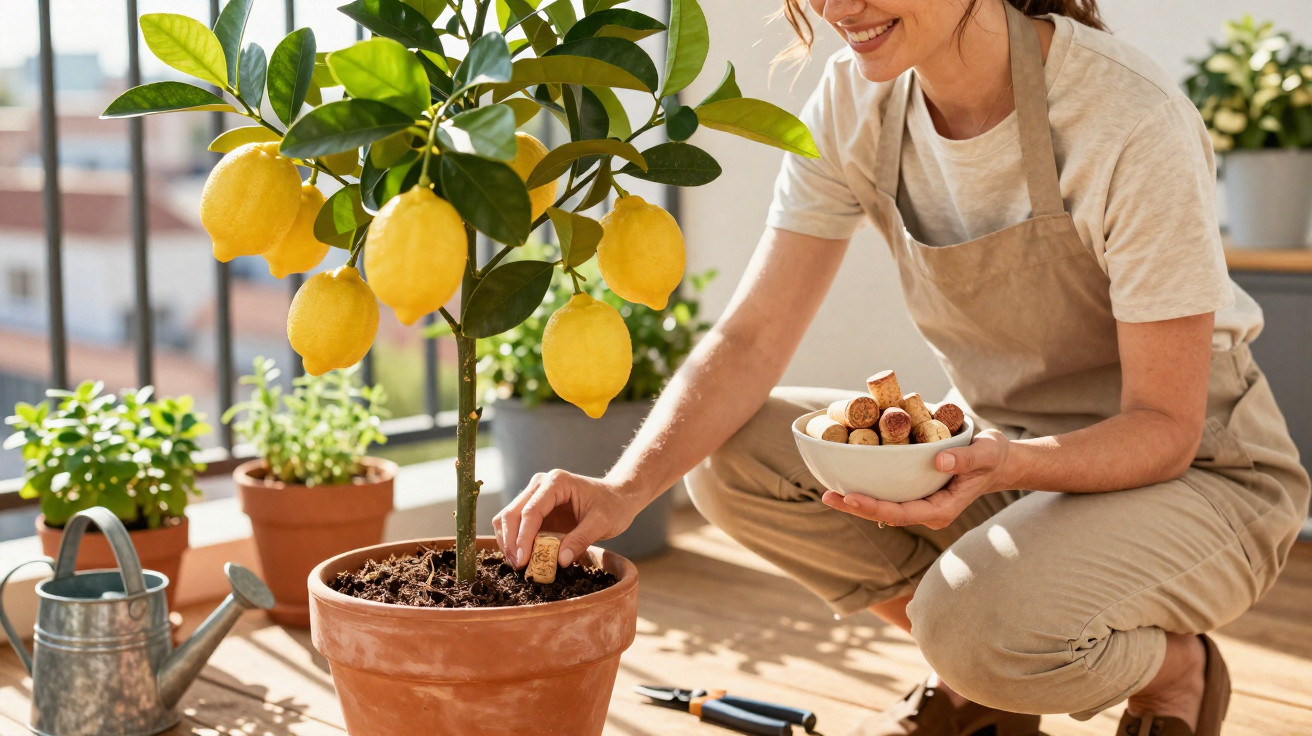
Across Europe, cost‑conscious growers are taking a second look at what they throw away and what they can put to work in a plant pot. One of the newest, most unlikely favourites is the everyday wine cork, repurposed to regulate moisture, improve compost structure and help deter pests around balcony and patio citrus.
Why wine corks and lemon trees are such a good match
Lemon trees grown in containers can be demanding. Their roots can dry out fast, but they also dislike being left in waterlogged compost. What they really want is oxygen around the roots, consistent moisture, warmth, and a buffer against sudden drops in temperature - quite a list for a single pot on a city balcony.
That is precisely where cork proves useful. It is lightweight, gently spongy, and decomposes slowly. In Germany and beyond, gardeners have begun placing used wine corks around citrus plants - lemons especially - and many describe noticeably positive results.
A recycled wine cork acts like a tiny sponge and air pocket at the same time, easing two of the biggest stresses for potted lemon trees: water swings and poor aeration.
Rather than ending up as useless waste in a bin liner, cork can be reused as a practical aid for compost texture, root wellbeing and, in some cases, pest management.
How a cork actually helps the soil
New compost for pots often starts off airy and open. Over time, though, it can become compressed - particularly when a plant is watered frequently or the pot sits in a cool, dim spot. As the mix compacts, the air spaces disappear, making it harder for lemon roots to breathe and take up nutrients effectively.
Adding crushed wine cork to the top layer of compost shifts that structure.
- Small cork fragments form tiny channels that help air circulate through the pot.
- Cork takes in a modest amount of water and then releases it gradually.
- Roots can weave between the pieces, almost using them as a supportive framework.
In heavier, clay‑leaning container mixes, that extra airflow can help head off common stress signs: yellowing foliage, feeble new shoots, and leaves dropping soon after watering.
Using corks as a mini water buffer
Lemon trees do not cope well with extremes. On a bright, hot afternoon, a pot can dry out in just a few hours; then a sudden downpour can soak the mix. Cork helps moderate both situations.
When you water, cork pieces soak up part of the excess. As the mix dries, they give some of that moisture back, smoothing the highs and lows.
This is not a substitute for attentive watering, but it can give you a little breathing space if you forget for a day, or if indoor heat from a radiator - or strong sun - speeds up evaporation.
A surprisingly effective pest barrier
Most people would not expect an old cork to work against pests, yet many gardeners say it does. When cork is split or chopped, its rough, uneven surface can be unpleasant for soft‑bodied pests such as slugs. Ants also appear less willing to cross a loose layer of irregular pieces.
For a potted lemon tree on a terrace or in a shared courtyard, that minor obstacle can make a difference. Slugs often nibble tender young leaves and the bases of new shoots. Ants, meanwhile, can “farm” sap‑sucking insects such as aphids, guarding them from predators in exchange for sugary honeydew.
Scatter chopped cork around the plant’s base and you create a less welcoming surface. Some gardeners also push half corks onto small twigs and suspend them among the branches, where they become simple physical impediments for crawling insects.
Cork will not defeat every pest, yet it lets many gardeners reduce their use of synthetic chemicals on edible fruit trees.
Practical ways to use wine corks around a lemon tree
Preparing corks before they go near the pot
Corks are not all the same. Only natural cork - typically a little uneven and slightly soft - is suitable for adding to compost. Synthetic corks, which are usually very smooth and uniform, can be used on the surface as decoration, but they contribute very little within the mix.
| Step | What to do | Why it helps |
|---|---|---|
| 1. Check the material | Choose only natural cork, avoid plastic imitations. | Natural cork is porous and biodegradable. |
| 2. Rinse | Briefly wash used corks in warm water, let them dry fully. | Removes wine residue that could attract mould or insects. |
| 3. Chop | Cut into slices or small chunks with a sharp knife. | Smaller pieces mix better and act more evenly in soil. |
Three simple applications for container lemons
You do not need a garden or specialist equipment. A pot on a balcony and a small supply of corks is enough to have a go.
- Mulch layer on top: Cover the surface with a 2–3 cm layer of chopped cork. This reduces evaporation, stops soil splashing onto lower leaves during watering, and provides a mild deterrent to pests.
- Mixed into the compost: At repotting time, work cork pieces into the central part of the compost, keeping clear of the very bottom where drainage gravel sits. This improves aeration through the main root area.
- Light filler in large containers: In bigger pots, place a loose layer of whole corks above the drainage layer. This cuts down the amount of compost required and stores a little extra water without adding much weight.
What still matters besides cork
No single technique will save a lemon tree if its position or watering routine is fundamentally wrong. Cork can make conditions more forgiving, but the essentials still need to be in place.
Think of cork as a helpful assistant, not a miracle cure. Light, temperature and feeding still decide whether your lemon actually fruits.
Key basics for vigorous potted lemon trees:
- Lots of direct light, ideally a south‑facing window or terrace.
- Protection in winter from frost and cold draughts.
- Consistent, moderate watering so the compost stays slightly moist, never waterlogged.
- A balanced citrus feed during the growing season to prevent yellowing caused by nutrient shortages.
Benefits, trade‑offs and small risks
Reusing cork brings obvious environmental and cost benefits. It cuts household waste, reduces the need to buy new gardening materials, and can lower how often you have to refresh bark mulch or decorative gravel. For renters or balcony gardeners in cities such as Berlin, corks can also be easy to obtain from nearby shops or wine bars that are happy to hand over their leftovers.
A few cautions are worth keeping in mind. If the cork layer on top is too thick, it can slow the way water soaks in, leaving the top few centimetres dry while the lower root ball stays overly wet. Checking moisture with a finger before watering helps prevent that. And in damp, shady spots, cork that has not been cleaned properly may develop mould - another reason why rinsing and drying beforehand is worthwhile.
Bringing the idea into everyday routines
This modest tip highlights how changing your mindset can improve plant care. Instead of buying new plastic items for every task, many everyday leftovers can be reused. Coffee grounds, crushed egg shells and banana peels already have committed fans among city gardeners. Cork now joins that group with a particularly strong argument for citrus.
Picture a winter evening: friends at the table, a bottle opened, the cork pulled. Rather than throwing it straight into the bin, you drop it into a jar on the windowsill. When spring arrives, that jar turns into a simple kit for stronger roots, steadier moisture and fewer pests on the lemon tree by the same window. Entertaining at home and looking after plants begin to reinforce one another.
If you are new to growing citrus, it is an easy method to test without much risk. Use a handful of corks on one plant and leave another untouched as a comparison. After a few months, contrasts in leaf colour, how the compost feels, and how often you need to water can become obvious. That small at‑home trial can be as rewarding as picking the first lemon you finally harvest from your own tree.
Comments
No comments yet. Be the first to comment!
Leave a Comment