
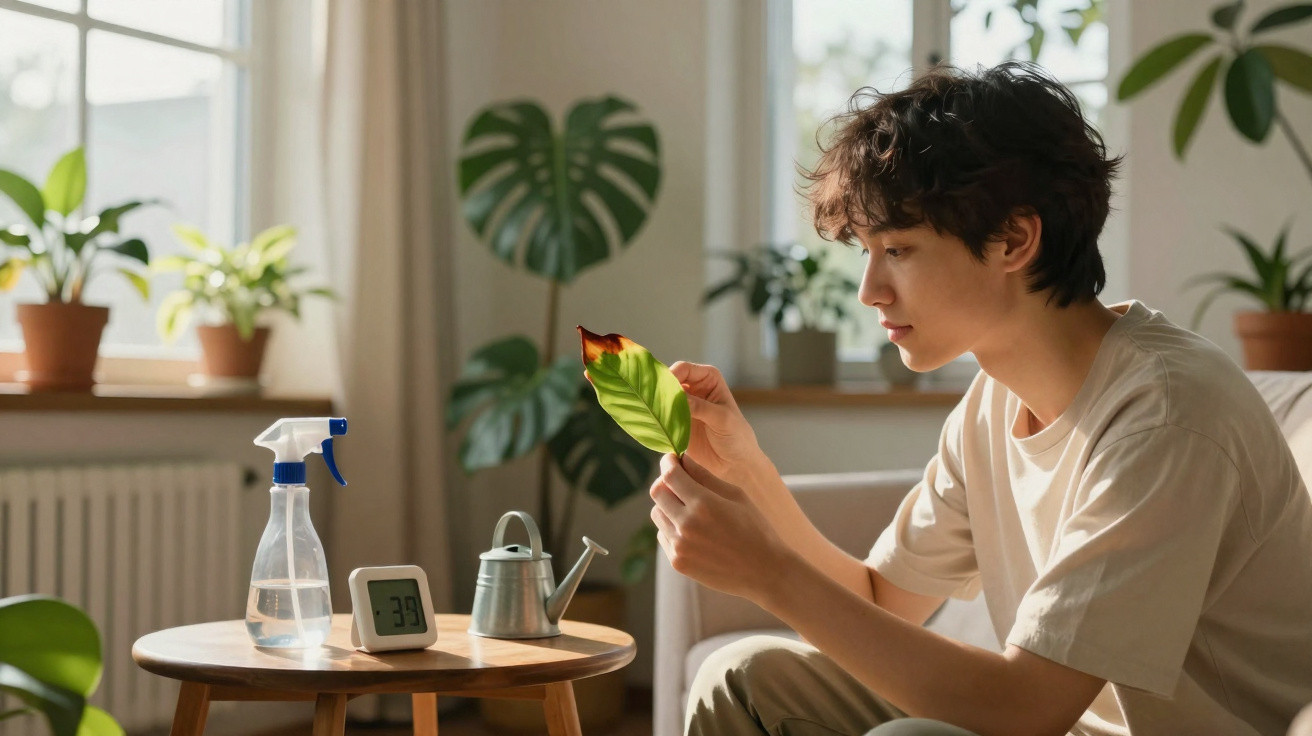
That fine brown line edging a leaf that was entirely green a week ago. You press it with your thumb, secretly hoping it will come away like a bit of dirt. It won’t. The edge is papery and brittle, almost singed, even though the rest of the leaf looks… fine. Still alive, just hurt.
You check another plant and spot the same pattern. Your spider plant has pinched brown points, your peace lily wears a rusty border, and your fiddle-leaf fig has a toffee-coloured rim. It feels undeserved. You water them, you chat to them, you swivel them towards the window. Yet the brown tips return anyway.
So what’s happening in the background, even when your care feels “right”?
The real reason your houseplants get brown tips
It’s common to reach for the most obvious explanation: “I must not be watering enough.” So you top it up, feel dutiful, and move on. Then, a few days later, the tips look worse. The leaves start to resemble they’ve been dunked in weak tea and left to dry, and irritation sets in.
The catch is that crispy tips usually aren’t caused by too little water. More often, the issue is what your water contains, and how moisture (and dissolved minerals) behave inside the potting mix. Your plant is drinking. But it may also be gradually stockpiling something it can’t process-and the furthest tissue from the stem, the tips, takes the hit first.
One dull Tuesday, I watched a friend’s previously full spider plant sag under its own weight. Each long arching leaf stayed green through the centre and looked scorched along the edges, as if a flame had skimmed past. She was sure she’d been doing everything properly: filtered water, plenty of light, consistent feeding. The compost was fresh. The pot had drainage holes. On paper, it all checked out.
We ran through a quick inspection. The compost was lightly moist, not waterlogged. There were no insects tucked beneath the leaves. There weren’t any obvious sunburn patches. Then we eased the plant from its pot. The roots were wound into a tight coil at the base, looping round and round-textbook rootbound stress. Combine that with a gradual accumulation of mineral salts from tap water and fertiliser, and the situation made more sense. The plant wasn’t simply thirsty or overfed; it was cramped, constrained, and carrying a build-up.
That kind of scenario is far from unusual. Polls and customer surveys from indoor gardening brands repeatedly show “brown tips on leaves” as one of the top two issues new plant owners search for. But the troubleshooting often ends at “maybe it needs more water” or “perhaps the air is too dry”. Meanwhile, in the pot, minerals from tap water and leftover fertiliser are slowly piling up. When water evaporates, salts remain and become more concentrated around the roots.
As plants draw water up through their tissues, those dissolved minerals come along for the ride. If there’s an excess, the plant can’t easily redistribute or get rid of it. The surplus tends to end up at the furthest points-the tips and edges of the leaves. That’s where cells eventually fail, leaving the familiar dry brown crispness. Dry indoor air from central heating or air-conditioning can add another layer, pulling moisture from leaves faster and putting those same tips under even more strain.
How to fix brown tips and stop them coming back
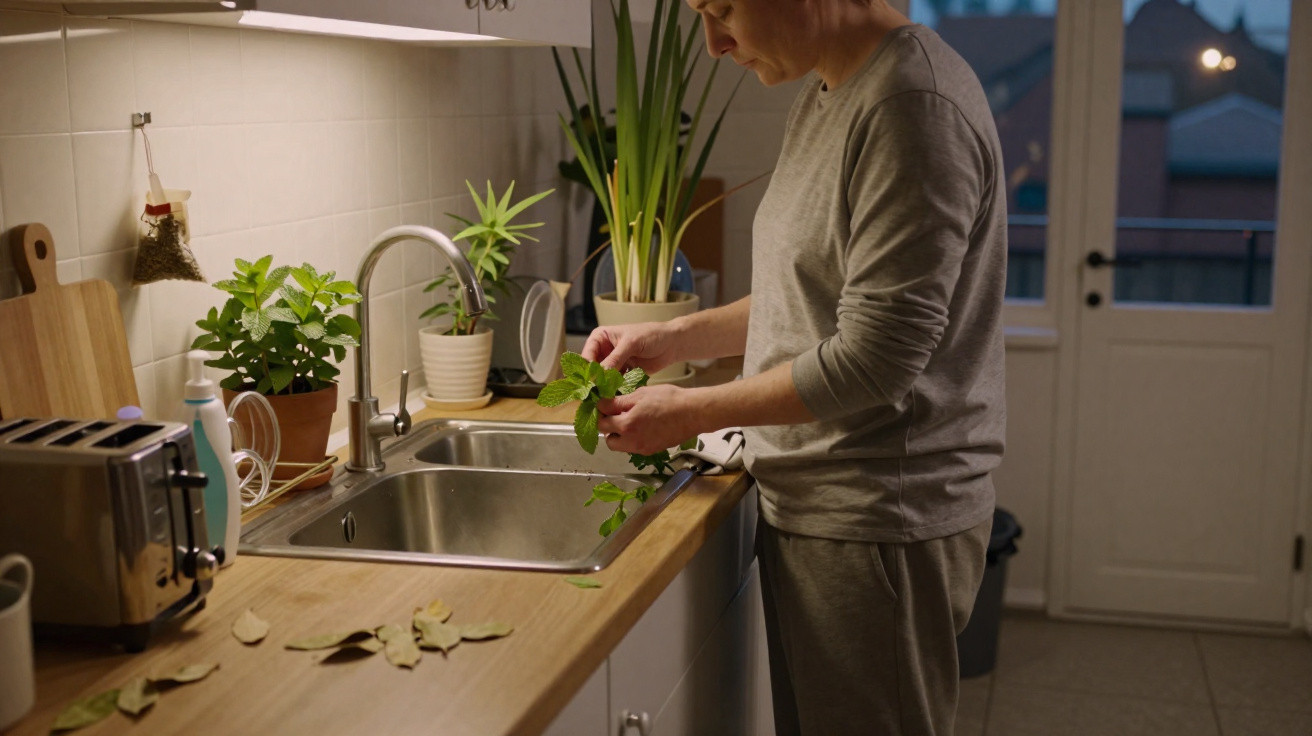
Begin with a practice that’s oddly overlooked: flushing the compost. The name isn’t glamorous, but the results can be. Move the plant to a sink or shower. Water slowly until the compost is fully soaked, then continue so plenty of water runs through the drainage holes and out of the pot. The goal is to rinse away excess mineral salts and fertiliser residue from the potting mix.
Allow it to drain thoroughly, and only put it back once it has stopped dripping. For plants watered with tap water, doing this every few weeks can make a noticeable difference to recurring brown tips. It’s essentially a rinse cycle for the root zone-like a deep clean for the compost, even if it’s October.
Let’s be honest: almost nobody does this routinely. Most of us water in a hurry, put the watering can back, and cross our fingers. If your plant sits in a container with no drainage holes, you’re making the job much harder. Excess salts and surplus water can’t escape, so they hang around the roots and intensify the stress. Moving into a pot with proper drainage can feel like hitting reset on a struggling plant.
Air conditions matter too. Brown tips are especially common in homes with strong heating, air-conditioning, or fans. The ends of leaves are often the first areas to dry where air movement is strongest. A shallow tray of pebbles with water beneath the pot, or clustering plants together, can gently increase humidity in the immediate area. You don’t need an industrial humidifier if you don’t want one-small, steady improvements are often enough.
Snipping the brown areas isn’t purely about appearances. Dead tissue won’t turn green again, but a neat cut just into healthy green (matching the leaf’s natural outline) can prevent the damaged edge from worsening and helps the plant look well tended. Avoid cutting into soft, pale tissue that may still be recovering.
“Brown tips are almost always a message, not a failure,” says one urban plant coach I spoke with. “The plant is telling you where the stress shows first - your job is to read the handwriting at the edges.”
To shift things without turning plant care into a second job, aim for small habits you can repeat. Here’s a quick snapshot:
- Use room-temperature water, and when possible leave tap water to stand overnight.
- Flush the compost thoroughly every 4–6 weeks for plants that receive tap water or regular fertiliser.
- Once per season, check whether roots are circling the base-repot if they are.
- Position plants away from hot radiators, cold draughts, and strong vents.
- Trim dead tips using clean scissors to reduce ongoing stress and help air move around the leaf.
Most of us know the feeling: you notice yet another browned leaf and get a pang of guilt. The aim isn’t a flawless, Instagram-only plant shelf. Plants are living things in a home that changes constantly, so a bit of wear is normal. What matters is adjusting a few quiet routines so your plants aren’t always teetering on the edge of dehydration and salt stress.
What brown tips are really telling you about your home
Try treating a brown-tipped plant like a small investigator. Where is the damage exactly? Only the very end, or the full edge? Is it limited to older leaves, or does it show up on new growth as well? Each pattern can point towards a different part of the story: water quality, humidity, root room, and how your feeding schedule lines up. The more you observe, the less random it feels.
If older leaves develop crunchy brown tips while new leaves remain fine, it often suggests slow, long-term salt accumulation. If new leaves appear with damaged tips from the start, the stress is happening now-perhaps a cold draught, or a recent repotting followed by fertiliser that’s too “hot” (too strong). When the entire leaf margin browns, it may be a combination of dry air and irregular watering, where the plant swings between drought and soaking.
This is where houseplants quietly reflect your home back to you. Brown tips often arrive in winter, when radiators are running and windows stay shut for days. They can appear after a hectic period when watering becomes patchy. They might crop up after moving to a new flat with harder tap water than you’re used to. These marks aren’t there to judge you; they’re small clues that your indoor conditions are changing faster than your plants can adjust.
Noticing how quickly the tips brown-and on which plant-can even show you which species act as your “early warning” indicators. Spider plants, dracaenas, and peace lilies are well known for signalling trouble at the tips long before other plants show symptoms. When they start to crisp, it’s a prompt to pause, look more closely, and tweak your routine. That brown edge is a message your home is writing in real time.
Once you see it that way, you may feel less irritated by every flaw and more interested in what it means. The question shifts from “What am I doing wrong?” to “What is this plant showing me about the way we share this space?”
| Key point | Detail | Why it matters to you |
|---|---|---|
| Build-up of mineral salts | Salts from tap water and fertiliser concentrate in the compost and scorch leaf tips. | Helps you see that the issue is often about water quality and the potting mix-not just how often you water. |
| Dry air and cramped roots | Heating, air-conditioning, and rootbound plants increase water stress and lead to brown tips. | Highlights home and pot factors you can adjust without overhauling everything. |
| A better care routine | Regular flushing, tidy trimming, and more thoughtful watering limit the damage. | Gives you practical, manageable steps you can fit into everyday life. |
FAQ:
- Should I cut off all the brown tips on my plant? Yes-trim them with clean scissors, following the leaf’s natural shape. Remove only the dead, crispy section plus a very small amount of green so the cut blends in.
- Are brown tips always caused by tap water? No. Hard tap water and salt build-up are major contributors, but dry air, rootbound pots, and inconsistent watering also matter.
- Will a plant with brown tips ever fully recover? The brown tissue won’t turn green again, but once you address the cause, new leaves can grow in healthy. In time, the older damage becomes far less noticeable.
- Is misting the leaves enough to stop brown tips? Misting on its own usually makes little difference and may sometimes encourage fungal spotting. Put more effort into flushing the compost, ensuring drainage, and slightly improving local humidity.
- How often should I flush the soil to prevent salt build-up? Every 4–6 weeks is a sensible routine for most indoor plants watered with tap water and fertiliser, particularly in dry or heated homes.
Comments
No comments yet. Be the first to comment!
Leave a Comment