
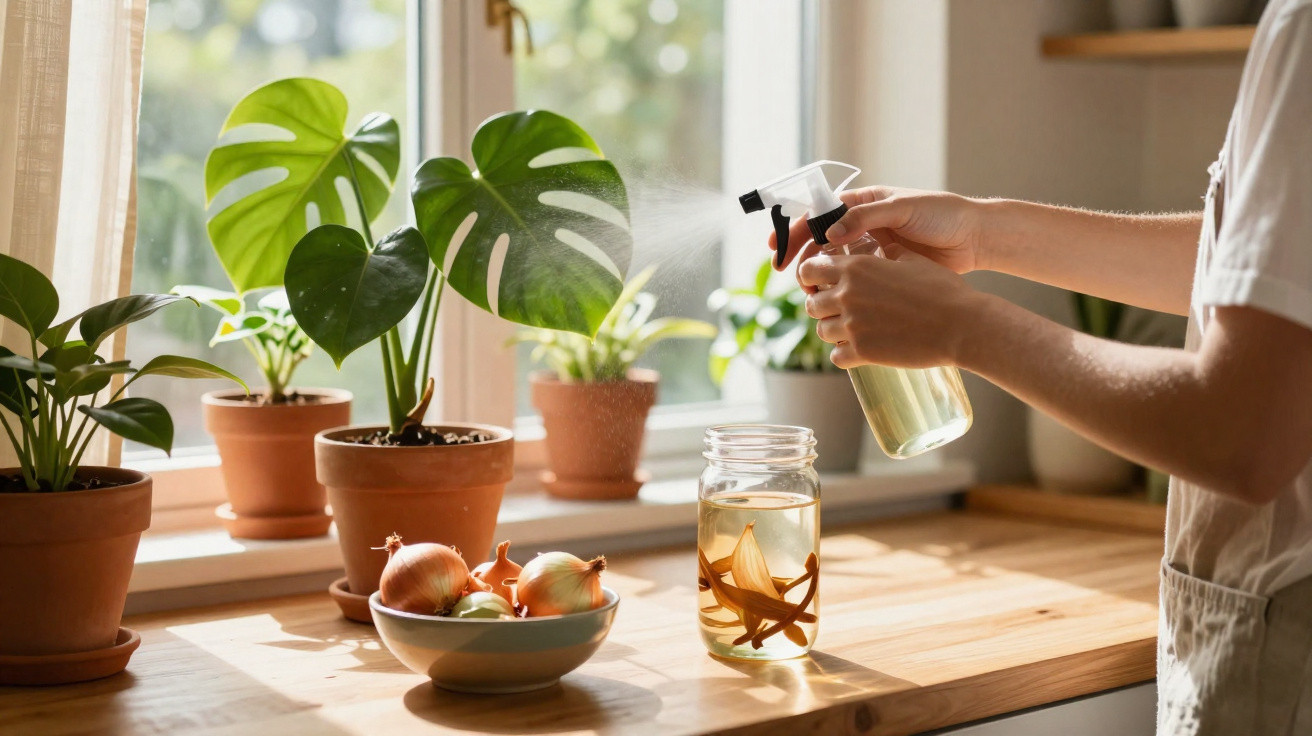
Some houseplants relish being fussed over. Others respond with a fine powder on the foliage, soil that never seems to dry, and odd speckling that appears overnight. A gardener I met insisted the answer is sitting in the kitchen caddy: onion peels, brewed up and used as a quiet but persistent antifungal spray.
My neighbour, Maya-a gentle, city-based gardener-was swirling a jar the colour of weak tea. Inside, onion skins spun round like rusty petals. “For fungus,” she said, misting the underside of a fiddle-leaf fig with the ease of someone who’s done it a hundred times. I braced myself for a sharp smell. It never arrived. Instead, the air had a clean, herbal note, and the plants seemed to stand a touch prouder, as if they recognised the routine. A week on, her calatheas-previously blotchy and miserable-looked almost buffed. I asked how she made it. She smiled as though it were the most obvious thing in the world.
Why onion peels make a tough antifungal ally
Onion peels offer more than pigment. They contain quercetin, sulphur compounds and phenolics-substances that have been studied for their antimicrobial punch. The fungal culprits that leave a chalky white coating on leaves or a soft, fuzzy ring near the compost line don’t cope well with those compounds. It isn’t a miracle cure, but it can shift the balance back towards the plant. By soaking dried skins in hot water, you draw those active components into a straightforward extract. What you get is a gentle, plant-friendly spray that helps stop spores spreading and settling in.
I watched Maya use it on a pothos that had patchy grey fuzz around a node. Every three days she applied a light mist, focusing under the leaves and along the stems-anywhere moisture tends to sit. By day nine, the fuzzy edge had pulled back, and fresh leaves opened without that dull, dusty film. It wasn’t dramatic. It was consistent. She recorded everything in a small notebook-dates, notes, tiny sketches. Page after page, it added up to the same theme: noticeably fewer flare-ups after two weeks, and hardly any after four. One small kitchen habit, with visible results.
What’s going on is micro-ecology rather than magic. Fungal spores thrive in stale air, lingering humidity and the sort of mild neglect that’s easy to slip into. Onion peel extract makes the leaf surface less inviting by leaving behind compounds fungi don’t like. You’re not sterilising everything; you’re nudging the system. When you pair that with more airflow, better light and more careful watering, you remove the conditions fungus depends on. It won’t fix chronic overwatering or dark corners all by itself. But when your plants are generally doing well, it acts like a low-key bouncer on the door.
How to make and use the onion peel antifungal spray
Collect the papery skins from two or three onions. Red and yellow both work, although red onions often produce a deeper-coloured brew. Give the peels a quick rinse to remove kitchen dust, then lay them on a plate to dry for a few hours. Warm 500 ml (about 2 cups) of water to a gentle simmer, switch off the heat, add the peels and cover. Leave to infuse for 6–12 hours. Strain into a clean spray bottle, mix in 1–2 drops of mild washing-up liquid as a surfactant, then top up with cool water if you need to. Keep it in the fridge and use it within a week.
When you’re ready to apply, mist the underside of the leaves first, then the tops, then the stems-avoiding open flowers. Repeat every 3–4 days for two weeks, then stop and watch what happens. I prefer spraying in the morning so any remaining moisture can dry by afternoon. If you notice yellowing or signs of stress, dilute the mixture 1:1 with water and try again. Fungus hates persistent routines far more than heroic one-offs. Aim for light, repeated applications rather than a single heavy soaking.
People tend to go wrong in three predictable ways: they spray until the leaves are dripping, they leave plants packed together with poor airflow, and they treat once and then miss the follow-up. Realistically, hardly anyone keeps up a daily schedule. So attach it to something you already do-while the coffee brews, while the kettle cools, when a podcast starts.
“You don’t need perfect,” Maya told me, shaking her amber bottle. “You need consistent, gentle pressure.”
- Patch test: spray a single leaf and wait 48 hours before treating the whole plant.
- Ventilate: run a fan on low for 30 minutes after spraying.
- Rotate: combine onion spray with brighter light and better watering habits.
- Pause on blooms: avoid flowers to reduce the risk of spotting.
- Replace weekly: a fresher extract tends to work better.
What gardeners notice once they try it
Most of us have seen a plant look fine on Monday and oddly haunted by Friday. Onion peel spray won’t turn you into a superhero, but it does tilt the odds. Leaves stay cleaner between waterings. Compost surfaces look less mossy. Small outbreaks settle down before they become a full-blown saga. The room feels less friendly to the sort of fungal drama that loves dim, still corners-and that forgotten mister left on full blast.
One unexpected effect is that it makes you more observant. You start spotting tiny cues: a leaf margin that curls when the air turns stuffy, or a mark that appears after a couple of rainy days. The spray becomes a small ritual that sharpens your eye. This costs almost nothing and asks for a little presence. And yes, the smell is faintly botanical rather than like a sandwich shop. If someone at home is sensitive to scents, spray when they’re out and open a window. The plants will appreciate the fresh air.
It also changes how you see waste. What you’d normally throw away becomes a form of care, which can feel surprisingly grounding. A bowl of peels drying on the side becomes a quiet promise that you’ll check the ferns tomorrow. You learn which plants benefit from a gentle wipe with a soft cloth before spraying, and which prefer being left alone with a bit of breeze. No bravado-just the small home rhythm that keeps green things thriving.
If a plant develops a more stubborn case-powdery mildew on a squash vine overwintering indoors, for example-use the spray alongside better spacing and a brighter position near a window. Remove the worst-affected leaves to lower the spore load. If possible, keep humidity between 40–55%. If it’s still going after 3–4 weeks, escalate: prune more firmly, repot into fresh compost, or bring in a targeted fungicide labelled as safe for houseplants. The onion peel spray is a first step, not a creed. It’s a nudge, not a miracle. And on most days, that’s enough.
| Key point | Detail | Why it matters for you |
|---|---|---|
| Onion peel extract basics | Steep dried peels in hot water for 6–12 hours, add a drop of soap, spray the underside of leaves | A quick, frugal, low-risk way to curb common fungal problems |
| Routine beats intensity | Apply every 3–4 days for two weeks, then reassess and adjust | Helps prevent flare-ups without overtaxing plants or your timetable |
| Environment still matters | Airflow, light and watering habits determine long-term success | Lasting results rather than short-lived fixes |
FAQ:
- Does the spray smell like onions? Surprisingly mild. Once cooled and diluted, it comes across as more herbal than kitchen. Any scent usually disappears within minutes.
- Can I use it on all houseplants? Most leafy houseplants cope with it well. Always patch test one leaf and wait 48 hours, particularly with thin, fuzzy or variegated leaves.
- How long does the extract keep? Up to one week in the fridge. After that, compost what’s left and make a fresh batch so the strength stays consistent.
- Will it cure severe fungal infections? It can help with mild to moderate cases. For persistent infections, combine it with pruning, improved airflow and, if necessary, a labelled fungicide.
- Can I use the same batch on outdoor plants? Yes, but rain will dilute it quickly. Spray after sunset or early morning and repeat more often during humid spells.


Comments
No comments yet. Be the first to comment!
Leave a Comment