
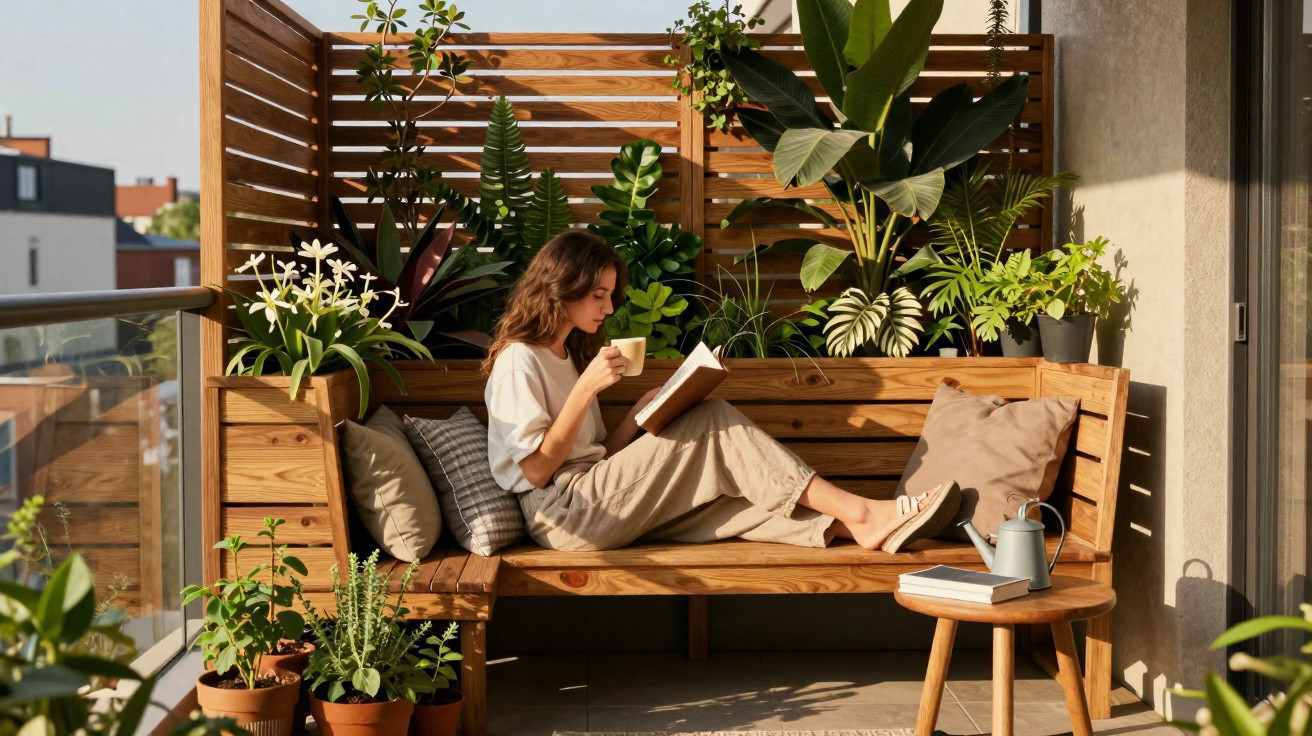
Living in a city usually means the same familiar moment: you sit down on the balcony with a coffee or an after-work beer, and within seconds you can feel the curious eyes from the building opposite. Major alterations are often prohibited or simply too expensive, and freestanding privacy walls can eat up precious space. This is exactly where a modular IKEA privacy screen comes in-combining three functions in a single piece of outdoor furniture and noticeably upgrading even the smallest outside areas.
Why privacy on balconies and tiny gardens matters so much
Urban living keeps getting denser: balconies are shrinking, buildings are going up closer together, and the gaps between homes are narrowing. At the same time, plenty of people want an outdoor retreat that feels like “their own room” rather than a stage for the whole neighbourhood.
Market analysis reflects that shift. The global market for privacy screening and fencing is already close to 19 billion dollars-an unmistakable signal that outdoor seclusion is becoming more desirable, much like living space itself continues to rise in price. In big cities especially, every square metre counts.
Whoever feels unobserved uses their balcony or garden far more often-for eating, working, sunbathing, or simply taking a breath.
In day-to-day reality, many traditional options fall short. Permanent fences or slatted barriers may require permission, large planters take up too much floor space, hedges grow slowly and demand ongoing care, and renters are frequently not allowed to drill or fix anything permanently. What people need instead is something flexible, movable, and compact.
The IKEA trick: a mobile privacy screen that does far more
That is the niche IKEA’s NÄMMARÖ range aims to fill. At the centre of it is a freestanding screen module that can be positioned without screws and without fixing anything to a wall. The basic version is a privacy panel made from solid acacia wood-known for being sturdy and weather-resistant while still looking warm and home-like rather than like industrial fencing.
The slats are spaced so that air and light can pass through, but direct sightlines are disrupted. Someone standing at a window opposite will only catch vague outlines, and the balcony immediately feels more protected.
3-in-1 function: privacy screen, bench seating, and storage in one
The more interesting option is the expanded setup, because it bundles three jobs into one piece.
- Privacy screen to block nosy neighbours
- Bench seat for sitting and relaxing
- Large storage compartment for cushions, throws, and small items
The construction is modular: the screen sits on top, while below it is a bench element with an integrated box. The overall size is roughly 80 × 68 × 140 centimetres-small enough for typical city balconies, yet substantial enough to make a visible difference.
Inside the box you can stash seat pads, blankets, children’s toys, or garden tools, helping the balcony or terrace avoid looking permanently cluttered. One user review on a ratings platform sums it up neatly: “Super product, easy to assemble and finally space for all the seat cushions.” It’s precisely this combination of tidiness, comfort, and privacy that makes the idea appealing.
In terms of price, a single privacy element sits at around €75. For the version with bench seating and storage, you should budget-depending on promotions-between €170 and €220. It isn’t a bargain-basement buy, but compared with fixed privacy systems or bespoke joinery solutions, it is still relatively reasonable.
How the module changes everyday life on small outdoor spaces
One practical detail matters: the unit is free-standing. Nothing gets screwed in, and nothing is anchored to the building. That means you can shift it around easily or re-angle it completely.
In everyday use, that flexibility opens up more options than you might expect:
- In the morning, move the screen to block low, direct sun.
- In the evening, rotate it so the line of sight from a neighbouring balcony stays cut off.
- At the weekend, push two modules together to create a small lounge corner.
On a narrow balcony, positioning the element parallel to the railing can be especially effective. Upward glances from the courtyard below are reduced, while you can still look outward into the open. If you add a tall planter or potted grasses above the 140-centimetre height, the screen becomes even more effective and the space starts to resemble a miniature urban garden.
In a tiny city garden, the piece works well as a divider: the storage bench separates a dining spot with a table from a lounging zone with a sun lounger. At the same time, it can hide less attractive necessities such as bins or an outdoor air-conditioning unit. Arrange two elements in an L-shape and you get a cocoon-like nook-ideal for a reading corner or a sheltered children’s play area.
Vertical planting: turning the privacy screen into a green wall
Another advantage is that the slatted structure is well suited to vertical planting. Lightweight pots with hooks, simple trellises, or strings can be attached without much effort. That creates a compact “green wall” effect without sacrificing floor space for beds.
Vertical gardening is widely seen-especially in cities-as one of the most effective ways to get maximum use out of minimal space.
Small trailing herbs such as thyme or oregano, seasonal flowering plants, or climbers like nasturtiums add colour and scent to the screen. If you prefer a cleaner look, evergreen plants or grasses in simple pots keep the balcony looking presentable even through the colder months.
Care and durability in everyday use
Because the furniture is made from acacia, it benefits from a little maintenance if you want it to keep looking good. Refreshing it once a year with wood oil or a protective stain is recommended. Dirt can usually be removed with water and a little soap. If you cover the box in winter-or store it under shelter where possible-you can significantly extend its lifespan.
For rental homes, the key point is that nothing is permanently attached, so you can take the module with you when you move out. That makes it easier to justify investing in a better, more usable balcony setup in the first place.
What to check before you buy
Before heading out to purchase, it’s worth running through a few practical considerations:
- Balcony load limits: wood, storage contents, and plants add weight. It is usually fine, but a quick check never hurts.
- Wind exposure: in very windy locations, an open slatted screen can wobble. In that case, adding weight inside the storage box or using non-slip pads can help.
- How you use the space: if your balcony is mainly for meals, you’ll likely place the module to the side of the table. If you work or read outside, you can create a more tucked-away corner with the bench and a small side table.
A simple sketch of your layout on paper is often enough to judge how many elements make sense. Sometimes a single module delivers a noticeable improvement-especially if one specific neighbour’s window is the main problem.
How to combine the furniture with other ideas
This IKEA privacy screen tends to work best alongside a few other simple upgrades. A small outdoor rug visually separates the “living area” from the rest, while fairy lights or solar lamps create a cosy evening atmosphere without harsh floodlight glare.
Where space is extremely tight-say, only about a metre deep-you can swap standard balcony furniture for folding chairs or stools and store them away after use in the box. That keeps the area adaptable while maintaining the protected feel.
The psychological effect is also important: when you deliberately design your outdoor space, you start to treat it as a room of its own rather than a pass-through zone. A mobile unit like NÄMMARÖ lowers the barrier to actually using that space-whether for a quick lunchtime home-office session or a short power nap in fresh air.
Ultimately, it is less about the item itself and more about the underlying principle: in tight spaces, multifunctional solutions help turn an anonymous balcony into a personal retreat. An element that combines visual screening, seating, and storage fits that logic neatly-and means the nosy neighbours may still be there, but they matter far less in everyday life.

Comments
No comments yet. Be the first to comment!
Leave a Comment