
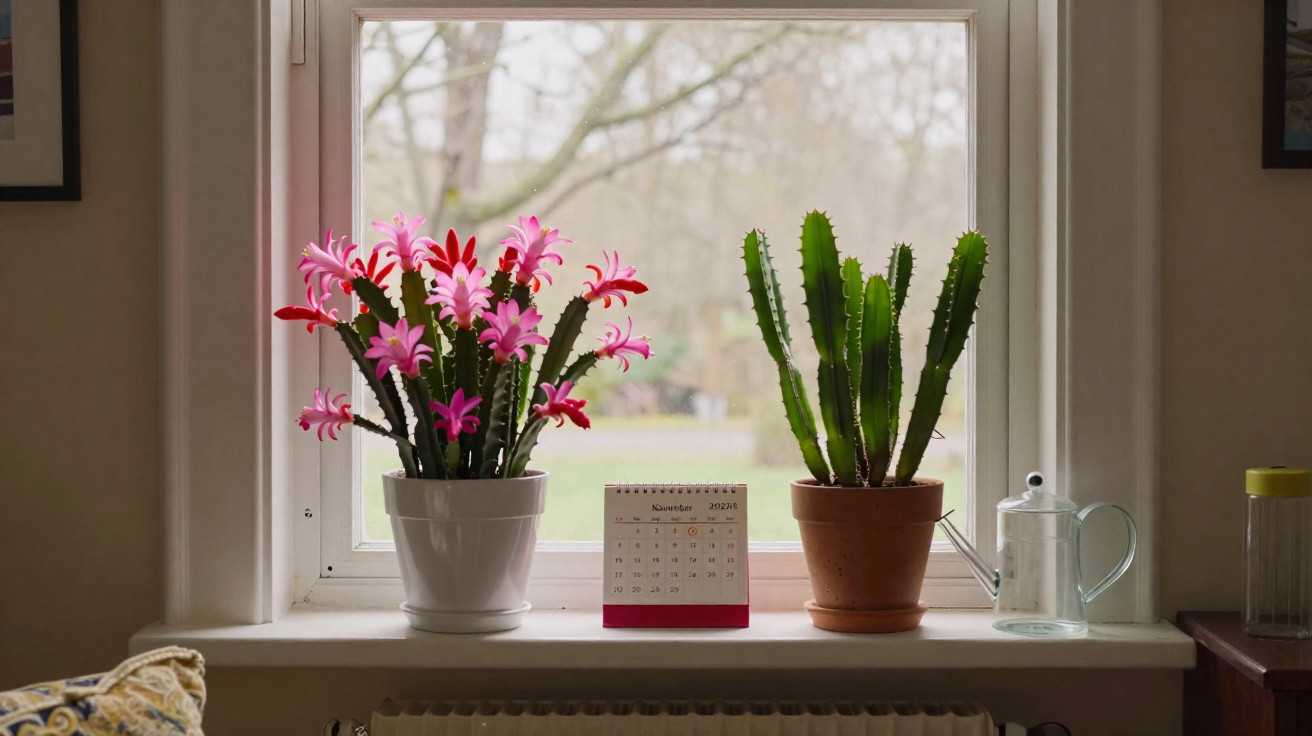
A simple winter mistake is often the reason.
Plenty of plant lovers have seen it happen: at the garden centre, the Easter cactus was covered in flowers; at home it lights up your room for one season - and the following year nothing happens. The segments stay a rich green and the plant looks perfectly healthy, yet when Easter comes around there is not a single bud in sight. This let-down is rarely down to a lack of a “green thumb” and far more often comes from getting the winter routine wrong.
What makes the Easter cactus so special
The Easter cactus (botanical name Rhipsalidopsis, sometimes also Hatiora) is not a desert cactus but a tropical epiphyte. In its natural habitat - the humid forests of South America - it grows on tree branches in filtered light and moist air, a world away from blazing sun and bone-dry compost.
That is why it needs very different conditions in the home than many classic cacti:
- bright light, but no direct midday sun
- a loose, free-draining mix (not heavy, all-purpose potting compost on its own)
- evenly, lightly moist compost, but never waterlogged
- not positioned in extremely dry air from central heating
Its natural flowering window is between March and May. During that period, the plant produces upright, star-shaped blooms - provided the preceding yearly rhythm has been right.
Easter cactus or Christmas cactus - the crucial difference
Many households mix up the Easter cactus and the Christmas cactus. That confusion quickly leads to the wrong care at the wrong time - and, inevitably, disappointment.
| Feature | Easter cactus | Christmas cactus |
|---|---|---|
| Flowering time | spring (March–May) | winter (November–January) |
| Stem segments | more rounded, with softer outlines | clearly toothed, with sharper edges |
| Typical purpose | flowering at Easter | flowering during Advent |
If you treat an Easter cactus like a Christmas cactus - or simply keep it in “summer conditions” all year - you can unintentionally prevent the very thing you are hoping for: buds for the Easter period.
This winter oversight stops buds from forming
The most common reason for a lack of flowers is spending winter somewhere that is too warm and too bright, without a true rest period. Many people leave the pot on a windowsill above a radiator and carry on watering “as usual”. The plant may put on growth, but it will not set buds.
"The Easter cactus needs 8 to 12 weeks of a real winter mode: cooler, darker, drier - otherwise it gets stuck in a ‘permanent summer’ and skips flowering."
The make-or-break period runs from late autumn into late winter. During this time, the cactus switches internally from growth to preparing to flower. If the conditions are off then, it simply does not develop the groundwork for buds by Easter.
What the ideal yearly calendar looks like for your Easter cactus
Autumn: a gentle move towards dormancy
From September/October onwards, gradually cut back on watering. The segments should remain plump, but the compost should no longer be kept constantly wet. Stop feeding. The plant can now be moved to a slightly cooler, bright room - ideally away from the heat of a radiator-warmed windowsill.
November to January: the cool rest period
This is when it is decided whether spring brings flowers or just greenery.
- Temperature: ideally 10 to 15 °C, with 15 °C as the maximum
- Light: around eight hours of indirect daylight; avoid strong artificial lighting in the evening
- Darkness: at least twelve hours of undisturbed night - no constant living-room lights, no TV flicker nearby
- Water: a small drink every three to four weeks is enough; the root ball must never become saturated
An unheated spare room, a cool hallway with a window, or a bright stairwell can all be excellent locations. One key point: do not set the pot directly on a cold floor, as this can damage the roots.
February: waking it up slowly
In February, raise temperatures gently to about 18 to 20 °C and move the cactus into brighter conditions again, while still avoiding direct midday sun. Increase watering slightly; the root ball may be kept lightly moist more often, but it should not sit wet for long periods.
This is when the first signs of buds appear. Any sudden change - moving it, draughts, a burst of heat from a radiator - can cause those developing buds to drop within a few days.
March to May: the Easter-time reward
Now the Easter cactus shows what all the effort was for, producing bloom after bloom. Keep care steady and consistent:
- a bright position without harsh midday sun
- keep the substrate lightly moist, but avoid “wet feet”
- no repotting, and no constant turning on the windowsill
To boost humidity, one simple trick helps: place the pot on a saucer filled with damp expanded clay pellets, ensuring the pot itself sits above the water and stays dry. This raises the humidity around the plant without leaving the roots standing in water.
The biggest care mistakes - and how to avoid them
Too warm in winter
A permanent spot at 20 °C near a radiator almost certainly prevents flowering. The plant effectively assumes it is always the growing season and does not invest in buds. Better: a deliberate cool period within the acceptable range of 10 to 15 °C.
Overwatering
The Easter cactus appreciates moisture, but not waterlogging. Common warning signs of rot include translucent, soft stem segments or a musty smell coming from the pot. If that happens, the only option is to dry it out immediately and, if necessary, repot into fresh, airy substrate.
A suitable mixing ratio, for example, looks like this:
- roughly two thirds high-quality potting compost
- roughly one third structure-building materials such as perlite, coarse sand, pumice, or fine pine bark
Light pollution during the rest period
One factor many people underestimate: the Easter cactus responds to night length. If lights stay on in the same room until midnight throughout winter, it disrupts the plant’s internal timing. In the quiet months, a room that truly becomes dark in the evening can make a real difference.
Stress when buds are forming
As soon as buds can be seen, the plant becomes extremely sensitive. Typical reasons buds drop include:
- the pot is repeatedly turned or moved
- icy draughts when airing the room
- sudden heat, for instance from direct spring sunshine
At this stage the rule is simple: choose a suitable spot - then change as little as possible.
How to keep a shop-bought “flowering cactus” thriving long term
Many plants arrive from retailers with a kind of “bloom turbo”: they have been deliberately timed using controlled light and temperature. At home those conditions are missing, so the cycle often breaks.
From the first year after purchase, there is only one reliable approach: switch it over consistently to its natural rhythm. That means that even if the cactus is a little reluctant in the first “free” spring, it is worth sticking with the plan. By the second year - often already in the first - a well-managed winter routine is rewarded with noticeably fuller cascades of flowers.
If you own more than one plant, you can easily run a comparison: give one cactus the recommended 8 to 12 weeks in cooler, darker conditions, while the other stays as usual in a warm living room. The difference in spring flowering is often more convincing than any theory - and it reassures many people that the cool pause will not harm the plant.


Comments
No comments yet. Be the first to comment!
Leave a Comment