
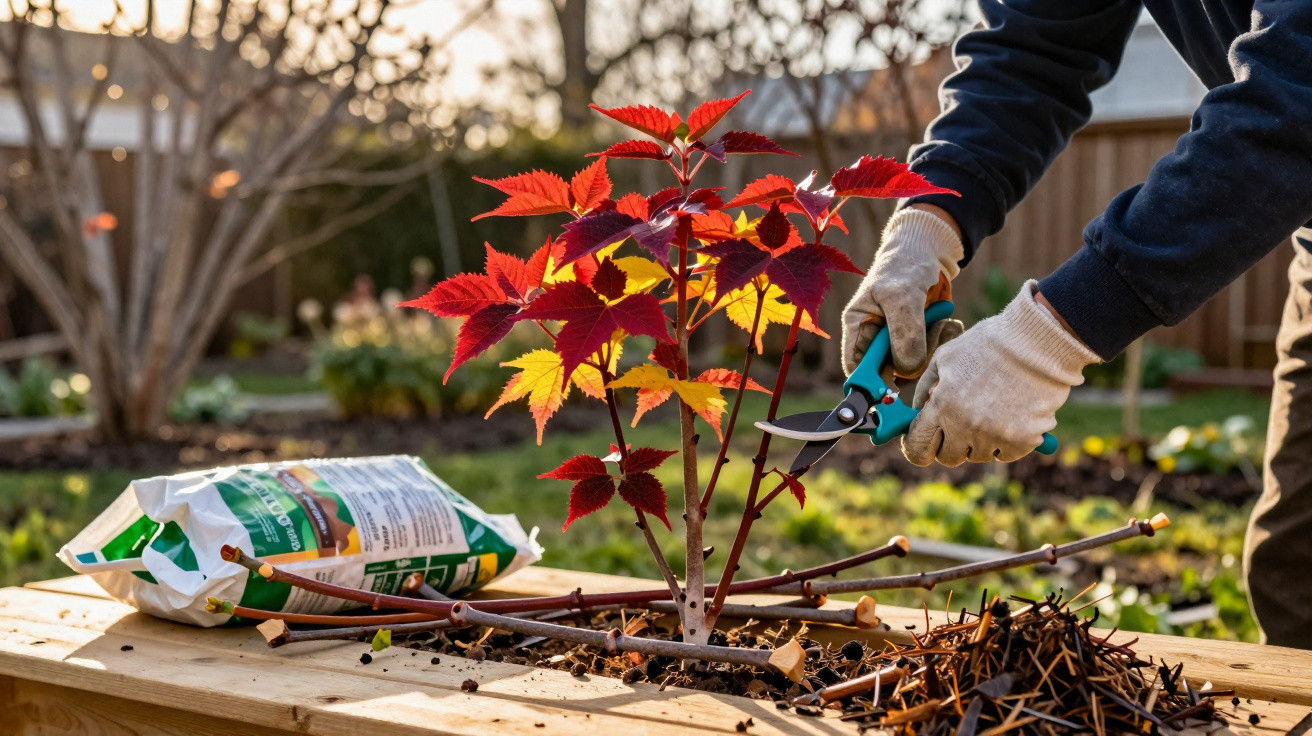
Many gardeners look over the fence and wonder why their neighbour’s Cornus shrubs blaze through winter like lit torches, while their own plants amount to little more than grey-brown sticks. The explanation is rarely a “secret variety” - it’s almost always a clear pruning approach, and the key moment for it is right now, in late winter.
Why Cornus often looks dull in winter
Cornus species such as common dogwood (Cornus sanguinea) and Cornus alba are among the most striking winter shrubs you can grow. Depending on the cultivar, fresh young stems can glow in strong red, orange, yellow, or even two-tone shades. Yet after a few years, that display frequently fades into a drab, twiggy thicket.
This comes down to stem age. As shoots get older, the bark thickens and becomes rougher, and the pigments gradually diminish. The shrub is effectively armouring itself against cold and bad weather - but the decorative winter colour is the price.
Only young wood colours up intensely - if you don’t prune, you’re choosing to go without the spectacular winter colour.
Left alone, a Cornus will keep growing, but it tends to look more tired each year. If you want the colour to stay vivid, you need to make the plant produce new wood on a regular basis.
Why the mid-February window is so critical
It’s not just that you prune Cornus - it’s when you do it. For Cornus shrubs, the best period is late winter, roughly between 10 and 25 February. In this short window, the plant is already gearing up for spring internally, with buds close to breaking.
If you prune much earlier, the cuts are left exposed for longer and hard frosts can cause damage. Leave it until well into March and the shrub will already have invested energy in growth that you then remove. Either way, you’re draining the plant for no benefit.
Cut at the right moment and you get the opposite outcome: the wounds seal quickly, and the shrub channels its spring energy into strong, fresh shoots - exactly the stems you want glowing next winter.
How to tell which stems need to go
A lot of home gardeners “tidy” Cornus by cutting it back a bit and then wonder why nothing improves. The real trick is to remove old wood deliberately and prioritise the youngest shoots.
You can usually judge stem age by appearance:
- 1-year-old shoots: very smooth, fairly thin, with clear, strong colour (intense red, yellow, or orange).
- 2-year-old shoots: still colourful, but slightly duller at the base, with the first branching.
- 3 years and older: grey-brown, cracked, often with thickening and small bumps.
For a genuine colour show, the young wood is what matters. Anything that looks obviously aged steals both space and light from the newer stems.
Being bold pays off: if you remove old wood consistently, you bring the colour back to eye level.
Radical or gentle? Two strategies for the perfect winter prune
The tough option: full stooling (recépage)
If you want the strongest possible effect, a decisive method works best. Professionals often call it stooling: using sharp, clean secateurs or sturdy loppers, you cut all older stems back to around 10 to 15 centimetres above ground level.
Vigorous cultivars such as Cornus alba ‘Sibirica’ cope with this extremely well. The shrub responds by producing a dense cluster of fresh, brightly coloured stems. This approach is particularly suited to free-standing specimen shrubs that are meant to be a winter focal point.
Many professionals repeat this “reset” every one to two years. Some gardeners hesitate at first because the shrub appears to vanish immediately after pruning. Within weeks it pushes out strongly again, and by the following winter the result is at full strength.
The cautious option: staged renewal pruning
If your Cornus sits in a mixed hedge or at the back of a border, a gentler approach can make more sense. In that case, remove only about one third of the oldest stems at the base each year. The plant rejuvenates steadily without looking completely bare.
This is especially effective for older plants that have become very woody. After three years of consistent work, you’ll have a noticeably younger, more colourful shrub that still keeps its structure.
How to do it step by step
- Pick a suitable day from mid to late February, ideally frost-free.
- Sharpen and disinfect your tools (clean cuts heal faster and more neatly).
- Assess the shrub from the outside: where is the old grey wood, and where are the young, coloured stems?
- Cut the old stems off at ground level, or just above it.
- Remove inward-growing or crossing branches in the centre to let light into the middle.
- Thin overly crowded young shoots slightly so the remaining stems can grow strongly upwards.
After pruning, the shrub should feel open and airy, with room for new upright growth. Doing this carefully sets the visual foundation for next winter’s display.
Care after pruning: feed, mulch and water
A heavy prune is hard work for the plant. The shrub will respond with a burst of growth, and that takes nutrients. A bucket of well-rotted compost or an organic general fertiliser around the root zone helps replenish energy.
Lightly loosen the soil with a rake so the feed can wash in. Then apply a thin mulch layer of bark chippings or leaves to help moisture stay in the ground. In dry springs, extra watering is worthwhile so the new shoots don’t stall straight away.
If you feed and mulch after pruning, you’ll be rewarded with strong, thick colour stems - not thin, weak threads.
What else you can do with the prunings
Surprisingly often, the cut stems go straight into the green waste bin. That’s a missed opportunity: red and yellow Cornus sticks are useful for plenty of creative jobs.
- Indoor décor: a bundle of Cornus stems in a glass vase looks like a minimalist art piece.
- Natural supports: in the veg patch, the straight rods can prop up peas, beans, or mangetout.
- Woven features: the flexible shoots can be turned into small wreaths, border edging, or decorative pieces.
If you enjoy hands-on projects, you can even use the branches for simple weaving. Younger stems, in particular, bend readily without snapping.
Cornus cultivars that are especially impressive
Not every Cornus delivers the same intensity of stem colour. Some cultivars are especially well known for standout winter stems, for example:
| Cultivar | Stem colour | Special feature |
|---|---|---|
| Cornus alba ‘Sibirica’ | bright red | ideal for hard pruning, very robust |
| Cornus sanguinea ‘Midwinter Fire’ | red-yellow, flame-like | colour gradient from yellow through orange to red |
| Cornus stolonifera ‘Flaviramea’ | light yellow, almost neon | perfect for contrast against dark backgrounds |
These colours are particularly striking alongside evergreens, dark conifers, or snow-covered ground. Combining several cultivars can create an almost painterly winter scene with multiple tones.
Common mistakes - and how to avoid them
The same Cornus problems crop up in gardens again and again. With a few simple adjustments, they’re easy to put right:
- Mistake: Only shortening the tips.
Better: Remove old wood at the base and keep the younger stems. - Mistake: Not pruning for years.
Better: Renovate gradually over several winters, taking out the oldest stems each time. - Mistake: Pruning straight after a severe frost.
Better: Wait for mild, low-frost days in late winter.
Handled this way, Cornus quickly shows how forgiving it is: it responds with vigorous new growth and much stronger colour.
What beginners should also keep in mind
Newer gardeners often worry that such a hard cut will harm the shrub. With healthy, well-established Cornus plants, it’s usually the other way round. This is a tough, reliable shrub that readily reshoots from the base. Only with freshly planted, very young specimens is it sensible to be gentler in the first one to two years and focus on gradual renewal.
If you have several shrubs planted in a line, you can vary the intensity: cut one back hard, the next only partly, and the third barely at all. That creates a tiered look that changes from year to year and keeps producing new colour nuances.


Comments
No comments yet. Be the first to comment!
Leave a Comment