
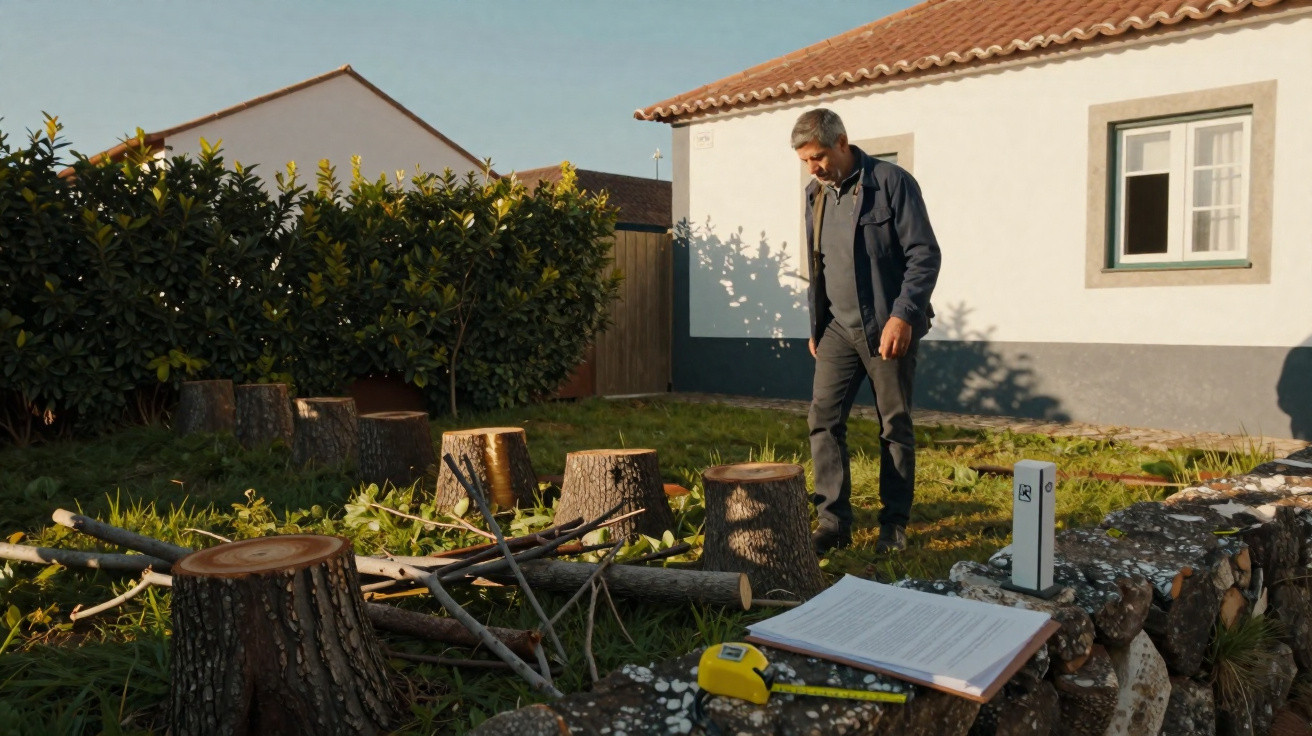
The sound of a chainsaw was what dragged him out of sleep. At first he mistook it for a lorry beeping as it reversed somewhere nearby, a low mechanical growl bleeding into a half-dream. Then came the clean snap of timber, the hiss and tumble of leaves, and a voice just outside his bedroom window: “That’s the last one.”
He lurched up, yanked the curtain aside, and felt his stomach turn.
The line of established trees that had bordered his back fence for twenty years had vanished. Where trunks once stood, there were only stumps. Limbs were stacked in heaps like evidence. His neighbour-wearing a hi-vis vest-was out there with two contractors, offering a satisfied little shrug: “Sorry, mate. I’ve got a right of light.”
The garden felt stripped back. Visible. Unprotected.
And in that moment it stopped being only about trees.
It became about power.
When your peaceful garden turns into a legal battlefield overnight
For plenty of homeowners, trees are not just greenery. They provide privacy, muffle noise, and create a living screen that makes the outside world feel further away. When that screen disappears in a single morning, the impact can be visceral. It’s not merely timber you’ve lost; it’s a sense of security.
From the neighbour’s side of the fence, the story can look completely different: a kitchen window they feel is blocked, a sitting room that stays dim, a garden that never seems to dry properly. They search online, stumble across the phrase “right of light”, and suddenly your maple or your cypress hedge becomes the villain in their version of events.
That is when the boundary between two homes starts to feel less like a line on a plan and more like a frontline.
Consider Tom, who owns a semi-detached house on a crowded suburban street. His rear garden had become a green corridor, thanks to four tall conifers planted along the boundary about twenty years earlier. Each spring, birds nested there. He used to drink coffee beside that dense wall of foliage-the same view that framed his children growing up.
His neighbour, Sarah, experienced those trees in another way. Her kitchen and an upstairs study sat on the shaded side. After years of tentative hints-“Have you thought about cutting them back a bit more?”-she finally reached her limit once she began working from home full time. One Monday, Tom woke to engines and the sight of helmets and saws. After a quick call to a local solicitor, Sarah convinced herself she could rely on a right of light to justify what was about to happen.
By 9 am the conifers were gone. And so, effectively, was the relationship.
In law, it is rarely as neat as the straight cuts left in bark. In many countries, a “right of light” is not something you automatically have. It is usually a specific legal easement, built up through long, uninterrupted enjoyment of light through a particular window or rooflight-often over 20 years or more. Even where that right exists, it almost never gives someone permission to step onto another person’s land and remove their trees.
If a neighbour cuts down trees on your side, it may amount to trespass. It may be criminal damage. It can expose them to costly claims covering the value of the trees, loss of privacy, and emotional distress. A right to light doesn’t magically trump ownership of the soil and what grows in it.
But once tempers rise and daylight turns into a symbol, common sense is often the first casualty.
What you can actually do when “right of light” is used as a weapon
If you wake to a stripped boundary and a neighbour brandishing “rights” as if they settle the matter, start with something practical: pause, and record everything. Photograph the stumps. Find older photos from previous summers showing the trees in place. Note dates, times, and any messages you exchanged about the trees.
Then keep it calm and factual: ask your neighbour where their legal advice came from. Did a solicitor genuinely tell them they could cross the boundary and cut? Do they have written permission from anyone? Often, what you will hear is hazy-“something I read online” or “a mate who knows property”.
That space between what they believe the law is and what it actually says is frequently where your leverage begins.
There is also a quiet trap many homeowners fall into at this stage: guilt. You start wondering whether your trees really did make life miserable next door. So you swallow the shock, leave the damage as it is, and try to “keep the peace”.
The emotional pull is understandable-nobody wants to be cast as the unreasonable tree owner who steals someone’s daylight. But sympathy for a dark kitchen is not the same as accepting unlawful conduct. You can acknowledge the problem and still be firm that the boundary is not optional. That is the hard middle ground: being fair-minded without becoming a doormat.
Realistically, most people do not read their local rules on trees or boundaries until something has already gone wrong.
A London-based property lawyer put it bluntly when I asked: “People throw around ‘right of light’ like it’s a magic spell. In reality, it’s technical, limited, and almost never justifies cutting trees on someone else’s land without consent. When that happens, we’re usually talking claims, not rights.”
- Check local tree and boundary rules early
Look up your city or council guidance, particularly if the trees are tall or mature. Some trees may be protected, or require specific permission before they can be altered. - Keep a simple photo record
Taking a few photos each year of the boundary and garden can quietly protect you later by showing what stood where, and for how long. - Talk before anyone reaches for a chainsaw
A slightly awkward conversation now is usually better than a long, expensive legal dispute. You can suggest pruning, crown lifting, or thinning as a compromise. - Put agreements in writing
Even a friendly email-“Thanks for agreeing to reduce the height by two metres”-can prevent later “I never said that” arguments. - Get neutral advice, not street-law
Citizens advice services, legal clinics, or a short paid consultation can help you understand your real position before anger takes over.
Light, trees, and the messy question of whose comfort counts more
Beneath the legal terms sits a human problem that rarely unties cleanly. One person wants sunlight in their kitchen. Another wants a sheltered, private garden. Both pay rent or a mortgage. Both feel they have earned the right to enjoy their home without someone else’s choices throwing a literal shadow across it.
Property law attempts to balance these competing comforts, but it seldom feels fair in the moment. If your trees are suddenly gone, it can feel like a violation. If your living room has been dim for years because next door has left a hedge to run wild, it can feel like a slow squeeze on your quality of life.
Most of these disputes are not truly about windows and branches. They are about respect, territory, and the fear that your home-your one place of safety-can be changed by someone else’s decisions.
| Key point | Detail | Value for the reader |
|---|---|---|
| Right of light is limited | Often a specific legal easement, not a general weapon against trees | Helps you push back when neighbours overstate their “rights” |
| Unauthorised cutting can be unlawful | Crossing the boundary to cut trees may be trespass or criminal damage | Gives you grounds to claim compensation or demand repairs |
| Early, calm action protects you | Documenting, talking, and seeking advice before reacting in anger | Reduces stress, costs, and the risk of a feud that lasts for years |
FAQ:
- Can my neighbour legally cut my trees because of a “right of light”?
In most cases, no. A right of light rarely allows someone to enter your land and cut your trees without consent. They may be able to demand changes through legal channels, but taking matters into their own hands is often trespass or damage.- What should I do first if my trees were cut without permission?
Take photos from every angle, note the date and time, and write down what was said. Speak to the neighbour calmly, then get independent legal advice or contact a citizens’ advice service before agreeing to anything.- Do I have to reduce tree height if my neighbour complains about light?
Not automatically. Local rules, tree type, height, and distance all matter. Sometimes negotiation and sensible pruning solve it. If they claim a formal “right of light,” that usually needs proof and proper legal process.- Can I claim compensation for lost trees and privacy?
Often yes, especially if the cutting was done without your consent on your side of the boundary. Compensation can cover the value of the trees, replanting costs, and in some cases the loss of privacy or amenity.- How can I stop this kind of dispute before it starts?
Talk early, keep trees maintained, and be open to minor adjustments when a neighbour raises a genuine problem. Put any agreements in writing and get clear about where the actual boundary lies before anything serious is cut.




Comments
No comments yet. Be the first to comment!
Leave a Comment