
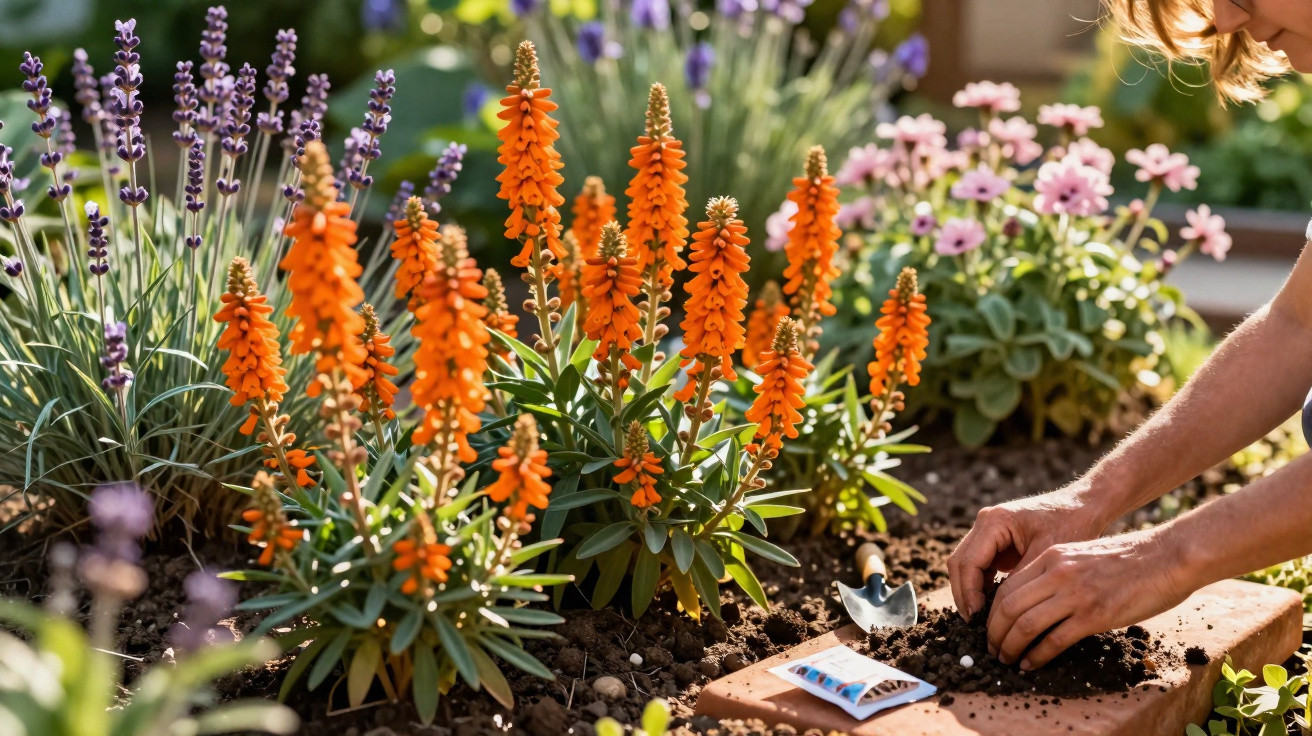
While many gardens fall back on the same geraniums, lavender and roses year after year, there are plants that instantly command attention and turn a polite border into a stage. One of them is Leonotis leonurus, often known in English as lion’s ear – a South African beauty that sits somewhere between a design statement and a burst of fireworks.
A perennial like a blazing chandelier
Leonotis leonurus is one of those plants you notice once and never quite forget. It grows in a neat, upright line and, in summer, can easily reach up to 1.80 metres. That puts it above many typical border companions and immediately changes the sense of height and space in the garden.
Its stems are sturdy and almost strictly vertical, carrying narrow, elongated leaves. Even before it comes into full leaf, the silhouette reads as graphic and architectural. The true spectacle begins when the flowers appear.
“Bright orange rings of flowers arranged in tiers make the plant look like a living chandelier.”
At regular intervals up the stem, dense whorls of flowers sit in bands around the plant. Each bloom is tubular, softly hairy, and coloured a vivid orange that brings flames to mind. From a distance, it can look like a deliberately styled fire ring climbing upwards level by level.
When it is in peak bloom, the effect is a vertical “firework” that is hard to miss in any border. It is not just people who stop to look: bees and butterflies are drawn to the nectar-rich flowers, and in warmer regions even nectar-feeding birds will visit.
The ideal spot: sun, warmth and free-draining soil
If you want Leonotis leonurus to thrive in your garden, one thing matters most: as much light as possible. This perennial comes from sun-drenched parts of South Africa and expects the same conditions when grown at home.
“The more sun, the more flowers – with fewer than six hours of direct light a day, it’s hardly worth it.”
The soil can be nutrient-rich, but it must above all be well drained. The plant does not cope well with waterlogged ground, especially in winter. A loose, sandy-loam mix works well, as does ordinary garden soil improved with sand or fine grit so excess water can run through.
For anyone who prefers to leave the hosepipe where it is: once established, Leonotis leonurus copes surprisingly well with longer dry spells. In low-rainfall summers it stays noticeably more relaxed than many classic border plants.
Quick check: is my garden right for Leonotis?
- A full-sun position, ideally warm and sheltered from wind
- Loose, free-draining soil, with no winter waterlogging
- Borders that tend to be drier rather than wet in summer
- Gardens where strong colour is welcome
- Owners who do not want to water every day
If you cannot find the right place in a border, Leonotis can be grown very successfully in a large pot. Choose a generous container with drainage holes and use a free-draining, slightly sandy compost mix. In a container, it is also easier to move the plant to shelter when frost is forecast.
Planting in spring: how to get it right
The best time to plant is in spring, once the soil has started to warm and severe frosts are no longer expected. Planted then, the perennial can root in quickly and build enough strength for its big summer performance.
“If you plant in spring, you’ll still get a striking focal point in the border that same year.”
For a strong start, hobby gardeners can follow five straightforward rules:
- Choose a sunny position: allow at least six hours of full sun each day.
- Prepare the soil: loosen compacted ground and mix in sand or fine gravel so water drains away easily.
- Add humus: mature compost or a high-quality planting compost boosts growth and flowering.
- Water sensibly: water in well after planting, then only irrigate again during prolonged dry spells.
- Don’t forget winter protection: in exposed areas, mulch the root zone thickly in late autumn.
In mild areas, Leonotis leonurus can tolerate temperatures down to around -8 °C, as long as the soil stays on the dry side. In colder regions, a genuinely robust winter cover is worthwhile, or grow it in a pot and overwinter it somewhere frost-free.
Dream partners: how to make the border look deliberately designed
This plant becomes even more exciting when paired with the right neighbours. Because Leonotis leonurus grows with such a clear vertical line, it adds structure to mixed plantings and effectively provides the framework for a scheme.
“Leonotis sets the tempo in the border – other plants can play the backing band.”
It looks particularly convincing in modern, lightly naturalistic planting styles. Good companions include:
- delicate ornamental grasses with airy stems, such as fountain grass
- blue or violet-flowering salvias as a cool counterpoint to the orange
- bronze-toned cannas to amplify the exotic feel
- dark-leaved dahlias or varieties with near-black flowers
- silver-leaved perennials that make the orange appear even brighter
If you prefer a more minimalist look, plant Leonotis in small groups of three to five and repeat these “islands” through the border. That creates rhythm without making the planting feel busy. In city gardens with strong lines, a single plant is often enough to lift a terrace or front garden visually.
Steering the colour mood on purpose
By choosing companion colours carefully, you can shift the overall atmosphere dramatically. With plenty of blues and purples, the garden feels cooler and more refined. Alongside reds, yellows and warm brown or bronze tones, it becomes a kind of “sun border” that glows from a distance.
If the rest of your garden is deliberately restrained, Leonotis can be used as a consciously placed colour accent. Set among white flowers and green shrubs, it delivers that “wow moment” without overwhelming the bigger picture.
Low effort, high impact: keeping Leonotis in shape
Through the growing season, Leonotis leonurus is noticeably less demanding than its theatrical appearance suggests. Once it has got off to a good start in spring, ongoing care is fairly limited.
- Watering: in summer, only during extended drought; a little more often in pots.
- Feeding: apply compost or an organic slow-release fertiliser once in spring.
- Pruning: remove spent flowering tiers if you want a tidier look.
- Overwintering: in colder regions, cut stems back in late autumn and wrap the base well.
Many gardeners leave the dried stems standing through winter. They give the border structure in the bare months and provide shelter for insects. In late winter or early spring, the stems can then be cut down close to the ground so the perennial can reshoot strongly.
Who this perennial is especially worth it for
Leonotis leonurus is particularly suited to anyone who wants a bold highlight in the garden without slipping into anything gaudy. It fits beautifully in:
- modern city gardens with clean lines
- prairie-style natural gardens with plenty of grasses
- south-facing patios and Mediterranean-themed corners
- front gardens where a genuine head-turner is needed
Because it draws in large numbers of pollinators in summer, it also earns its place in wildlife-friendly gardens. If insect value matters to you, this perennial is an appealing choice that combines visual punch with real benefit.
Background knowledge and practical tips from experience
The botanical name Leonotis comes from Greek words meaning “lion” and “ear”, referring to the flower shape. In its native range, the species is part of the typical flora of dry, sunny habitats. That is exactly why it performs so well in our increasingly hot summers.
In places with hard winters, an extra strategy can be useful: take cuttings in late summer and root them somewhere frost-free. That way you have replacements ready for next year, even if a severe winter damages older plants. Specimens in pots can be brought through the cold season in unheated conservatories, bright stairwells or frost-free garages.
If you have previously avoided tall, statement perennials, Leonotis can be a cautious first step: it looks spectacular, yet it keeps a clean outline and is less prone to flopping apart than some bulky sun-loving plants. Especially in terraced-house gardens where every square metre counts, it can become the quiet star of the planting.


Comments
No comments yet. Be the first to comment!
Leave a Comment