
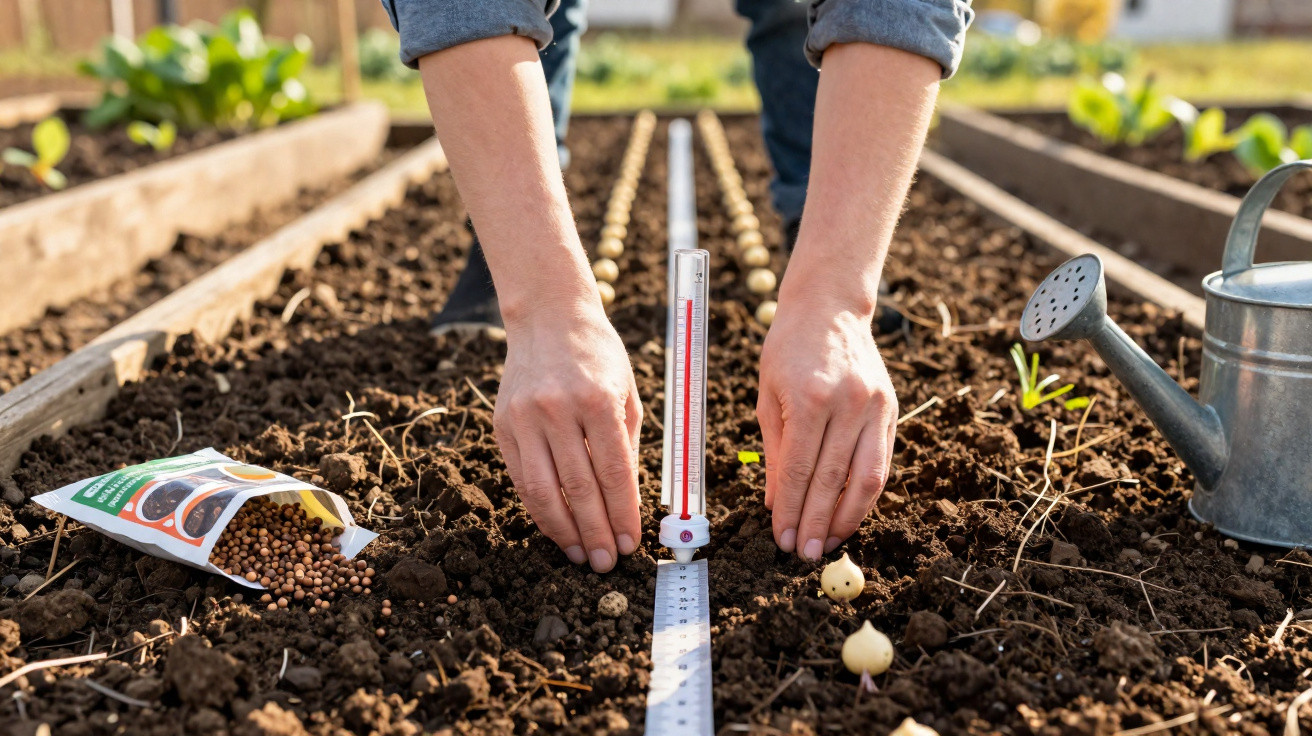
The calendar may say “time to sow”, but the soil often still behaves like winter. If you rush in without thinking, you risk rotted seed, patchy rows and undersized roots. Follow a few straightforward rules on temperature, depth, spacing and watering, and what feels risky becomes close to a sure thing.
The deciding start factor: soil temperature, not the date
Why beetroot needs at least 8 °C in the soil
Beetroot doesn’t germinate on hope or habit-it responds to temperature. The seed sits in a kind of standby until the soil is warm enough. If the soil is still at 5 or 6 °C, a lot of seed simply rots before it can sprout.
“Only from around 8 °C soil temperature does beetroot germination start reliably.”
Relying on air temperature alone is an easy mistake. A bright day might reach a fresh 15 °C, while the soil remains icy. To be confident, use a simple soil thermometer-or briefly push an ordinary household thermometer about 5 cm into the ground.
- Below 8 °C: wait; the soil is still too cold.
- 8–10 °C: a solid window for an early sowing.
- Above 10 °C: germination is usually quick and even.
How to warm the soil on purpose in March
The good news is you don’t have to sit around waiting for warmer weather. You can nudge soil temperature up by a few degrees with very simple steps.
Two tried-and-tested measures work particularly well:
- Clear the bed: remove mulch, leaves and old plant debris so the sun can hit the soil directly.
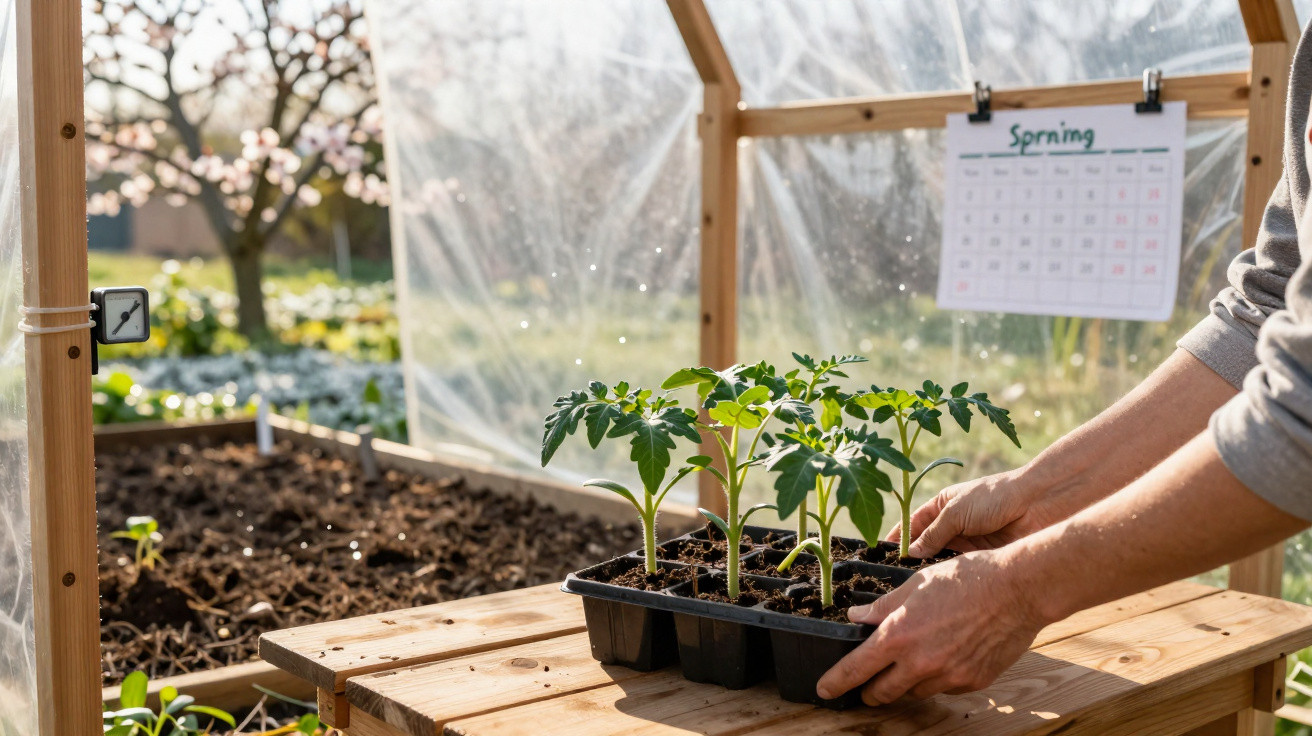
- Use a cover: a small polythene tunnel, horticultural fleece or even old window frames as a cold frame will trap warmth.
Often, just a handful of sunny days is enough to warm the top layer noticeably. If you sow during a mild spell, you’ll begin the beetroot season with a clear head start.
Correct sowing technique: depth, spacing and structure in the bed
Set out rows with 30 cm between them
Once the soil is warm enough, the next common stumbling block is row layout. Beetroot needs air and room; without it, fungal problems and weak roots are more likely.
“There should be about 30 centimetres between rows-this allows airflow and makes maintenance straightforward.”
Use a handle or hoe to draw shallow drills that are easy to water and later simple to hoe between. Sowing closer can look like you’re saving space, but it often costs you later in smaller harvests and more disease pressure.
The 2 cm rule for sowing depth
Depth matters just as much. Too shallow and the seed dries out; too deep and the seedling has too far to struggle up.
Aim for roughly 2 cm. A practical method is to firm the drill lightly with a finger or a small stick, scatter the seed, then cover with a thin layer of soil. Once you bury it under more than 3 cm, you can slow emergence dramatically.
“Two centimetres of sowing depth gives beetroot enough moisture and protection without overtaxing the seedling.”
The critical ten days: pressure, water and patience
Why you should firm the soil after sowing
One step that’s frequently missed is firming in. After sowing, press the soil down gently using the back of a rake or a board. This puts the seed in close contact with the soil, removes air gaps and helps the bed hold warmth.
Don’t overdo it. You’re aiming for a level, lightly firmed surface-not something like concrete. If you end up making mud, you’ve worked too wet or pressed too hard.
Even moisture instead of a drench
The first ten days are decisive. The seed coat swells, and the sprout inches upwards. For that, it needs consistent moisture.
- Water with a fine rose so you don’t wash soil away.
- Water lightly more often rather than rarely and heavily.
- Don’t let a hard crust form-it can literally trap the seedling underneath.
“For around ten days, the top layer of soil should never dry out completely-this is the sensitive germination phase.”
If you can’t water during the day, lay a light fleece over the bed. It cuts evaporation, keeps moisture in the soil longer, and reduces the chance that heavy rain will cap and smear the sowing rows.
The hidden key point: you never sow beetroot “as singles”
What’s really inside the ‘seed’
Many beetroot varieties aren’t sold as smooth, individual seeds, but as small, angular clusters. These clusters aren’t a single seed at all-they’re a casing that contains several seeds.
“From one seed cluster, two to four seedlings often grow-this isn’t a sign you sowed too thickly; it’s completely normal.”
That’s why rows can look overcrowded soon after emergence. If you leave them as they are, you won’t get round roots-just a tangle of thin roots that compete and deform each other.
Thin correctly: one plant every 10 cm
As soon as the young plants have two to three true leaves, it’s time for the step many people hesitate over: thinning. It can feel harsh, but it’s essential for strong roots.
- Target spacing within the row: about 10 cm between plants.
- From each cluster, keep only the strongest seedling.
- Snip unwanted seedlings at the base or pull them out.
Those “extras” can be eaten when young-used like baby spinach in a salad-so it doesn’t feel quite so wasteful. The plants you leave behind will then form much larger, more evenly shaped roots.
What an early, well-planned sowing date delivers
The success formula for strong roots
If you combine the right soil temperature with the correct depth, gentle firming and careful watering, you lay the groundwork for an excellent beetroot harvest. Add consistent thinning, and a small March bed can turn into a dependable supply through summer.
“Warm soil, 2 centimetres depth, 30 centimetres row spacing, keep it moist for ten days and thin in time-that’s the whole method.”
An early spring start is particularly worthwhile: plants take advantage of remaining winter moisture, root deeply, and cope better when high summer turns dry. Sow enough and thin properly, and you’ll harvest sturdy, juicy roots rather than tiny marble-sized ones.
Extra practical tips: variety choice, companion planting and risks
If you fancy experimenting, try yellow or candy-striped varieties alongside the classic red. Many mixes germinate just as reliably, but differ in flavour and how well they store. Early varieties suit the first sowing of the year, while later types often stay crisp for longer in storage.
Beetroot grows very well next to onions, lettuce or kohlrabi. With spinach and Swiss chard-which are in the same plant family-it’s better not to pack the bed too densely or year after year, so soil-borne diseases don’t build up unnecessarily.
One risk that’s often underestimated is waterlogging and compacted ground. On heavy clay soils, it can help to mix in sand or compost to open up the structure. Beetroot likes deep, loosened, humus-rich soil, but not a fresh dose of manure-too much nitrogen quickly produces huge leaves and tough, fibrous roots.
Keep these points in mind and don’t cling blindly to the calendar-“ask” the soil instead-and beetroot becomes a surprisingly forgiving crop. With one well-managed March sowing, you can cover a large share of your summer and autumn beetroot needs from your own garden-no special kit required, just timing, a bit of feel, and a few clear steps.
Comments
No comments yet. Be the first to comment!
Leave a Comment