
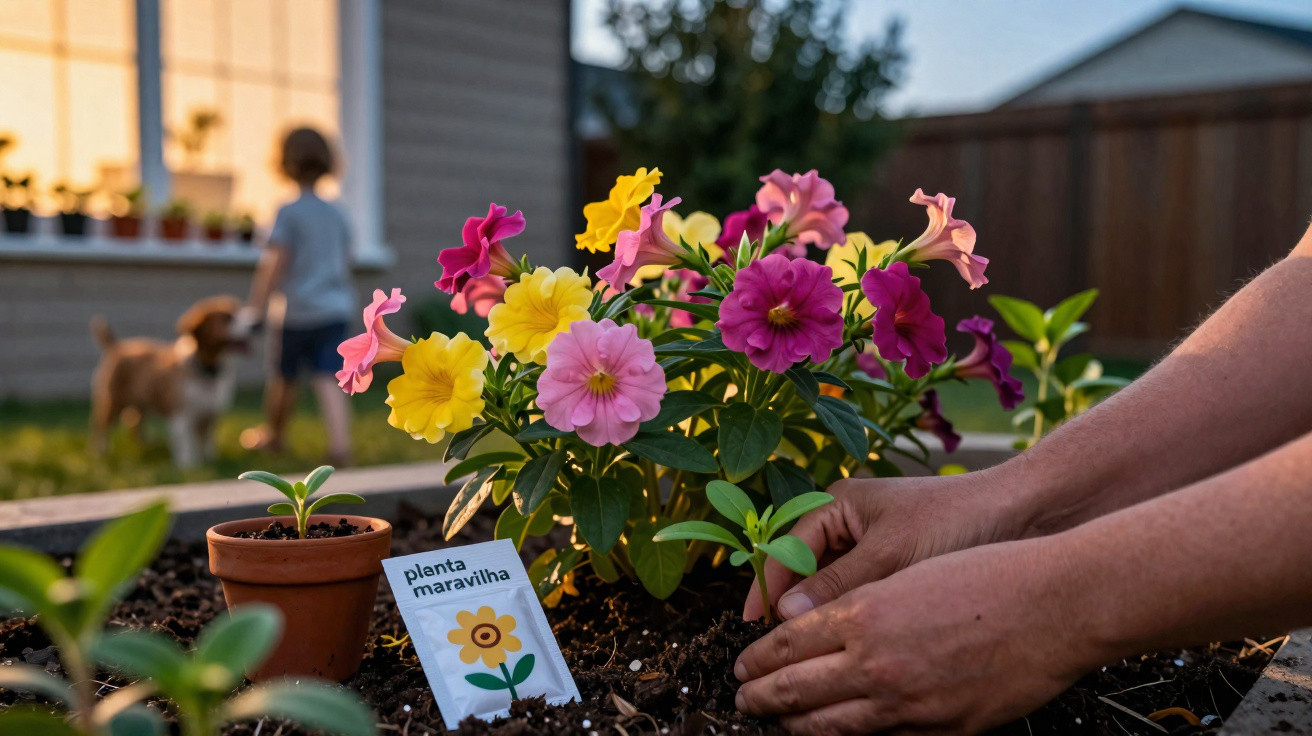
Most perennials take years before they really hit their stride. Yet there’s one exception that gardeners often miss: a summer tuber that shoots up at speed, carries a strong scent, opens its flowers in the evening and quickly turns drab borders into a colourful night-time display. Plant it in spring and you’ll get a small summer firework show - without needing a professional garden team.
A night-time star in the border: what makes Mirabilis jalapa so special
The plant in question is Mirabilis jalapa, best known in English as the marvel of Peru. It originates from South America and, in our climate, is grown like a fast, summer-flowering perennial. Its big advantage is simple: it plugs gaps in beds far sooner than many traditional perennials.
It forms bushy clumps roughly 40 to 80 centimetres tall. Soft green leaves sit on branching stems. The real spectacle, though, is the bloom: funnel-shaped flowers with 3 to 5 centimetre-wide trumpets in white, yellow, pink, red or violet - plain, speckled, or even showing multiple colours on a single plant.
"The flowers open in the late afternoon, smell intensely and close again in the morning - ideal for anyone who mainly enjoys their garden in the evening."
That evening “programme” is exactly why it appeals to people who spend the day at work and only make it into the garden after hours. While plenty of other plants are winding down, this one is only getting started.
Just 60 days to full bloom: how quickly Mirabilis jalapa grows
The key selling point here is speed. In good conditions, it often takes only around 60 days from sowing to the first flowers - remarkably quick for a tuber-forming perennial.
The seeds look like small black nuts. If you sow them about 0.5 to just over 1 centimetre deep, they usually germinate in 7 to 10 days. After that, progress is rapid: young plants push out strong new growth, branch out, and soon you’ll see the first buds.
- Germination time: about 1 to 1.5 weeks
- Growth phase to flowering: roughly 6 to 8 weeks
- Flowering period: from late spring or early summer until the first frosts
If you start plants off indoors, you can bring flowering forward by a few weeks. Sowing straight into the border saves effort, but you do need to wait until the soil is properly warm.
The right moment in spring: when to sow and when to plant
Timing determines how soon your garden benefits from the marvel of Peru. You have two straightforward options: raise plants indoors or sow directly outside.
Starting off on a sunny windowsill
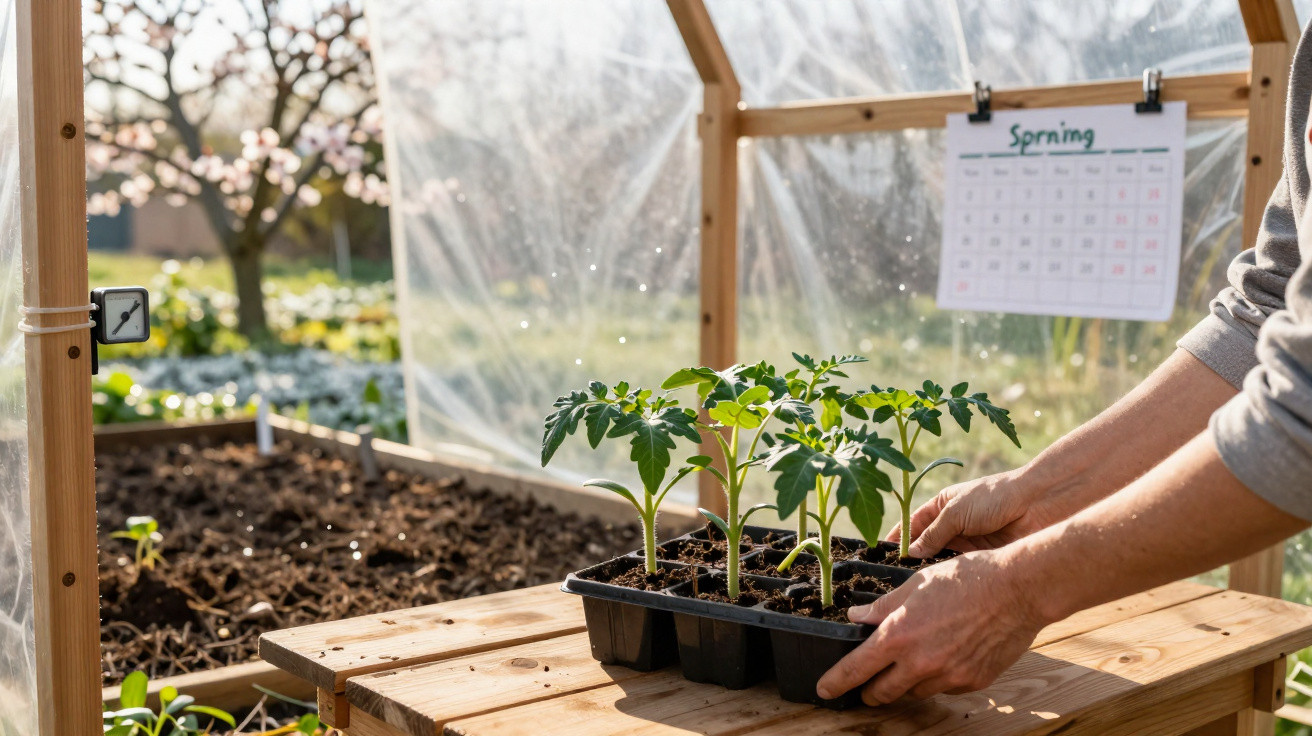
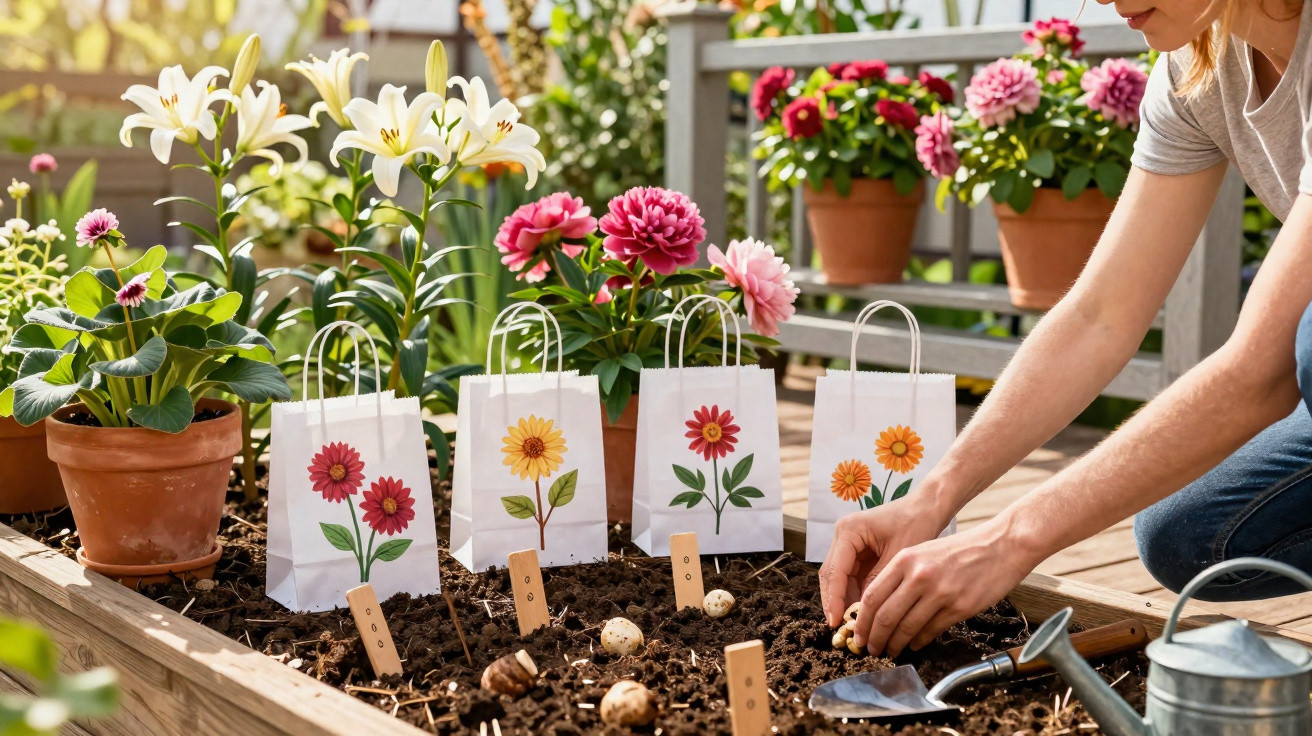
To get going early, sow indoors around six to eight weeks before your last expected frost. That produces sturdy young plants ready to go out once the risk of frost has passed.
- Fill small pots with a light, loose, well-drained seed compost
- Press each seed in to about 1.5 centimetres deep
- Water gently; keep evenly moist but never wet
- Aim for a temperature of 18 to 20°C
A practical tip: soak the seeds overnight in lukewarm water. It softens the hard outer coat, and germination often becomes quicker and more even.
Direct sowing into the border or a container
If you prefer the simplest route, wait until the soil has noticeably warmed in spring, then sow straight where the plants are meant to grow.
Space and site matter most here:
- Full sun: at least six hours of direct sunlight per day
- Soil: fertile, loose and free-draining, with no waterlogging
- Water needs: around 2.5 centimetres of rainfall or watering per week
It also performs well in pots. Choose enough depth (30–40 centimetres), add a drainage layer of expanded clay or gravel, and use a mix of garden soil and multipurpose compost.
Low-effort, high energy: keeping the plant under control
Day to day, the marvel of Peru is impressively tough. With a bit of watering, it comes through mid-summer heat without fuss. Slugs mostly ignore it, and major pest issues are rare.
"Many gardeners experience the marvel of Peru as a ‘plant, water, done’ choice - it then almost runs itself."
Even so, a few basics are worth keeping in mind:
| Aspect | Recommendation |
|---|---|
| Watering | Regular, but moderate. Keep soil lightly moist; avoid waterlogging. |
| Feeding | At the start of the season, add compost or a slow-release fertiliser; top up only on poor soils. |
| Flower tidying | In prominent spots, cut back some faded stems to limit self-seeding. |
| Position control | In small gardens, avoid sowing right on bed edges if volunteer seedlings would be a nuisance. |
The roots form tuber-like swellings. In mild areas, these can overwinter in the ground and shoot again the following year. Where winters bring hard frosts, treat it like dahlias: lift the tubers in autumn, store them dry and frost-free, then replant in spring.
Take care with children and pets: the downside of the marvel of Peru
As appealing as it is, there’s a drawback: it is considered poisonous if eaten. The underground tubers in particular can be risky if young children or pets chew them.
In a family garden, it’s sensible to choose the position deliberately:
- Don’t plant right beside a sandpit or playhouse
- Grow in containers placed up high, such as on a terrace
- Explain in an age-appropriate way that nothing from these plants should be eaten
For ornamental gardens without animals, this is easier to manage. Either way, clearly labelling the plant - for example with a small sign at the bed edge - is a worthwhile precaution.
Where the marvel of Peru works best in the garden
Because it really comes into its own from late afternoon onwards, the marvel of Peru suits places you use in the evening: a terrace, balcony, or a seating area at the garden’s edge. Positioned there, you can enjoy the scent at close range.
It also looks especially harmonious alongside plants that bring daytime colour but settle down later on, for example:
- Lavender or catmint for structured swathes of blue
- Daylilies, which flower during the day while the marvel of Peru takes over in the evening
- Ornamental grasses that create striking silhouettes at dusk
If you garden with lots of containers, you can use it as a “gap filler”: tucked between slower-growing roses, as a colourful finishing plant in large pots, or as an accent on the balcony that truly comes alive after work.
Who this plant is best for - and what to watch out for
The marvel of Peru is ideal for hobby gardeners short on time but keen on strong visual impact. Beginners in particular can get quick, obvious results without having to navigate complicated care routines.
At the same time, it can be a fun project for children - provided it’s clearly understood that nothing goes in the mouth. Fast germination and rapid growth make changes in the border visible in a short time, which keeps interest high.
One point many people only notice in the second year: in warm spots, the plant tends to spread by seed. If you don’t want that, regularly cut back areas with lots of spent flower stems. That keeps it in check and avoids surprise seedlings turning up in the veg patch.
If you already lift and store dahlias or gladioli, overwintering the tubers adds very little extra work. The marvel of Peru fits neatly into that routine and broadens the colour and fragrance range at dusk - exactly when many people finally have time to enjoy their garden properly.
Comments
No comments yet. Be the first to comment!
Leave a Comment