
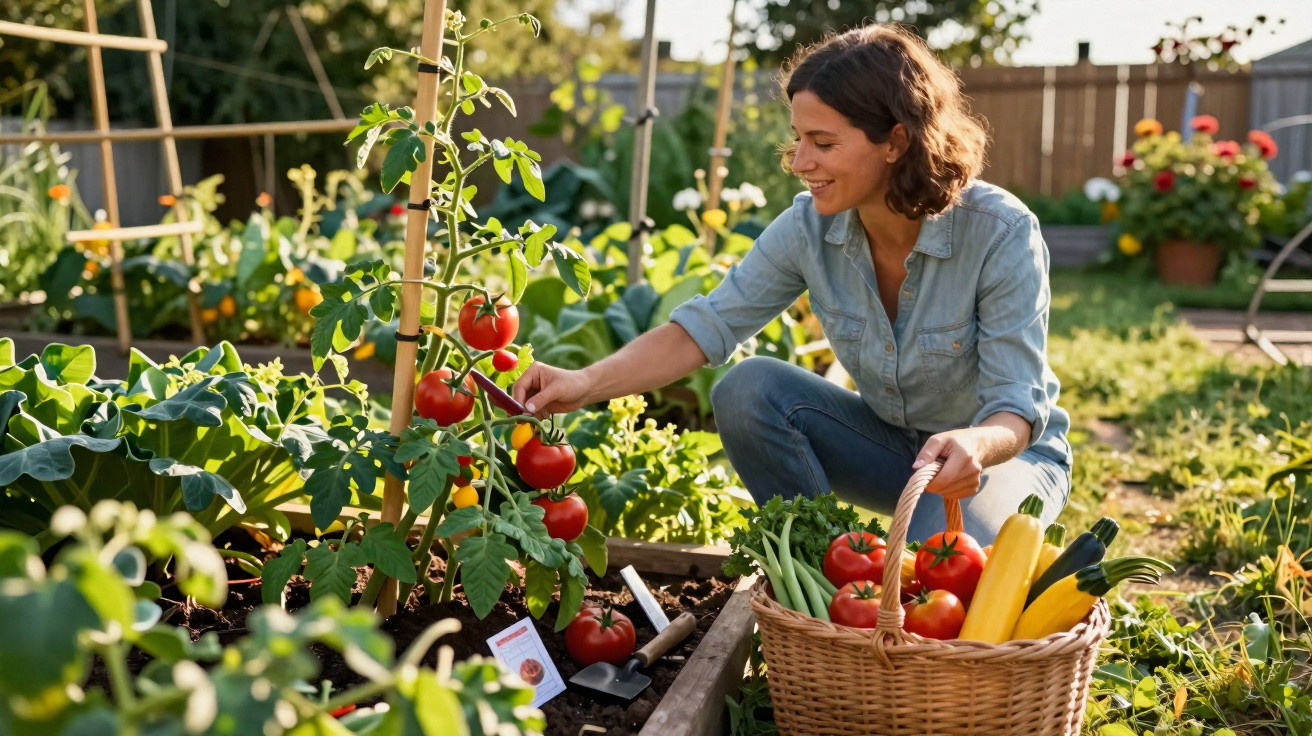
The quiet choices you make now set up summer baskets piled high.
Plenty of keen gardeners dutifully wait for the Ice Saints (the mid-May cold spell) and then wonder why tomatoes, radishes and the rest never really get going. If you start in March instead with a handful of seemingly unremarkable sowings, you can set yourself up for a surprisingly generous veg-growing summer. It is not about rare, exotic varieties, but about choosing sensible classics and getting the timing right.
Why March decides the fate of your summer vegetable garden
Early spring is effectively the control room for your veg plot. In these few weeks, you determine whether July brings only the odd tomato dangling from a plant-or whether bowls and baskets are overflowing week after week.
“If you sow in March, you give your plants several weeks’ head start-and you’ll harvest earlier, for longer, and more reliably in summer.”
Crops sown early develop much stronger root systems. They push deeper into the ground, take up water and nutrients more efficiently, and cope better with heatwaves or brief dry spells. On top of that, sturdy plants are less prone to aphids, fungal problems and sunscald.
The common approach of “I’ll do everything after the Ice Saints” sounds careful, but it reduces your overall yield. With the right protection, many crops can begin weeks earlier: indoors, in a cold frame, or straight into the bed once the soil is no longer icy cold.
How to wake seeds properly at the end of winter
The three basics for seeds that germinate well
Whether you are sowing tomatoes or spinach, seeds always need the same essentials-just in slightly different amounts:
- Warmth – depending on the crop, roughly 5 to 25°C
- Even moisture – never waterlogged, never bone-dry
- Light – many types thrive on a bright windowsill
For seed-starting, you can often use what you already have at home: rinsed yoghurt pots, old plant pots or small trays. What matters is a drainage hole in the base so water cannot sit there.
A loose, fine seed compost works best. It needs to stay airy so tiny roots do not suffocate. Choosing peat-free compost also helps protect peatlands and the climate. After watering, the surface should look dark and evenly moist-then it is ready for the first seeds.
Warm lovers: these summer vegetables need to start indoors
Tomatoes, peppers, aubergines: get going on the windowsill
Anything that looks like “a holiday in Italy” hates cold roots. Tomatoes, peppers and aubergines only germinate reliably when they are kept consistently warm. Aim for around 20°C or above, plus a bright spot.
How to get them off to an early start:
- Fill a shallow tray or small pots with seed compost
- Scatter seeds thinly and cover with only a light layer of compost
- Water gently, ideally using a spray bottle
- Cover with film or a clear lid until the first shoots appear
Within days or a couple of weeks, the seed leaves push up-the first visible win. From this point, seedlings need lots of light, otherwise they become leggy: long, weak and unstable.
Basil: the essential partner for every tomato
What would sweet summer varieties be without fresh basil leaves on the plate alongside them? Basil is just as sensitive to frost as tomatoes, so it also belongs in warm indoor conditions early on.
If you sow basil thickly, you quickly get little green carpets in a pot. Choose a draught-free place and keep the compost consistently moist. It must never dry out completely, or the delicate stems soon collapse. After a few weeks you can start harvesting carefully for the first time-take only the tips, and the plant will branch out and stay productive for longer.
Robust classics: these can go straight into the bed
Carrots and radishes: a strong duo in a small space
While tomatoes and peppers build strength indoors, root crops can already begin outside. Radishes and carrots are made for early sowing. They cope better with cool soil and make the most of spring moisture.
“Radishes loosen the soil for carrots-sow them together and you’ll harvest faster and more efficiently.”
A tried-and-tested method:
- Rake the bed to a fine tilth, removing stones and large clods
- Draw shallow drills, about a finger’s width deep
- Sprinkle carrot seed sparingly and add radish seed a little more densely
- Close the drills, press lightly, then water
Radishes grow at record speed, and as they swell they naturally open up the soil. They are ready to pick after only a few weeks. Carrots take longer, but benefit from the loosened structure and improved airflow.
Peas and spinach: fresh power even with cool nights
Peas and spinach also appreciate an early start. The first sowings tolerate soil and air temperatures that would still leave heat-lovers sulking. Spinach in particular enjoys the cooler weeks before the real summer heat arrives.
A typical spring approach:
- Space peas about a fist-width apart along a mesh or net
- Sow spinach broadly and rake in lightly
- Keep the soil moist, but not wet
Peas will climb fences, supports or simple strings and can produce crisp pods from the end of May. Spinach quickly forms a dense canopy of leaves, shading the soil and providing early vitamins.
Raising young plants safely: from a dropper to the sun
Water gently and thin out in good time
For seedlings, the biggest risk is not a short dry spell but drowning. A strong watering-can stream can easily wash tiny plants out of their pots. Better options are:
- A mister or a fine rose
- Watering from below via a saucer
If you have sown too thickly, you will need to thin later on. That means carefully pulling out or snipping the weaker seedlings and leaving only the strongest. This gives them enough light, nutrients and space. The effort pays back later in every single plant or tuft.
Hardening off: a gradual move outdoors
Plants that have spent weeks in a warm living room do not cope well with an immediate jump into full spring sunshine. Leaves can literally “burn”, and stems can snap in the wind.
“If you harden off your plants, you spare them temperature shock-and you save yourself a lot of losses.”
A proven routine looks like this:
| Day | What to do |
|---|---|
| 1–3 | Put them outside for 2–3 hours during the day in a sheltered, semi-shaded spot |
| 4–7 | Extend the outdoor time daily, gradually allowing more sun |
| 8–10 | Outdoors for almost the whole day; bring them in at night or move into the greenhouse |
After this phase, plants are tough enough for the bed and handle cooler nights far better.
From June to August: how harvesting almost runs itself
What to harvest when, with well-timed March sowing
If you plan your sowing dates well, you get a seasonal wave of harvests that almost joins up without gaps:
- from mid/late April: first radishes and young spinach leaves
- May to June: crisp pea pods, with spinach continuing to regrow
- from June: the first tomatoes, peppers and basil for Caprese and more
- July to August: peak season for tomatoes, peppers, aubergines and later carrot rows
This “harvest timetable” also takes pressure off the weekly shop: if you are picking fresh veg every few days, you carry much less home from the supermarket-and you know exactly what ends up on your plate.
Make the yield last: succession sowing and mulch as the secret finishing touch
To stop beds looking empty after one crop is cleared, follow a simple rule: sow a fresh short row every two to three weeks. Radishes, spinach and later carrot sowings respond especially well, giving a near-continuous supply.
Mulch is another small step with a big effect. A layer of lawn clippings, shredded twigs or straw around plants keeps the soil moist for longer, protects against erosion in heavy rain, and suppresses weeds. As it breaks down, mulch also feeds soil life over time-and that benefits your crops indirectly.
Practical extra tips for full beds without chemical sprays
If you want to avoid spraying, you need healthy plants from the outset. That includes crop rotation: heavy feeders such as tomatoes and peppers should not be grown in the same spot every year. Leaf crops, legumes or root vegetables break up the sequence and reduce strain on the soil.
Mixed planting also helps. Marigolds among tomatoes, lettuce between carrot rows, or a few pot marigolds along the edge attract beneficial insects and deter certain pests. These combinations also look far more lively than sterile single-crop rows.
If you do not have a garden, you can use the same March trick on a balcony: deep containers for carrots, window boxes for spinach and radishes, and large pots for tomatoes and peppers. With a bit of know-how, even a small city balcony can become a dependable source of fresh veg-and the best time to begin is, here too, right now.
Comments
No comments yet. Be the first to comment!
Leave a Comment