
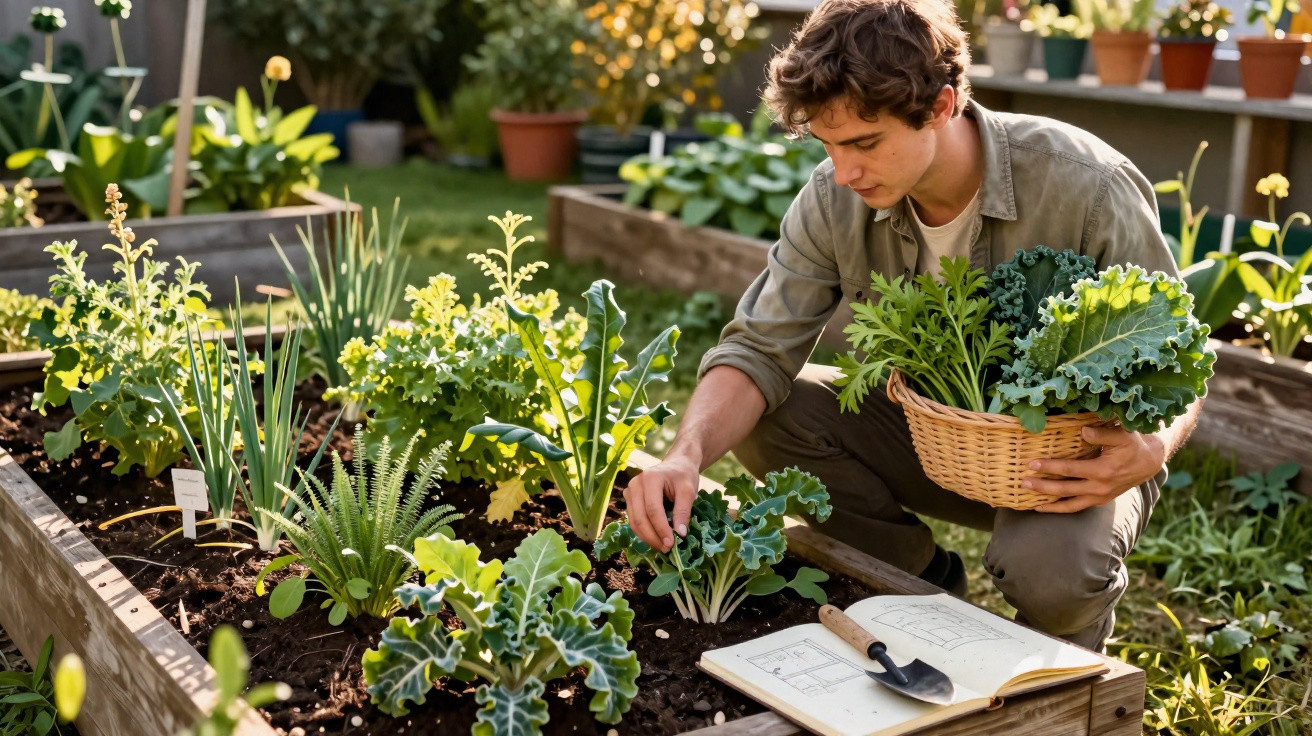
If you find yourself sowing the same varieties every spring, anxiously watching for late frosts and barely putting the hose down, you will know the feeling: a vegetable garden can swallow time and energy. Perennial vegetables turn that pattern on its head - plant once, then harvest for years. That is the whole idea behind so‑called perennial vegetable crops, which many gardeners now use as the backbone of an almost self-running garden.
What the term “perennial vegetables” really means
Perennial vegetables are edible plants that stay in the same spot for several years and reliably regrow. Some are genuinely long-lived perennials, such as asparagus or rhubarb. Others keep themselves going by self-seeding or returning via root runners, appearing again and again - Jerusalem artichoke and Chinese artichoke (crosne) are typical examples.
The principle is straightforward: prepare the bed properly once, and after that the plants do much of the work themselves. They overwinter in the soil, push up fresh growth in spring, and provide produce without you having to remake the bed every year.
"Perennial vegetables save work, protect the soil and often deliver stable yields for many years."
Many of these plants slot neatly into ideas such as a wildlife-friendly, permanently planted garden or permaculture projects. Because something is always growing, flowering, or standing as structure in the bed, they support soil life, insects and other beneficial creatures.
The biggest day-to-day benefits for gardeners
The appeal of a perennial-vegetable bed is not about novelty so much as what it does for everyday gardening. If you commit to it, you gain several practical advantages at once:
- Less soil work: no annual rotavating or digging; the ground is left largely undisturbed.
- Much less watering: deep roots draw moisture from lower down, while mulch reduces evaporation.
- Long picking windows: many types provide edible leaves, stems or tubers for weeks or even months.
- Greater resilience: if a year is very wet or extremely dry, the harvest is less likely to collapse completely.
- More life in the garden: flowers, foliage and roots offer ongoing food and habitat for animals and microorganisms.
Some species are true long-distance performers. Asparagus needs two to three years before you can take full harvests, but then it can produce for ten to twenty years. Rhubarb comfortably lasts around a decade. Chives, sorrel and so‑called perennial winter leeks return dependably every spring.
Top 15: These plants make your garden almost autonomous
For getting started, it makes sense to choose tough, reliable species that do well in most gardens and will not overwhelm beginners. Below is a practical selection of the most popular perennial vegetables:
| Vegetable | Part used | Special feature |
|---|---|---|
| Perennial winter leeks | Leaves, stems | Returns each year; ideal for soups and frying-pan dishes |
| Marrow-stem kale / perennial kale | Leaves | Grows into a bushy plant; continuous supply for kale dishes |
| Sorrel | Leaves | Tangy flavour; great for salads and sauces |
| Rhubarb | Stalks | Large crowns; early spring harvest for cakes and compotes |
| Lovage | Leaves, stems | “Maggi herb”; very aromatic and grows tall |
| Chives | Leaves | Extremely easy to look after; keeps reshooting |
| Perennial basil (keep frost-free) | Leaves | Best in a pot or greenhouse; reliably fragrant |
| Perennial fennel | Leaves, seeds | Delicate greens for fish; seeds used as a spice |
| Wild garlic (ramsons) | Leaves | Prefers shade; gradually spreads over time |
| Jerusalem artichoke | Tubers | Very vigorous with tall stems; heavy autumn harvest |
| Chinese artichoke (crosne) | Tubers | Small, twisted tubers with a nutty taste |
| Horseradish | Root | Robust, hot flavour; spreads readily |
| Globe artichoke | Flower buds | Ornamental and edible; needs a warm, sheltered position |
| Asparagus | Shoots | Takes patience; then crops for many years |
| Welsh onion (perennial spring onion) | Hollow leaves, spring onions | Hardy, perennial alternative to chives |
The common thread is simple: every one of these comes back for multiple years and keeps producing with limited input. With a thoughtful mix, a single bed can provide leaves, tubers, stems and aromatic herbs.
Bed planning: where each perennial vegetable fits best
Before you plant, it pays to check a few practical basics. Not every species thrives in every spot, and some simply need more room than others.
- Space requirements: lovage, globe artichoke and rhubarb become large plants and should not be squeezed into a tight corner.
- Soil type: asparagus prefers light, sandy ground, while rhubarb does best in slightly moist, nutrient-rich soil.
- Light levels: wild garlic (ramsons) likes shade and cool, fresh conditions; sorrel copes well in partial shade.
- How you cook: if soups are a staple, perennial winter leeks, lovage and chives are handy; for oven dishes, Jerusalem artichoke, Chinese artichoke (crosne) and globe artichoke are good choices.
A common misstep is putting strongly spreading plants too close to more delicate crops. Jerusalem artichoke, horseradish and Chinese artichoke (crosne) can quickly gather momentum and, left unchecked, take over the bed over time.
How to set up a perennial-vegetable bed with minimal fuss
Getting going is easier than many people assume. If you set aside a patch of garden for perennial vegetables in the long term, the process looks roughly like this:
- Gently loosen the soil, for example with a digging fork or a specialist soil-aerating fork.
- Work in well-rotted compost; on poor soils you can also add a little rock dust.
- Remove persistent perennial weeds thoroughly, especially any roots.
- Plant young plants or set tubers, keeping suitable spacing.
- Apply a generous mulch layer, such as grass clippings, leaves or straw.
Mulch is central in a system like this. It protects the soil, retains moisture, feeds soil organisms and reduces the need for repeated hoeing. Watering is mainly important while plants establish and during long dry spells.
How the rest of the garden changes
Once you have a permanent bed in place, the workload in the vegetable garden shifts. Traditional annual crops such as tomatoes, courgettes or beans tend to move into additional beds. Those areas remain easy to redesign each season, while the perennial-vegetable framework provides dependable replenishment.
Many hobby gardeners say harvesting feels noticeably less pressured: instead of gathering “everything at once” in summer, there is something to pick across the year - wild garlic in spring, then rhubarb, followed later by Jerusalem artichoke and Welsh onions.
Practical tips: control, harvesting and small risks
As effortless as perennial vegetables can appear, they are not completely maintenance-free. Two aspects deserve particular attention:
- Keep an eye on spread: it is often best to grow vigorous types in separate corners or in large containers.
- Divide regularly: rhubarb, globe artichoke and lovage respond well if you divide the crowns every few years, encouraging fresh growth.
If you garden in exposed, colder locations, protect more sensitive plants such as globe artichokes with leaves or brushwood against hard frosts. Perennial basil forms should also be kept frost-free indoors or in a greenhouse.
One point for new growers: not every part of every plant belongs on the plate. With rhubarb, the large leaves are off-limits - only the stalks are used. With horseradish and lovage, the kitchen typically uses the root and the foliage respectively.
Why perennial vegetables are worthwhile even in small gardens
The same advantages can work on a balcony, terrace or in a tiny garden. Chives, Welsh onions, perennial fennel or perennial basil grow happily in large pots. A shaded balcony is almost made for wild garlic or sorrel, as long as the compost does not dry out completely.
By combining different species, a handful of containers can become a living pantry for the kitchen: fresh herbs, hot roots and tender leaves. And the best part is that, instead of starting from scratch each year, the plants become more valuable with every spring.
Comments
No comments yet. Be the first to comment!
Leave a Comment