
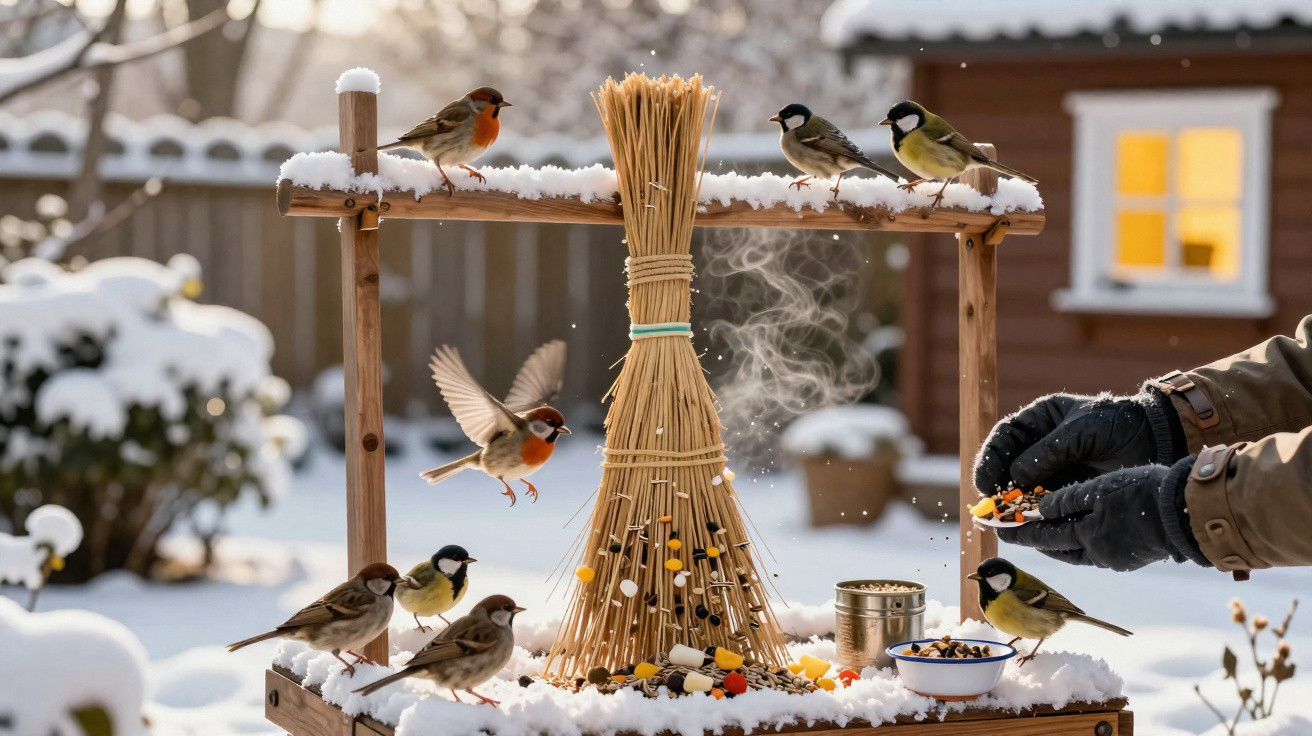
In the depths of winter, your garden can quickly become a survival zone: food is scarce, hiding places are limited, and predators have the advantage. Many people respond by buying pricey feeders from DIY stores. Yet a surprisingly effective solution is often already sitting in the shed: an old broom. Put in the right place, it can work as both a feeding point and a sheltered nook - and can quite literally help small garden birds stay alive.
When the cold bites and snow covers everything
As soon as temperatures stay below 0°C for days at a time, native songbirds rapidly reach their limits. With an unbroken layer of snow on the ground, insects, seeds and berries become hard to find. Frozen soil makes foraging even more difficult. Some birds can lose up to ten per cent of their body weight in a single frosty night.
At that point, the garden can no longer be just a “decorative space”. It turns into a refuge where three things matter most:
- a safe place to rest
- easy-to-reach food
- shelter from wind, damp and predators
Hanging up a seed silo certainly helps - but it rarely creates genuine cover. Many birds need both: calories and a place to disappear into at speed when danger appears.
"An old broom can be a feeding spot, perch and camouflage hide all in one – for birds, a small multi-purpose winter lifeline."
How a forgotten broom becomes a mini refuge
The trick lies in the structure of the bristles. Between lots of fine fibres, small birds can grip on, pause briefly, and peck at food without being completely exposed. The closely packed bristles also slow the wind, retain a little warmth, and add extra concealment.
You can often see the impact from the window: if the broom is hung freely, it soon becomes a kind of “bird stage”. Tits clamber around the ends, sparrows squabble over the best spots, and robins hop about on the ground below. Where an old cleaning tool once gathered dust, there is suddenly activity.
How to turn a broom into a safe feeding station
You can set it up in minutes, with no specialist kit. The main thing is a sturdy, weather-resistant broom - whether it’s a yard broom, a scrubbing brush or a straw broom.
Step by step to a “bird broom”
- Choose the location: A sheltered spot is best - for instance against a house wall, within a dense hedge, or under a tree branch. This way the birds are not fully visible in the open.
- Secure the broom: Fix the broom head horizontally or at a slight angle, either hung up or with the handle pushed into the ground and additionally fastened.
- Add the food: You can attach bird-safe foods to the outer bristles.
- Check for hazards: Cats, martens and other predators should not be able to reach it easily. A minimum distance from the ground of 1.5 to 2 metres is sensible.
Suitable food for the “broom buffet”
| Type of food | How to use it | For which birds |
|---|---|---|
| Fat balls without a net | Tie to the bristles with string | Tits, sparrows, nuthatches |
| Oats with a little fat | Press small clumps between the fibres | Robins, blackbirds, wrens |
| Unsalted nuts and sunflower seeds | Push into gaps or hang in a small mesh basket on the broom | Finches, tits, sparrows |
| Slices of apple or pear | Hang from the edge with wire or cord | Blackbirds, thrushes, starlings (in winter quarters) |
Important: never offer salted, seasoned or mouldy food. Bread is only suitable, at most, as an occasional extra in small, hard pieces and should not be the main food source.
Why the broom is often better than a standard feeder
Many off-the-shelf bird tables and feeders look attractive but provide limited protection from wind and predators. A broom has several practical advantages:
- Protection from damp: Food is suspended and not sitting in wet grass.
- Fewer rats and mice: The raised position makes it harder for rodents to reach the seed.
- Quick escape options: Birds can press in among the bristles or dart into nearby shrubs.
- Low cost: Using a broom you already have costs nothing, cuts waste and saves resources.
"Recycling in the garden doesn’t just mean less waste – it also means more structure, more hiding places and more life between beds and bushes."
More than food: the social effect in the garden
Anyone who sets up a “bird broom” soon realises it is not only about helping wildlife - it changes the feel of the place, too. Children watch in fascination as the birds grow bolder. Neighbours pause at the fence and strike up conversations. All of a sudden, the winter garden is no longer a bleak, grey patch, but a small stage for close-up encounters with nature.
Many hobby gardeners say these simple steps make them pay far more attention to sounds, tracks in the snow, and subtle changes around the garden. That creates a sense of connection to the immediate environment - without major projects or expensive builds.
Which garden birds benefit most
Not every species uses a broom in the same way. Smaller, more agile birds gain the most. Common visitors include:
- Blue tits and great tits: They climb confidently along the bristles and pull food from even tiny gaps.
- House sparrows and tree sparrows: They often treat the broom as a meeting point before moving back into the hedge.
- Robins: They prefer to feed on the ground, but use the broom for cover and as a food source when scraps fall.
- Wrens: They appreciate the tucked-away corners for short rests.
If you also keep a dense hedge nearby, leave faded perennials standing, or retain a small pile of deadwood, you create a “complete package” of food, cover and nesting material for the following spring.
Other everyday items that can help birds
The old broom is only one example. Plenty of tools and odds and ends from a shed or garage can be repurposed for quick winter support:
- Broken rakes: Hung head-up on a fence, they become landing and pecking spots.
- Wooden handles without a head: Pushed into the ground, they serve as perches for birds of prey, which in turn help control mice in the garden.
- Old terracotta plant pots: Turned upside down and filled with straw, they provide hiding places for insects that later return as food.
Used consistently, ideas like these gradually turn a garden into a small, layered ecosystem. Every additional structure attracts more species - and that brings greater resilience against pests and disease.
Common mistakes when feeding in winter
Good intentions are not enough; feeding wrongly can do harm. Typical everyday pitfalls include:
- Salty leftovers: Salted nuts, crisps or bacon should never be part of a bird buffet.
- Mouldy food: Wet seed and old bread can trigger digestive problems.
- Unsuitable nets: Thin plastic nets from fat balls can tangle around birds’ legs. Reusable metal or wire holders are safer.
- Placed too close to cats: Feeding points should not be right beside ledges, log piles or dense shrubs that allow cats to ambush.
If you keep these points in mind, you greatly improve the survival chances of your small visitors - and you also avoid the frustration of empty feeding spots that birds ignore.
Why this trick still makes sense in the long term
Helping birds in winter does not stop with the last frost. Birds that come through the cold season in good condition breed more successfully in spring and often feed their chicks on aphids, caterpillars and other pests. A healthy bird population is therefore free pest control for your garden.
In that sense, the old broom becomes a symbol of a different attitude to things that might otherwise be thrown away. Instead of binning it, the idea is to repurpose it, use it and observe what happens. Anyone who pulls a dusty broom from the shed in January is not only helping tits, sparrows and robins - they are also laying foundations for a more robust, more lively garden in the year ahead.

Comments
No comments yet. Be the first to comment!
Leave a Comment