
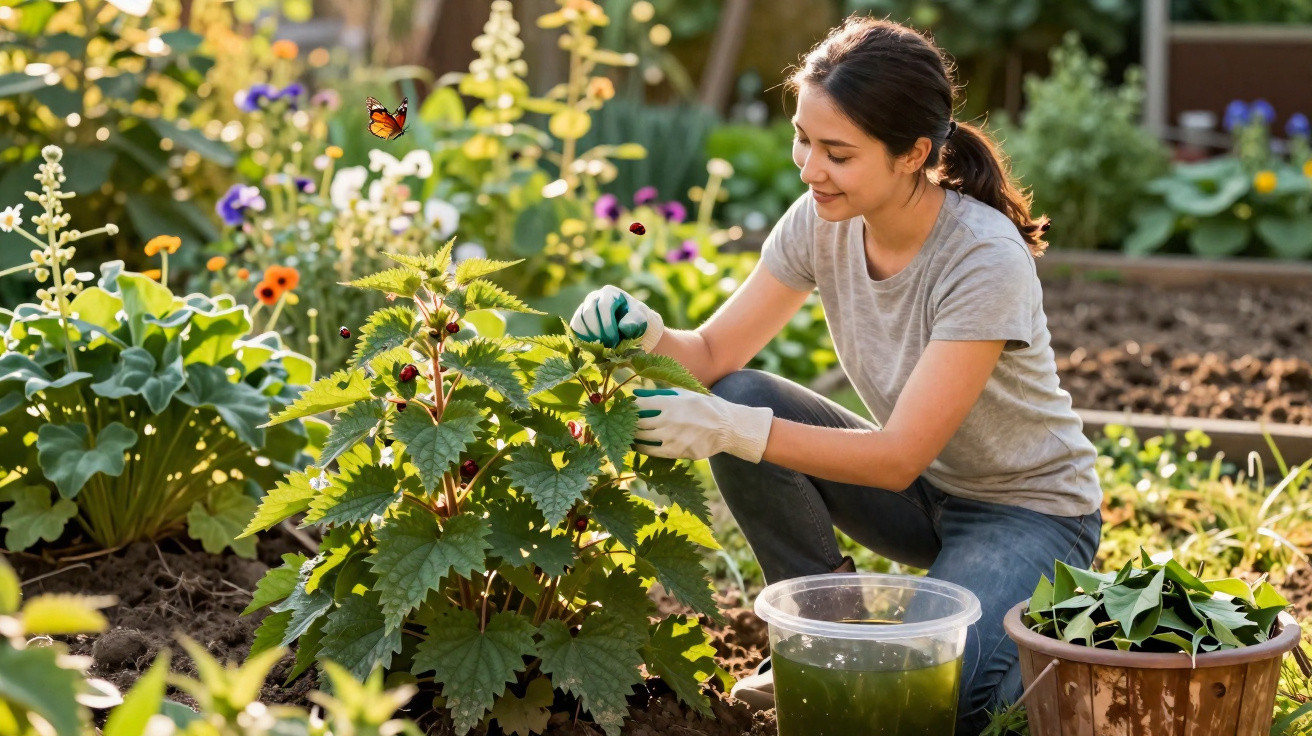
Leaving nettles where they are can bring far more benefits than most people expect.
Plenty of keen gardeners reach for the spade the moment nettles appear in a border. That reaction is understandable: nettles are seen as irritating, fast-spreading and painful to touch. Yet behind those stinging hairs is a remarkably useful plant for the soil, other plants and wildlife - and even for your own wellbeing. Give nettles a little space and your garden can noticeably improve.
Nettles as a turbo fertiliser for vegetables and beds
Hardly any other native plant packs in as many nutrients as nettles. The leaves are rich in nitrogen, along with potassium, calcium, magnesium and iron. Together, these elements support vigorous growth, lush foliage and strong, well-anchored roots.
“Nettle liquid feed replaces many shop-bought fertilisers and strengthens vegetables, berries and ornamental plants naturally.”
With minimal effort you can turn nettles into a highly effective liquid fertiliser - the well-known nettle liquid feed. It encourages robust, deep-green leaves, supports root development and helps plants cope better with disease.
Making nettle liquid feed is that simple
- Wearing gloves, cut fresh nettles (ideally young shoots)
- Roughly chop the leaves and put them in a bucket or tub
- Pour over rainwater until everything is well covered
- Leave for 7 to 10 days in a shady spot, stirring daily
- Once fermentation slows and the leaves have broken down, strain the liquid
- Dilute heavily before use (about 1 litre of feed to 10 litres of water)
Used as a watering feed, this mix is especially suitable for heavy feeders such as tomatoes, pumpkin, cabbage or courgettes. Applied as a spray, it can also help against aphids and spider mites: healthier plants are less vulnerable, and the smell can deter certain pests.
Green gold for the compost heap
If you compost, nettles are not something to throw away. Chop them roughly and mix them through your garden waste and they act as a natural compost activator. Their high nitrogen content stimulates the micro-organisms that break material down, so plant matter decomposes more quickly.
At the same time, compost temperatures tend to rise, which can reduce pathogens and some weed seeds. The result is nutrient-rich, finely crumbly humus that improves vegetable plots and perennial beds over the long term.
“In the compost, nettles completely lose their stinging hairs - the dreaded stings are no longer an issue there.”
The best approach is to keep the mix balanced: dry, woody material such as prunings or fallen leaves provides carbon, while nettles supply the necessary nitrogen. That creates a lively, self-sustaining cycle from garden waste - and can make expensive fertilisers unnecessary.
A haven for butterflies and beneficial insects
Removing nettles indiscriminately can wipe out a crucial nursery for many insects. A number of butterfly species depend on nettles because their caterpillars feed only on nettle leaves.
Well-known examples include the peacock butterfly, small tortoiseshell, red admiral and map butterfly. If nettles disappear from gardens and the surrounding area, their populations decline significantly.
“A small strip of nettles in the garden can safeguard whole generations of butterflies - and later brings colourful fluttering over the beds.”
It is not just butterflies that benefit. Many insects live in and beneath nettles, including natural predators of aphids, mites and other pests. Ladybirds, hoverflies and a range of other beneficial species use dense nettle growth as cover and a retreat.
Why a “too tidy” garden causes problems
Many gardens now look as if they have been scrubbed clean: closely cut lawns, every wild plant removed immediately, every corner perfectly neat. For wildlife, a garden like that has very little value. By deliberately allowing a few wilder areas - for instance, a nettle corner - you create habitat and help restore natural balance.
Medicinal plant and superfood right on your doorstep
This stinging plant is not only useful for tomatoes and butterflies; it can be valuable for people too. In traditional folk medicine, nettles have been among the most important medicinal plants for centuries.
Young shoots can be cooked like spinach: blanched with vegetables, made into soup, stirred through risotto or blended into pesto. Prepared properly, nettles taste mild with a slightly nutty note. If you rub the leaves firmly with a rolling pin or cloth, or briefly blanch them, the stinging hairs are deactivated.
- rich in vitamins A, C and K
- provides iron and other minerals
- described as draining and anti-inflammatory
- traditionally used for joint problems and fatigue
As tea, fresh plant juice or as part of herbal blends, nettles feature in many home remedies. A garden where they are allowed to grow intentionally can become a small, open-air natural pharmacy.
How to keep nettles within limits in the garden
If you are thinking, “Sounds great, but I don’t want a sea of nettles,” that is a fair concern. Without management, this tough perennial can spread aggressively, as it expands via runners and claims new ground. The key is to choose a deliberate spot for it - and set clear boundaries.
Practical strategies to prevent a “nettle invasion”
- Allocate a defined patch by a fence, under trees or along the edge of the property
- Grow them in a large container or builder’s tub with drainage holes
- Keep a deliberately wild corner where you do not mow
- Cut back regularly before seeds develop
Any cut shoots can go straight onto the compost heap or into the nettle-feed bucket. That way, “surplus nettles” are immediately turned into something useful again. With this approach, nettles remain part of the garden, but they stay under control.
What nettles do in the soil - and why that changes so much
Nettles rarely appear by chance. In many cases they indicate nutrient-rich, humus-heavy ground, often with a good nitrogen supply. If you find them in a bed, they can be an indirect sign of how fertile that spot is.
Their dense roots help loosen the soil and draw nutrients up from deeper layers. As roots die back and leaves decay, those nutrients return to the topsoil. Below ground, the root network also creates habitat for soil organisms, which in turn improve structure and fertility.
“Below the surface, nettles work as a quiet soil improver - free of charge and long-lasting.”
So, repeatedly pulling out every plant with its roots can weaken soil structure over time. If, instead, you leave a few clumps standing and make use of the cut growth, you create a cycle: the soil stays lively, and the garden responds with stronger growth and higher yields.
Practical tips for everyday gardening
For beginners, a simple trial is worthwhile: leave a small nettle patch of 1 to 2 square metres in one corner of the garden, and tend the rest as usual. Over the course of a year, the differences are often clear:
- more butterfly visits
- fewer aphid outbreaks in nearby beds
- improved compost thanks to added nettles
- free fertiliser via nettle feed or mulch
If you have children, nettles can also become a hands-on nature lesson: watch caterpillars, identify butterflies and examine seed heads. With gloves and a little care, even young children can learn that “weed” does not automatically mean “enemy”.
A thoughtful approach to nettles fits perfectly with a garden style that relies on less chemical input, uses water more efficiently and creates more habitats. Instead of removing every supposed weed on sight, it pays to consider what it does. With nettles, that perspective is unexpectedly positive: they feed, heal and protect - and ask in return for only a small patch of soil and a little tolerance.
Comments
No comments yet. Be the first to comment!
Leave a Comment