
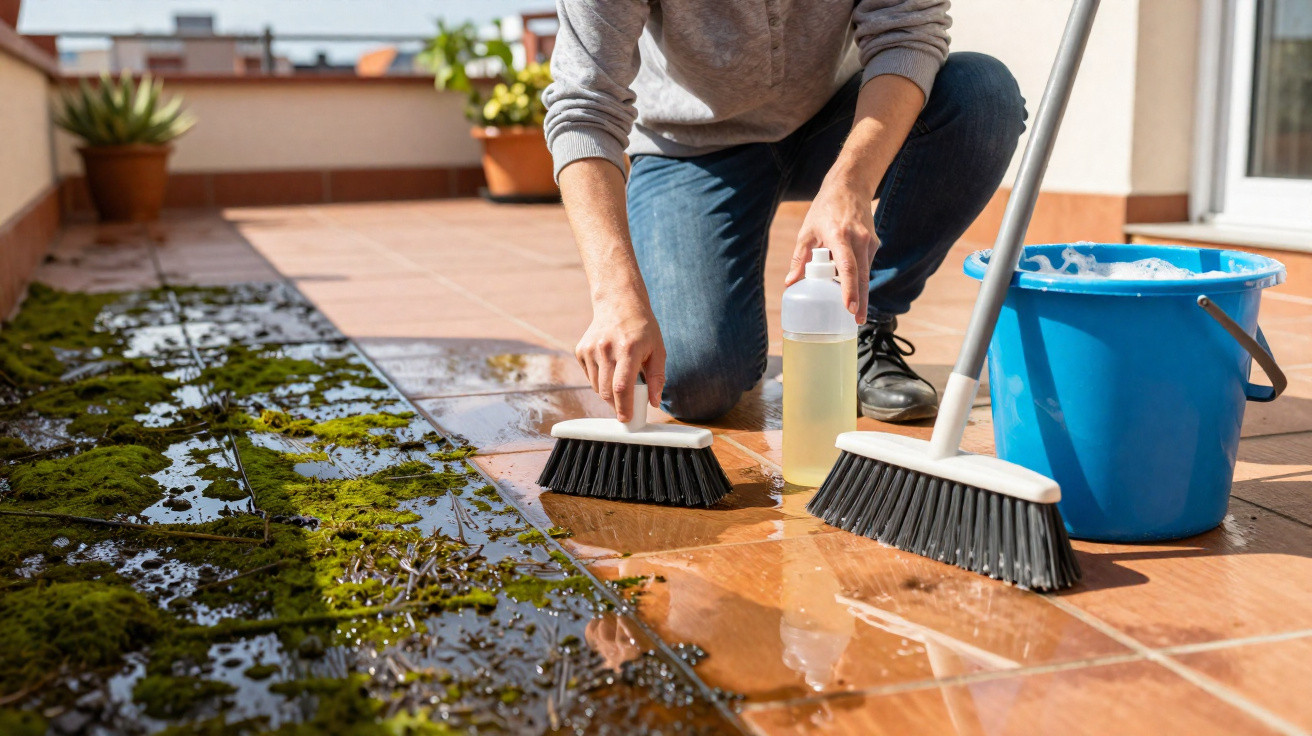
Months of rain, frost and shade can do a number on a patio, and plenty of homeowners will recognise the result: a hazardous green layer of moss and algae. Instead of relaxed barbecues, you’re suddenly dealing with a slipping risk - and in the DIY shop you’ll find pricey specialist cleaners and the temptation to hire a pressure washer yet again. There is, however, a straightforward and extremely cheap alternative that looks almost too ordinary to be true: a bottle costing around 35 cents.
How patios turn into a green skating rink after winter
Concrete slabs, block paving and outdoor tiles take a beating through the colder months. Moisture sits on the surface, sunshine is scarce, and organic debris such as leaves and soil settles into every joint. That combination is ideal for:
- thick moss growth
- slippery algae films
- dark stains that are difficult to shift
- weeds pushing up between the joints
When that happens, many people reach for the heavy-duty chemical options: “green growth remover” in big canisters, spray cleaners containing biocides, sometimes even chlorine. They can work well, but they aren’t cheap and they’re tough on both the environment and your wallet. And if you don’t own a pressure washer, you also have to decide whether to rent one or find a different approach.
The 35-cent trick: cleaning a patio with household vinegar
The budget solution comes straight from the cleaning cupboard: plain, colourless household vinegar. In supermarkets, it often costs between 30 and 40 cents per bottle. A British journalist described how she used it to make her completely greened-over patio presentable again in a short time - no pressure washer, no specialist cleaner.
"A simple mix of water and household vinegar can lift moss, algae and dark coatings surprisingly thoroughly - if you apply it the right way."
The reason is simple: vinegar contains acid, which attacks and loosens the cell structure of moss and algae. At the same time, the mixture helps break down deposits that have lodged in the pores of concrete or rough-textured outdoor tiles.
Step-by-step: brighten your patio in an hour
1. Sweep properly before you start scrubbing
Before you apply any mixture, there’s one step many people underestimate: sweeping. A stiff outdoor broom will remove leaves, loose soil, sand and small stones. That helps in two ways:
- The vinegar mix can reach the moss, algae and stubborn films directly.
- You can clearly see where the worst areas are.
Pouring the liquid straight onto loose dirt only weakens the effect and wastes product.
2. Mix the vinegar solution correctly
For the cleaner itself, all you need is a simple bucket. A 1:1 ratio is a proven approach:
- half water
- half household vinegar
Keep the water no warmer than lukewarm. If it’s too hot, the acid can evaporate faster than you want, reducing its working time. Depending on the size of your patio, you can prepare several buckets. For a medium-sized area, half a bottle is often enough.
3. Apply generously and leave it to work
Pour the mixture directly onto affected sections or spread it using a watering can. Pay particular attention to:
- dark green, slippery patches
- joints between slabs
- shaded areas that rarely dry out
Then leave it alone. An hour of contact time tends to be ideal for loosening moss and algae. During this period, the surface shouldn’t dry out completely - a lightly damp film is exactly what you’re aiming for.
4. Light scrubbing - and the layer lifts off
Once the time is up, bring the broom back. Scrub with moderate pressure rather than going at it aggressively, so you don’t roughen the surface. Many people report that most of the coating comes away almost immediately, with the patio’s original colour returning noticeably brighter.
Afterwards, rinse with clean water - for example using a garden hose or a watering can. This washes away loosened residue and any remaining vinegar solution.
Which surfaces are suitable for vinegar - and which are not?
As handy as this trick is, it shouldn’t be used without thinking. Vinegar is acidic, and not every surface tolerates it equally well.
| Material | Suitability for vinegar solution | Note |
|---|---|---|
| Concrete slabs | well suited | 30–60 minutes contact time, then rinse |
| Outdoor ceramic tiles | usually fine | test first in an inconspicuous spot |
| Natural stone such as marble | not suitable | acid can attack the surface and dull it |
| Granite, limestone, sandstone | questionable | follow specialist guidance; pH-neutral cleaners are safer |
| Timber decking boards | with caution | strong dilution, very short contact time; dedicated wood cleaners are usually better |
If you’re unsure, test the mixture on a small hidden corner first. If the surface discolours or looks dull, don’t use the method across the whole patio.
Vinegar solution versus heavy-duty chemicals: comparing cost and results
DIY shops often stock large containers of anti-green-growth treatments. Prices are roughly four euros for five litres, which works out at just under one euro per litre, and can be enough for up to 50 square metres. These products frequently contain strong biocides designed specifically to tackle algae, moss and fungi.
Household vinegar is noticeably cheaper. A one-litre bottle for around 35 cents is enough for at least one application depending on the area - often even two. That makes the cost per clean very low. The downside is that for extremely thick, old growth, specialist products may work faster and last longer.
"If you’re willing to put in a bit of time and elbow grease, household vinegar is a very inexpensive and relatively environmentally considerate option - especially for normally soiled patios."
If you’re dealing with a very large patio with decades-old, stubborn deposits, some people still opt for professional-grade products or bring in a specialist company. In those cases, saving time and ensuring predictable results can matter more than shaving off the final few cents.
Safety points and legal considerations
One thing that’s often overlooked: strong anti-moss and anti-algae treatments for outdoor use are, in many cases, classed as biocidal products. Manufacturer instructions commonly specify protective gloves, eye protection, calm (windless) conditions and keeping pets away until the area is fully dry. Residue also often shouldn’t be allowed to run into a drain or pond.
Household vinegar also inhibits plant growth and micro-organisms, but in everyday cleaning it sits in a different category. Even so, you shouldn’t pour litres of concentrated vinegar mix into flower beds, lawns or open water. The same principles apply: use it sparingly, avoid excess, let any remnants soak into soil where appropriate, and don’t discharge it directly into drains that lead to waterways.
Practical tips: how to boost the cleaning effect
A few small adjustments can improve the outcome:
- Choose dry weather: ideally it stays dry during the contact time, as rain dilutes the solution too soon.
- Work in light shade: in strong sun the liquid dries out too quickly; gentle shade extends contact time.
- Target the joints: the most moss tends to sit in the joints, so apply a little more there.
- Wear rubber gloves: vinegar is milder than many specialist chemicals, but it can still irritate sensitive skin.
- Plan multiple passes: two gentle applications are better than one overly aggressive attempt with too strong a concentration.
If you like, you can follow up with a basic joint scraper. That makes it easier to remove loosened weeds, helping the patio stay cleaner for longer.
How often should you clean a patio this way?
For many households, one thorough clean in spring is enough. If your patio is heavily shaded or stays damp for long periods, repeating the process in autumn can help. Frequent use of acid on delicate materials isn’t advisable, but for robust concrete or glazed tiles, a seasonal clean is usually fine.
It also helps to remove fallen leaves regularly in autumn, place plant pots on saucers, and prevent standing puddles. The less organic matter that accumulates, the fewer opportunities moss and algae have to take hold. That keeps the patio looking better - and makes it much safer to walk on.



Comments
No comments yet. Be the first to comment!
Leave a Comment