
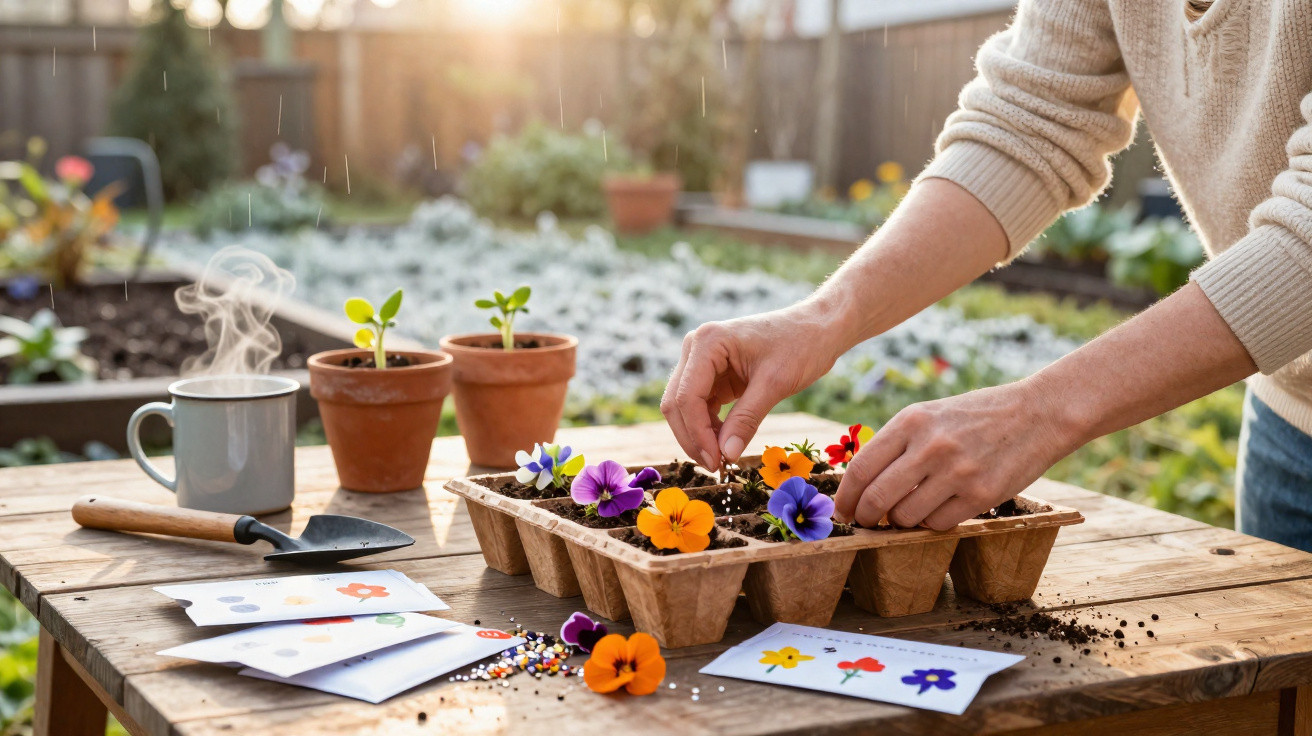
Between drizzle, late frosts and the first flashes of sunshine, March brings a surprisingly important choice: which flowers you’ll sow. Pick the right varieties now and raise them under cover, and from June you can enjoy a blaze of colour that runs right through to autumn - without feeling as though you’re constantly grafting in the borders.
Why March decides what your summer garden will look like
As the days start to stretch out, many gardeners feel the itch to get going. Even if the garden still looks stuck in winter on the surface, the season is already stirring underneath. That’s where March sowing pays off: flowers started early build strong roots and gain a clear head start.
"If you sow in March, you bring flowering forward - your summer garden begins earlier and keeps going for longer."
The catch is that March can be fickle. In many areas, night frosts can still arrive well into April. That’s why experienced gardeners rely on protected propagation:
- on a bright windowsill
- in a simple polythene-covered greenhouse
- in a well-sheltered, light garage or shed with a window
- in an unheated conservatory
This way, young plants develop steadily but sturdily until they can move into the bed once the last frosts have passed. With a bit of planning, they’ll later fill the gaps where you’d otherwise be staring at bare soil.
Choosing wisely: selecting seed with a plan
It’s a familiar story: you buy seed packets, sow them carefully, water diligently - and still end up with only a few weak-looking seedlings. Often it isn’t a case of being “bad with plants” at all; it’s simply down to the seed.
More and more home gardeners therefore look for open-pollinated (seed-saving) varieties. That means you can collect seed from your own plants and raise the same flowers again next year. It saves money and makes you less reliant on whatever happens to be on promotion at the garden centre.
There’s another advantage too: when you save seed year after year in the same garden, plants can gradually adapt to local conditions. Many people report that these flowers seem tougher, more resilient and more vigorous over time.
If you enjoy swapping and sharing, it’s worth looking for seed exchanges locally. Libraries, community gardens and environmental groups often run small “seed libraries”, where you can donate your own seed and take home new finds.
The 7 best flowers to sow in March
With the seven options below, even a plain border can turn into a ribbon of blooms that lasts all summer. All are considered fairly straightforward and are manageable for beginners too.
Zinnias - bold, long-flowering colour
Zinnias are a classic choice for generous summer displays. They bring strong colour - from vivid pink and orange-red through to bicoloured flowers. They thrive on warmth and full sun.
- Sowing: from March indoors, from May direct in the border
- Position: sunny, sheltered from wind
- Bonus: excellent for bright summer bouquets
If you keep removing spent flower heads, the plants will keep producing fresh buds.
Scented sweet peas - a climbing favourite for fences and balconies
Annual sweet peas lift summer mood not only visually but with their fragrance too. Their delicate flowers in pink, violet or white climb up trellis, fencing and balcony railings.
Start a few seeds in pots in March and you’ll have lush climbers later on. One key point: their roots dislike disturbance. Sow into individual pots and plant out carefully with the entire rootball.
Nasturtiums - pretty, low-maintenance and edible
Nasturtiums are a real all-rounder for a summer garden. Depending on the variety, they’ll either spread as ground cover or clamber along fences. Their bright yellow, orange or red flowers add life to beds - and to meals.
"Flowers and young leaves have a lightly peppery taste and are perfect in summer salads or on a piece of buttered bread."
They can be sown in pots or straight into the ground. In cooler areas, starting indoors is worthwhile so the plants can get going properly by June.
Giroflée (sweet alyssum and close relatives) - old-fashioned garden charm
Strongly scented plants are enjoying a real comeback. Traditional “giroflée” types have a fragrance that brings to mind classic cottage gardens. They suit patio edges, path borders or mixed perennial beds.
Sown in March, they develop into compact plants with rich flower colour and a pleasant scent - ideal if you like sitting outside in the evening.
Coreopsis - sunshine spots for the border
Coreopsis (tickseed) adds bright accents with flowers in yellow through to orange. These plants bloom freely and look like small sunbursts dotted through the bed.
- Sowing: indoors in March, outdoors from May
- Especially suited to: border edges, wildlife-friendly planting
If you leave the seed heads in place, you’ll also provide an extra food source for birds in late summer.
Nigella (love-in-a-mist) - delicate and romantic
With its fine foliage and slightly dreamy flowers, nigella looks as though it belongs in an old garden illustration. It’s attractive in the border, and it also produces decorative seed pods for dried arrangements.
Sowing is easy: scatter the fine seed in March into trays, or in milder areas directly into the bed, press in lightly - and that’s it.
Papaver (poppies) - a wildflower look in no time
A patch of poppies instantly makes a garden feel like a mini meadow. Individual flowers may only last a few days, but a steady supply of new buds keeps the colour coming.
"Many poppy species self-seed - if you allow it, you’ll get new surprises in the border every year."
In colder areas, raising plants in pots can give them an early advantage. In sheltered, milder spots, direct sowing from March or April is often enough.
How to turn seed into sturdy young plants
To make March sowing genuinely successful, a few basics matter more than expensive kit:
- Free-draining compost: seed compost, or a mix of multi-purpose compost and sand, helps fine roots develop properly.
- Light, but not scorching heat: bright windowsills are ideal. Right behind south-facing glass, seedlings can scorch in strong sun.
- Water sparingly: keep the compost moist, not saturated. Waterlogging quickly leads to fungal problems.
- Pricking out: once seedlings have several true leaves, move them into their own pots so they grow into strong individual plants.
Once the last frosts have passed, it’s time to harden them off. Put the young plants outside for a few hours at a time during the day, starting in a sheltered spot. This helps them adjust to sun and temperature swings.
What these flowers also do for your beds
Beyond good looks, many of these plants bring extra benefits:
- Nasturtiums attract aphids, helping draw them away from more sensitive vegetables.
- Flower-rich choices such as zinnias or coreopsis are excellent for insects and support wild bees.
- Self-seeders like poppies or nigella return each year with no extra effort.
With thoughtful combinations, you don’t just fill beds with colour - you create a small ecosystem. Between tall zinnias, climbing sweet peas and ground-covering nasturtiums, you get lively structure that often copes better through dry spells.
It’s also handy to think of seed for these seven flowers as a personal “starter kit”. A few packets sown in March can cover window boxes, pots and several borders. What begins as an unremarkable handful of seed can become a summer garden that looks professionally planned - even though it all started with a few small grains in a still-chilly March.
Comments
No comments yet. Be the first to comment!
Leave a Comment