
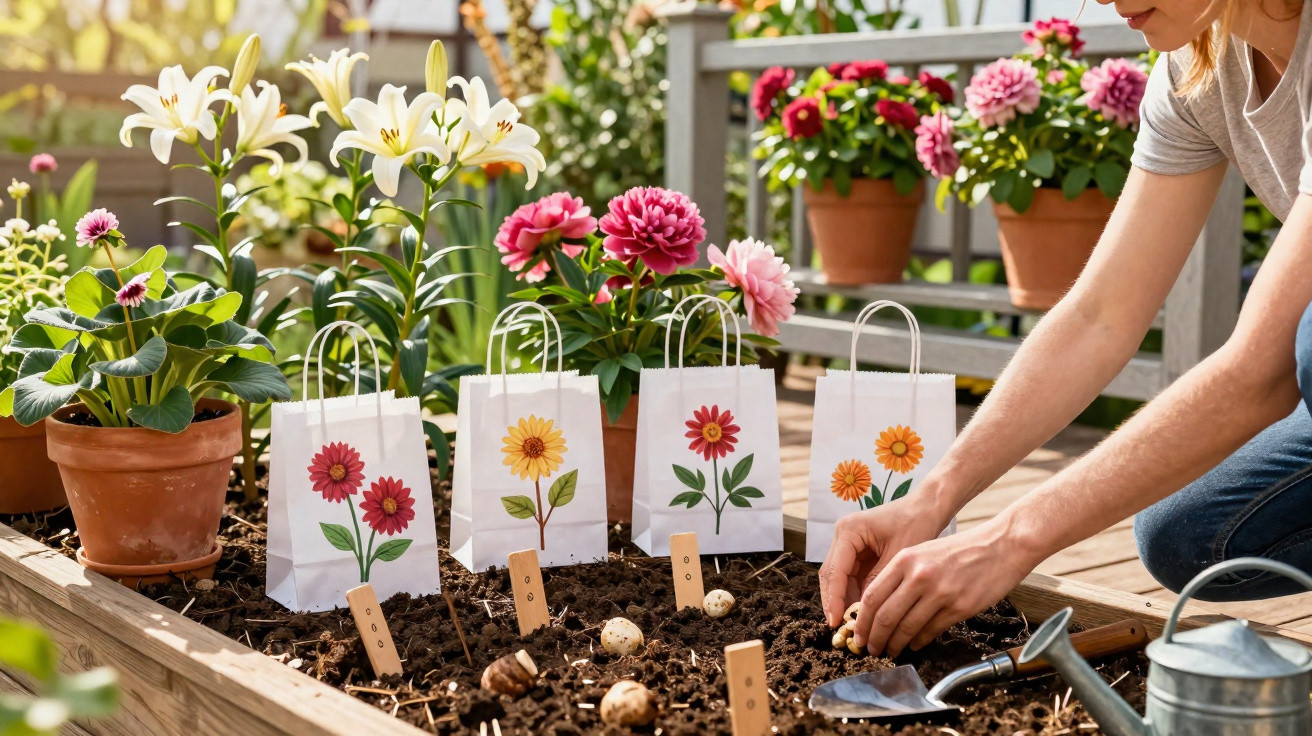
With the right planting job in March, you can neatly fill this gap.
Once the first spring bulbs have finished, borders and balcony planters can look as though they’ve been stripped bare. Yet this is exactly the moment to set things up for a garden that keeps flowering right through the year. If you reach for four specific flower bulbs and tubers in March, you can sail past that drab interval and bring a real burst of colour to your own patch of green from June well into autumn.
Why March is a game-changer for summer-flowering plants
March is the key starting point for many summer-flowering plants: the ground begins to thaw, the sun has more strength, and daylight hours noticeably increase. Planting now doesn’t push flowering into late summer; instead, it helps you lock in colour from the start of the warmer season.
Without planting in March, many hobby gardeners face a colourless dry spell of several weeks – right when the patio is used most.
Most summer-flowering bulbs and tubers go into the soil from early March through to around mid-May. If you wait until late April or May, the first flowers often won’t appear before July. By then, daffodils and tulips have long since disappeared, and beds and boxes can look surprisingly sparse.
There’s a straightforward way to avoid that: four groups of bulb plants, used together, create a relay of flowering-carrying the display from the early weeks of summer right through to autumn.
The four most important candidates for planting in March
Dahlias: colour bombs for sunny borders
Dahlias are among the most dependable stars of summer. They grow from tuberous root pieces that benefit from being woken up in March. A good approach is to start the tubers off in pots under glass, or in a bright, frost-free cellar.
- Begin in March in pots; keep the compost slightly moist and protect from frost
- Move into borders or large containers from mid-May
- Flowering (depending on variety) runs from June to October
- Needs lots of light and nutrient-rich soil
Because the range of varieties is huge, there’s something to suit every taste: from compact pompon types and star-shaped blooms to enormous flower balls that work well as cut flowers. Starting in March gives you a long season and lets you disguise gaps between perennials and roses with ease.
Begonias: quiet heroes for shade and north-facing balconies
Where many plants struggle, begonias often thrive. Shady courtyards, north-facing balconies, and darker sides of the house can benefit in particular. In March, place the tubers in shallow trays or pots, with the curved side facing upwards, in loose compost that’s lightly moist.
Keep the containers bright but frost-free-on a windowsill, in a stairwell, or in an unheated conservatory, for example. Once the risk of frost has passed in mid-May, the plants can go outdoors. With regular watering, they repay you with an almost uninterrupted ribbon of flowers right into autumn.
Begonias are ideal gap fillers in spots where there seems to be no suitable flowering plant.
Lilies: elegant structural plants with a fragrance bonus
Lilies add height and a refined look to borders. Their bulbs should be planted in March, at a depth about two to three times their height. Choose a free-draining position, as they do not cope well with waterlogging. Sun or partial shade works, depending on the variety.
A particular advantage is that many lilies flower when the garden can otherwise feel a little quiet. Some varieties open in late spring, while others focus on high summer and early autumn. That makes it possible to deliberately bridge weeks when there are fewer flowers elsewhere.
- March: plant the bulbs, loosen the soil, and mix a little sand into heavy clay
- Early summer: first flowers on early varieties
- High summer: main flowering period for many Asian and Oriental varieties
Peonies: an investment for many future springs
Peonies are less of a quick fix and more of a long-term commitment. Planting them in March sets you up for abundant late-spring and early-summer flowers in the years ahead. They require patience: it often takes two to three years before the plants show their full potential.
These perennials want a spot where they can stay for a long time, as they dislike being moved. Once established, they form larger clumps year after year and produce impressive, often scented flowers. For gardeners thinking beyond this summer and planning for the seasons to come, they’re a must.
How these four plant groups close the flowering gap
With a little forethought, these four groups can create an almost continuous flowering calendar. As spring bulbs fade away, pre-started dahlias and begonias take over. Lilies extend the display upwards, while peonies ensure a generous start to early summer in the years that follow.
| Plant | Planting time | First flowers | Typical position |
|---|---|---|---|
| Dahlia | March (in pots), outdoors from May | June | Sun to partial shade, nutrient-rich soil |
| Begonia | March (indoors), outdoors to balcony/border from May | June | Shade to partial shade, including north-facing balconies |
| Lily | March (in the ground) | Late spring to high summer (variety-dependent) | Sun or partial shade; well-drained soil |
| Peony | March | Usually after 2–3 years | Permanent position in the border; avoid transplanting |
- Only one milk roll brand really stands out positively to the nutrition doctor
- 10 smart phrases you can use to set boundaries – without an argument
- Crop top despite a belly? How to pull off the trend without a tummy ache
- Brilliant trick: scrub your driveway like new with kitchen cleaner and a broom
- If a tit flies into your house in March: what it means
- With this trick, your garden becomes a paradise for tits
- Planting potatoes properly: pro tips for an XXL harvest in summer
- Lidl launches a 3-in-1 marvel for floors: vacuum, mop, dry in a single pass
Copyright © 2026 Koester-kuechen
Scroll back to the top
Comments
No comments yet. Be the first to comment!
Leave a Comment