
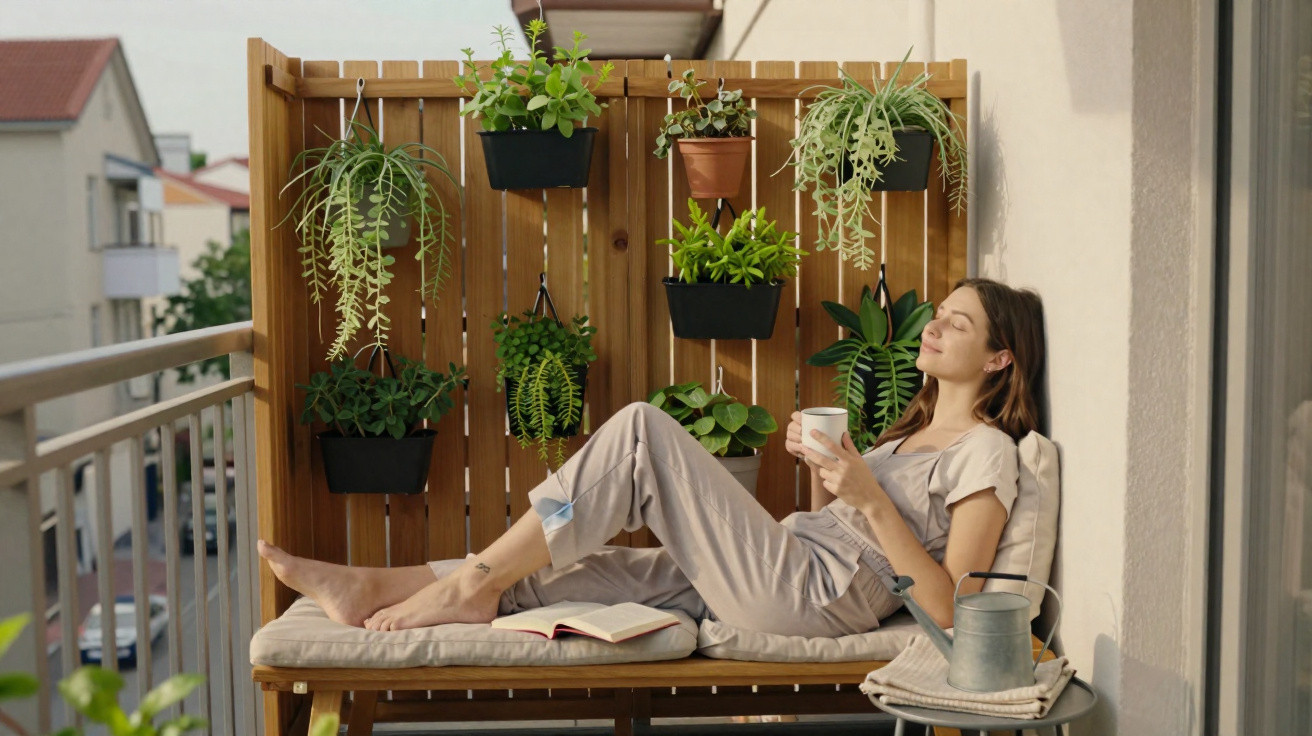
Anyone who lives in a city knows the issue: the moment you step outside with a coffee or a book, it can feel as though the neighbours have been invited to watch.
Plenty of people want a calmer outdoor spot without having to apply for permission for privacy walls or fixed canopies. One smart piece of IKEA furniture makes that possible: it blocks prying eyes, gives you somewhere to sit and adds storage - all without drilling, screwing, or sacrificing loads of space.
Why privacy screens on balconies and tiny gardens matter so much
In tightly built-up areas, balconies and small gardens often feel completely exposed. Someone lives opposite, someone’s leaning out of a window above, and someone else can see in from the terrace next door - that’s not what real privacy feels like.
Market researchers estimate the global market for privacy-screen elements and fencing at around 19 billion dollars, which underlines how strongly the desire for a retreat is growing. At the same time, every square metre of living space is getting more expensive, especially in major cities. So if you do have an outdoor area, you’ll understandably want to use it efficiently - and enjoy it in peace.
“A small piece of furniture with a big impact: well-placed screening turns a forgotten corner into a genuine comfort zone.”
With very limited space, there’s another snag: traditional fences, walls, or permanently installed slatted screens are often too bulky, not allowed, or simply too costly. That’s where flexible solutions come in - things you can put up yourself, move around, and take with you when you leave.
The NÄMMARÖ module from IKEA: privacy screen, seat and storage in one
This is exactly where IKEA’s NÄMMARÖ range comes into play. One particularly interesting module combines three jobs at once: a free-standing room divider that stops curious glances, a comfortable place to sit, and built-in storage for all the bits that otherwise end up scattered outside.
The unit is made from solid acacia, a timber widely regarded as sturdy and long-lasting for outdoor use. Its slats still allow light and air through, while interrupting the direct sightline. The result is an area that doesn’t feel boxed in or gloomy - it stays airy, just more sheltered.
- Height: about 140 cm - tall enough to give cover while seated
- Screen width: roughly 80 cm
- Footprint depth: around 50 cm - slim enough for standard balconies
In the version with the bench and integrated box, the overall module is around 80 × 68 × 140 cm. That makes it easy to stash cushions, blankets, children’s toys, or garden tools in seconds. If you’re aiming to keep your outdoor area tidy, the storage becomes just as valuable as the screening.
“One customer especially praises how straightforward it is to assemble and the quality - something that will matter to anyone who’d rather not do DIY.”
On price, the screen on its own comes in at about €75, while the combination of privacy screen, bench and box typically sits somewhere between €170 and €220, depending on in-store promotions.
How the privacy screen changes day-to-day life outdoors
The biggest plus is that the module is free-standing. There’s no need to drill into the façade or fasten anything to a balcony railing. That means you can reposition it whenever you like - depending on the time of day, where the sun is, and which direction the neighbours are looking from.
In small spaces, that flexibility makes a real difference:
- In the morning, you can create a coffee spot behind the screen, buffered from the street.
- At lunchtime, the module can shift slightly to block harsh midday sun or views from the office opposite.
- In the evening, the same corner becomes a mini lounge where you can enjoy a glass of wine in peace.
Families also tend to use the screen to form a semi-sheltered play area for children, while keeping space alongside for eating or working.
Vertical planting: turning the room divider into a green garden
The slatted design is ideal for building a lightweight vertical garden. Horticulture experts emphasise that vertical gardening is particularly efficient in tight spaces because it grows upwards rather than spreading outwards.
Practical planting ideas for the NÄMMARÖ module:
- Hang herb pots from hooks (basil, rosemary, mint)
- Train small climbers such as nasturtiums up the slats
- Fix lightweight hanging baskets filled with flowering plants
- Place grasses in narrow planters directly in front
“With just a few pots and plants, the divider stops looking like furniture and starts to feel like a small green wall.”
Concrete ideas for outdoor areas of different sizes
Narrow city balconies
On typical rented flat balconies, every centimetre counts. Here it works best to position the privacy screen on the side that attracts the most attention - often where the neighbouring balcony sits closest.
One workable set-up:
- Align the module lengthways along the railing to reduce upward views from below
- Place a slim bistro set in front (small table, two folding chairs)
- Add a tall planter of grasses or bamboo on top of the unit or directly behind it
This creates a second, higher visual barrier above the railing without closing the area in.
Tiny back-courtyard gardens
In compact city gardens, you can create separate “zones” for different uses. The NÄMMARÖ module with bench works well for visually dividing an eating area from a relaxation area.
Typical arrangement:
- Use the bench with the screened back as the end boundary of the dining spot
- Hide less attractive essentials behind it: wheelie bins, an air-conditioning unit or a compost bin
- Place the table and chairs in front, framed by two large planters
That way, the functional side of the garden stays out of sight, and what you do see feels neat and welcoming.
Ground-floor terraces with lots of overlooking
Ground-floor flats along pavements often suffer from constant exposure to passers-by. If you live there, you’ll recognise the feeling of sitting in a shop window. Two modules set at right angles can create a semi-open cocoon.
A cosier layout:
- Position one module lengthways along the pavement edge
- Attach a second module across it to form an L-shape
- Put a bench in the corner, with a small table in front
Add cushions, a blanket and some fairy lights and it quickly feels like an outdoor living room - without making any permanent changes.
Care, durability and legal considerations
Acacia can handle plenty, but it does need minimal upkeep. Once or twice a year, it’s worth lightly sanding the wood and refreshing it with oil or a wood stain to maintain colour and weather protection. For day-to-day cleaning, lukewarm water and a mild soap is usually enough.
| Aspect | Recommendation |
|---|---|
| Cleaning | Soft brush, soapy water, no pressure washer |
| Maintenance frequency | Oil or stain 1–2 times per year |
| Winter storage | If possible, cover or store in a sheltered spot |
Because the module stands freely and isn’t permanently fixed, many users avoid arguments with property management or neighbours. Even so, in rented homes it’s sensible to check the building rules: some management companies care about a uniform look, particularly on street-facing balconies. A free-standing piece of furniture, however, is generally less contentious than a construction that’s bolted in place.
Practical tips to get more impact with minimal effort
If you want to get the most out of the screening effect, a few simple tweaks can help:
- Use light-coloured seat cushions on the bench to make the area feel larger
- Attach fairy lights or solar lamps to the slats
- Put darker pots at the bottom and lighter ones higher up to create depth
- Choose textiles in similar tones so the space doesn’t look visually cluttered
Something many people only realise after buying it: outdoor storage reduces mess indoors. Seat cushions don’t need carrying back and forth through the flat, children’s toys can be cleared straight into the box, and blankets for cool evenings are always close to hand.
It also helps that the module can move with you. If you relocate from a balcony flat to a place with a garden, you can simply reposition the unit and repurpose it - for instance, as a backdrop for a seating area under a tree.
That makes the IKEA solution a practical building block for better quality of life in very tight spaces: not flashy, but extremely usable. If you often feel watched on your balcony, a single piece of furniture can switch the vibe from “display area” to “private retreat”.


Comments
No comments yet. Be the first to comment!
Leave a Comment