
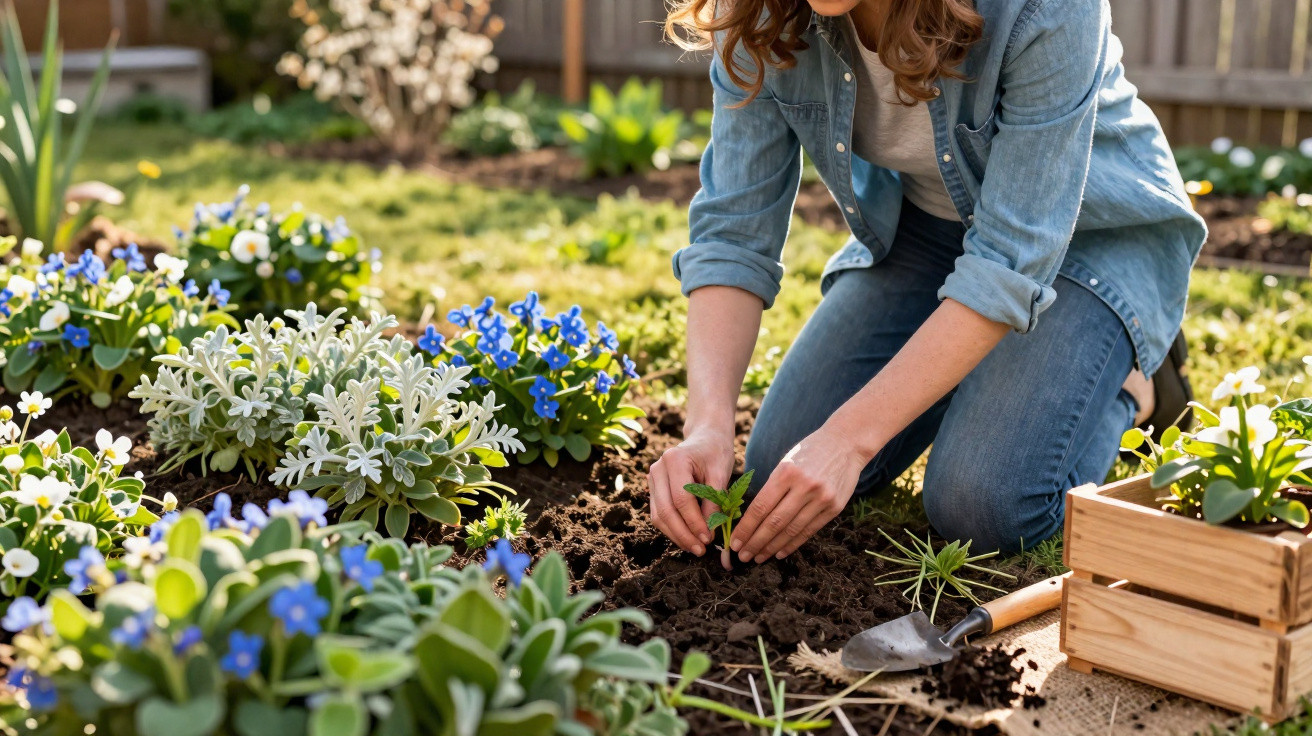
Instead of spending every weekend pulling thistles, chickweed and dandelions out of your borders, you can plant the space intelligently once - and then mostly leave it alone. The key idea is a living ground-cover carpet. With the right perennials, gaps in the bed close so tightly that unwanted weeds barely get a look in. March is the ideal time to get started.
Why the weeds keep coming back
Many gardeners tackle the problem at the wrong end: they yank out whatever is visible, then wonder why fresh green tufts appear after every spell of rain. The real reason sits in the soil itself.
Below the surface is a huge “seed bank”. Year after year, seeds from wild plants accumulate and can wait for ages for the right trigger: light and moisture. The moment bare soil is exposed, that reserve springs into action.
"Every deeper jab with a spade or hoe brings new layers of seed up to the surface - and with them the next wave of weeds."
So if you respond to every weed outbreak by digging hard, you unintentionally manufacture next season’s problem. Specialists therefore recommend a different approach:
- Work shallowly: Loosen only the very top layer; don’t churn the soil deeply.
- Lift off seed weeds: For annuals such as chickweed, slice them off just above soil level rather than ripping out big holes.
- Pull deep-rooted weeds thoroughly: For dandelions, thistles or burdock, use a narrow tool to cut down carefully and remove as much root as possible - ideally when the ground is moist.
Woody seedlings of shrubs and trees are especially awkward. If you leave them “for later”, you’ll need far more force (and much deeper digging) later on - and that opens new windows for dormant weed seeds to germinate.
Living mulch: perennials as natural weed protection
The more sustainable tactic starts earlier: don’t leave soil bare in the first place. Instead, fill beds with tough perennials that cover the ground like a carpet. Garden experts often call this “living mulch” or “living ground cover”.
These plants effectively work around the clock for you:
- They shade the soil so weed seeds don’t get the light they need.
- They hold moisture in the ground and cut down on watering.
- Their roots support soil life and help prevent erosion.
- Many also provide food for bees and other insects.
"By planting ground-cover perennials, you swap back-breaking weeding for a colourful cushion of flowers - often for many years."
Brunnera & Co.: perennials that take over the soil in spring
Among ground covers, one perennial is repeatedly singled out: Brunnera macrophylla, commonly known as the Caucasian forget-me-not. Many professionals rate it as one of the best spring ground covers.
It forms large, heart-shaped leaves topped with delicate clouds of sky-blue flowers that strongly resemble classic forget-me-nots - but are longer-lived and more generous. In good conditions, Brunnera often flowers from mid-March right through to May.
Its advantages:
- very long-lived and resilient
- spreads in a moderate but dependable way
- ideal for partial shade to full shade
- combines well with spring bulbs such as crocuses or daffodils
In the shade of trees or along house walls, this can create a dense blue carpet of flowers under which hardly any wild weeds can persist.
Other suitable ground covers for March
To make a garden genuinely low-maintenance, it’s worth mixing several different perennials. That way, the planting stays lively from spring through to autumn. Proven options include:
| Plant | Position | Special feature |
|---|---|---|
| Brunnera macrophylla (Caucasian forget-me-not) | Partial shade, shade | Spring-flowering, large leaves, forms an opaque cover |
| Cranesbill (Geranium) varieties | Sun to partial shade | Long flowering period; closes gaps quickly |
| Cushion phlox | Full sun | Low flowering carpet; ideal for bed edges |
| Stonecrop types (Sedum) | Dry, full sun | Copes with little water; insect-friendly |
What matters most is always the same: the species must suit the site. Put a shade-loving perennial in blazing midday sun and it will struggle - and stress creates gaps where weeds can move straight back in.
How to plant successfully in March
The starting gun for a living flowering carpet is when the soil has dried out enough in March to be workable underfoot. Preparation then follows a few short, crucial steps:
- Final thorough weeding: Use moist soil to your advantage; dig out deep-rooted weeds carefully and remove annual weeds shallowly.
- Loosen only the surface: With a cultivator, rough up just the top 2–3 cm without digging deeply.
- Work in compost: A thin layer of well-rotted compost improves structure and provides starter nutrients.
- Plant closely: Space perennials so that by the second year at the latest, the leaves touch.
- Water in: After planting, water well so the roots make good contact with the soil.
"In the first year the new carpet needs a little attention - a few watering sessions and targeted pulling of the handful of weeds that still come through. After that, the planting largely takes care of itself."
What to watch out for with ground covers
As tempting as an almost maintenance-free garden sounds, a few points deserve attention so the plan doesn’t backfire.
- Check growth habit: Some ground covers spread aggressively and can crowd out weaker neighbours. Read the cultivar description or ask at a garden centre.
- Combining with shrubs and trees: Under shallow-rooted shrubs or mature trees, competition for water and nutrients is tougher. Choose particularly robust species there.
- Adjust watering routines: Dense planting needs more water at first; later it usually needs far less than bare soil.
- Plan the flowering sequence: Mixing different plants can keep areas colourful from early spring right through to autumn.
Practical examples from everyday gardening
A common situation is a perennial bed with roses in the middle and bare patches between. Many people reach for bark mulch here. It does suppress some weeds, but it can heat up strongly in summer and gradually breaks down without creating life of its own.
If you plant low cranesbill varieties instead, you get a living, flowering surface that cools the soil, attracts bees and reduces maintenance. The same principle works for strips in front of hedges or under fruit trees - places where the hoe previously never got a rest.
Another example is a gravel strip in the front garden. With drought-tolerant Sedum types, creeping thyme and cushion phlox, you can build a hard-wearing carpet that shrugs off summer heat while denying weeds the open space they need.
Risks, benefits and sensible combinations
Every change in the garden has side effects. If you plant extremely densely, you may need to water more at first until the root systems establish. In very damp corners, waterlogging can become an issue when heavy soil meets thick growth. Doing a basic soil assessment in advance helps avoid frustration.
In most home gardens, the benefits clearly outweigh the drawbacks: less weeding, improved soil structure, more flowers, more insects, and less bare ground drying out. It becomes especially interesting when ground covers are paired with bulbs. Crocuses, tulips or daffodils can push up through the foliage, flower early, and then hand the space back to the perennial carpet.
If you want to ease into it, begin with one problem area - the bed that always needs weeding. Do one thorough tidy-up in March, plant the ground cover, and watch how it develops over a season. Often, the next area follows almost automatically - and your knees stay noticeably cleaner far more often.


Comments
No comments yet. Be the first to comment!
Leave a Comment