
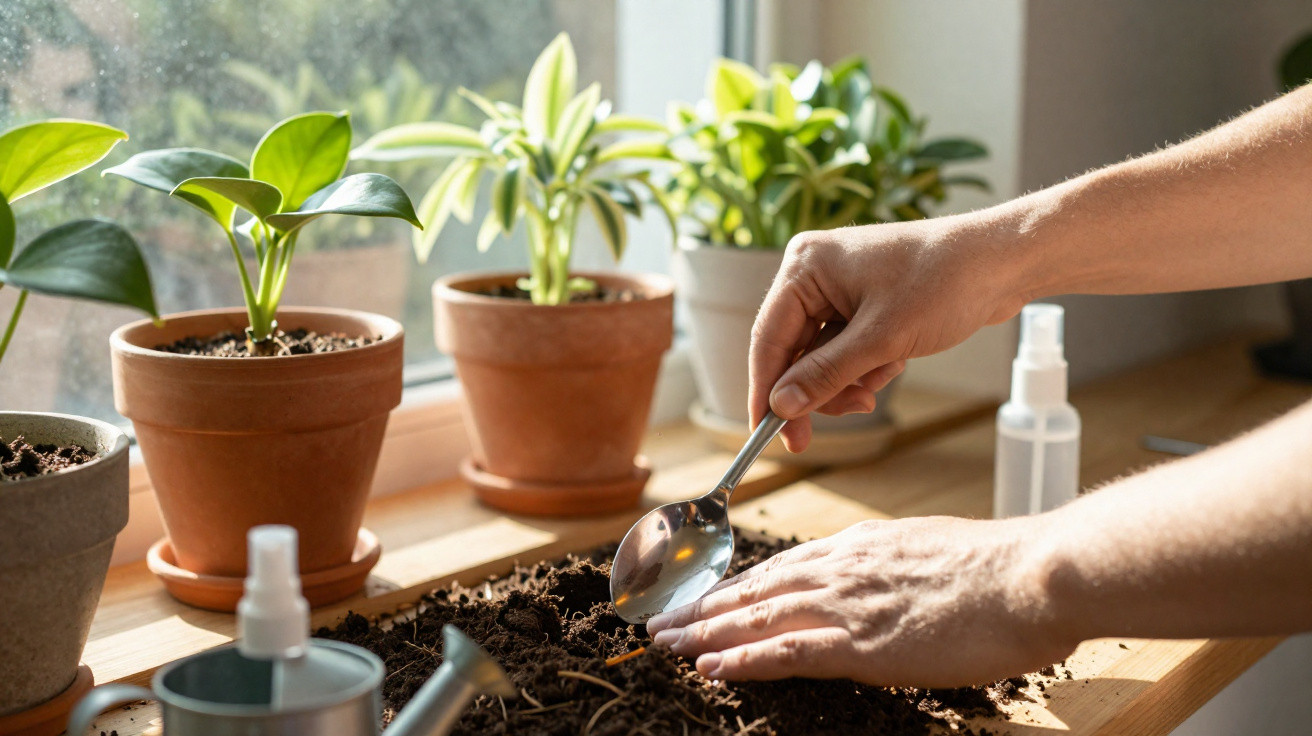
If you look closely, you may spot it more and more often between ficus, geraniums and herbs: an old metal spoon pressed firmly into the compost. It is not a forgotten watering aid, but a small trick from hobby gardens and living rooms that has quietly spread via social media and neighbour-to-neighbour advice. But can a piece of metal in a pot genuinely improve plant health - or is it simply a pleasing misconception?
Where the idea of a metal spoon in a flower pot comes from
Using metal in the garden is far from new. Many gardeners have long placed copper coins at the bottom of a pot, either to deter slugs or to help with drainage. Burying a spoon in the soil follows the same DIY reasoning: everyday objects are meant to turn a plant pot into a smaller, more cleverly managed ecosystem.
The approach is straightforward. A plain metal spoon - most often stainless steel, without paint or any coating - goes straight into the compost. The handle can be left visible or pushed down completely; the only thing that matters is that the metal remains in contact with the growing medium.
Plenty of hobby growers insist this tiny change benefits potted plants over the long term. So far, there is no solid scientific proof; for now, it remains a hands-on experiment for anyone who enjoys testing and comparing.
What benefits gardeners hope to get from the spoon
"The basic idea: the metal spoon is meant to slowly enrich the compost in the pot with tiny amounts of minerals while also unsettling pests."
A gentle mineral top-up for tired potting compost
In a flower pot, there is only a limited volume of compost. Nutrients can be used up quickly, especially if repotting is rare. The thinking behind the spoon trick is that moisture may, over time, release minute traces of metal that then make their way into the soil.
Supporters believe these traces can:
- keep the compost a little more “active”,
- make growth more even,
- and give plants in older compost a slight boost.
This is often mentioned in connection with hardy houseplants that stay in the same pot for years, where people hope for a small extra effect. From a technical standpoint, stainless steel or aluminium release very little, so any impact is likely to be subtle rather than dramatic.
A physical obstacle and light reflections to discourage crawling pests
A second claimed benefit is more practical. The spoon can act as a small obstruction around the base of the plant. Some crawling pests do not particularly like smooth metal surfaces or sudden flashes of reflected light. Especially on balconies - where aphids, fungus gnats or small slugs can quickly become an issue - many gardeners are willing to try any simple, low-effort idea.
A spoon may:
- make it harder for pests to reach the plant’s base,
- reflect light in small, localised flashes,
- occasionally startle mice or birds if it glints in the sun.
This should not be mistaken for a miracle cure. A spoon will not replace balanced care or thoughtful pest management. At best, it is one small extra hurdle - and it does so without chemicals.
How to use the spoon method correctly
Which spoon is suitable?
If you want to try the trick, an old stainless-steel tablespoon is the safest option. It should be:
- clean and free from grease,
- unpainted, with no decorative coating,
- free from rust and sharp edges.
Silver cutlery may look impressive, but it is unnecessarily expensive for everyday use and can tarnish. Brightly painted party spoons or coated bargain cutlery are best avoided, as particles could potentially flake off.
The right position in the pot
The spoon should not be pushed into the centre of the root ball. A safer spot is near the edge of the pot:
- Use your fingers or a small stick to open a narrow hole close to the rim.
- Slide the spoon in carefully, without forcing it.
- Insert it deep enough that the bowl of the spoon sits in the active layer of compost.
- Gently firm the compost so no large air gaps remain.
With very small containers - for example tiny succulent pots - the experiment is hardly worth it. The spoon takes up too much space and can damage roots.
Which plants are suitable for trying it?
Many hobby gardeners trial the spoon first with resilient houseplants and balcony flowers. Examples include:
- ficus varieties and rubber plants,
- peace lily, spider plant, devil’s ivy,
- pelargoniums, petunias, marigolds in window boxes.
More caution makes sense with herbs and vegetables that are harvested and eaten frequently. In those cases, many people prefer established, traditional nutrient sources such as compost or organic fertiliser.
What a spoon can do - and what it cannot
The spoon method is appealing because it costs almost nothing and is easy to do. Even so, it helps to keep expectations realistic:
| Hoped for | Realistic |
|---|---|
| Noticeably stronger growth | At most slight effects that are difficult to measure |
| Strong protection from pests | A small barrier; depending on the species, barely noticeable |
| A replacement for fertiliser | Not a substitute for feeding and fresh compost |
If you want to test it properly, place two plants side by side that are as similar as possible: same species, same pot size, same location. Put a metal spoon in one pot and not the other. After a few weeks, you can compare growth, leaf colour and pest pressure.
What to watch out for
Metal in a pot is still an intervention, even if it seems minor. To avoid problems, keep a few risks in mind:
- Root damage: Shoving a spoon in too forcefully can tear fine roots. Always work gently.
- Space issues: In very tight pots, a spoon displaces compost and roots. In that case, it is better to skip it.
- Unsuitable alloys: Cheap, unknown metals may contain components that do not belong in soil.
If you already repot regularly, you need tricks like this less. Fresh, high-quality potting compost, correct watering and occasional feeding have a far greater impact than a spoon in the soil.
Practical add-ons for healthy potted plants
The spoon trick works, at best, as a small extra within a wider routine. If you want your potted plants to stay strong, keep a few basics in mind:
- Choose a free-draining growing medium so roots are not left sitting in water.
- Avoid waterlogging; empty saucers in good time.
- Repot container plants every one to two years into larger pots with fresh compost.
- For long-term houseplants, use lightly dosed liquid feed.
Some gardeners combine the spoon with other simple measures: for example, a little coarse sand to help against fungus gnats, a thin layer of expanded clay on top of the compost, or copper tape around the rim for slug-prone balcony planters. Each individual tweak has limited effect, but together they can make the overall setup feel more robust.
In the end, the metal spoon is mainly this: a playful trial that might produce small effects. If you enjoy watching your plants closely and trying something new, it is a harmless, low-cost experiment - and it gives you a story to tell every time you glance at the pot.
Comments
No comments yet. Be the first to comment!
Leave a Comment