
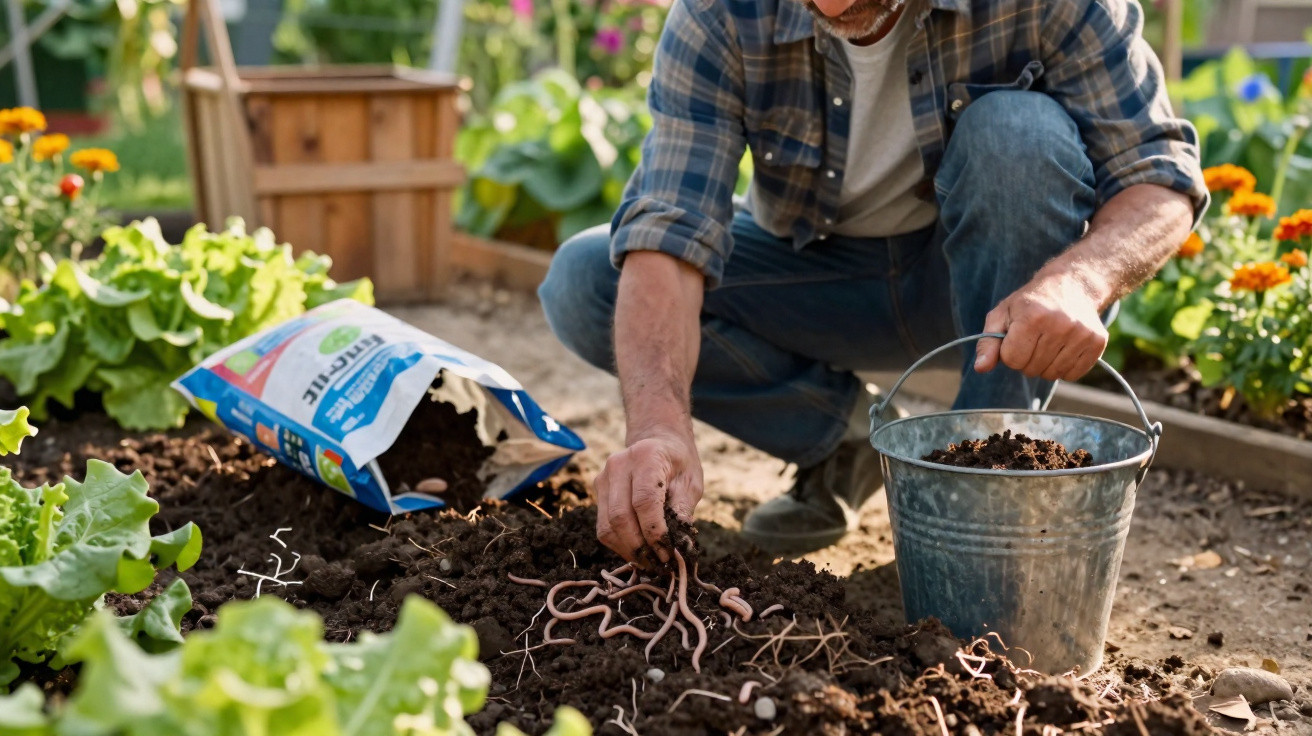
It begins with the absence of noise.
No stinging chemical pong, no blue crystals fizzing away in a watering can. Instead there’s moist soil underfoot, bees humming somewhere above the roses, and a robin bouncing through the mulch, head cocked like it pays the rent.
In Claire’s modest suburban garden, something has changed this spring. She used to keep her bottles lined up like a chemist’s shelf: weedkiller, synthetic fertiliser, disease sprays-each one promising “instant results”. The grass looked impressively green, but the earth beneath it had set like aged concrete.
This year she simply stopped. One container after another was shoved to the back of the shed. And slowly, the ground began to feel active again. Fine white threads appeared in the soil. Beetles showed up. Worms, too. A quieter kind of life started edging its way back.
It all began with one decision that was almost embarrassingly simple.
The common garden product that quietly flattens soil life
Walk into any garden centre and you’ll see it stacked near the tills: bright packs of fast-acting synthetic fertiliser.
Granules, blue liquids, soluble powders-all selling “explosive growth” and “instant green”. For beginners especially, they offer the comforting promise of control: stop the plants sulking, get them growing.
And on the surface, they deliver. Leaves bulk out, lawns glow, flowers burst into colour.
But below ground, a different process plays out-slowly-and it doesn’t match what’s printed on the packet.
Consider Mark, a new homeowner who took over a bit of lawn and two weary rose bushes. The previous owner had left a half-used bag of high-nitrogen lawn feed, so Mark did what most people would: he spread it liberally, watered it in, and waited. A fortnight later, the grass was an almost shocking shade of green.
By mid-summer, though, the soil had begun to split. Worms were hard to find.
His roses seemed to need feeding more and more often, as if they’d developed a dependency. When he pushed a trowel into the bed, it went in with a crunch rather than that soft, crumbly give you hope for. Roots stayed near the top few centimetres where the fertiliser landed, instead of driving down into deeper layers-where toughness and stability actually come from.
Synthetic chemical fertilisers are like energy drinks for plants. They flood the soil solution with readily available nutrients, effectively side-stepping much of the soil food web.
So plants stop “talking” as much to fungi and bacteria, because they no longer need the microbial help to forage for nutrients.
Over time, that quietly unravels an old partnership. Microbial variety shrinks. Fungal networks become sparse. Worms back away from salty, abrasive conditions. Soil that once behaved like a living sponge starts acting more like sterile growing medium.
Yes, you get growth-but little by little you trade away the living engine that makes a garden able to sustain itself.
What happens when you stop: small shifts, big impact
The most dramatic improvements rarely start with grand, heroic changes.
More often, they begin with a small, almost hesitant turn: people stop buying the blue stuff. They finish the current bottle and don’t replace it. They park the spreader at the back of the shed.
Then they take a step that is both straightforward and remarkably effective: they feed the soil, rather than pushing the plant.
That can look like top-dressing beds with homemade compost, tucking chopped leaves beneath shrubs, or swapping synthetic feeds for weak compost teas. Tiny routines that seem far too gentle to make a difference.
When Claire gave up synthetic fertiliser, she braced herself for sulky hydrangeas.
She even rehearsed her explanation: “Well, I’m going organic, so of course it’ll look a bit worse for a while.” But it didn’t play out like that.
The first clue came from her compost heap.
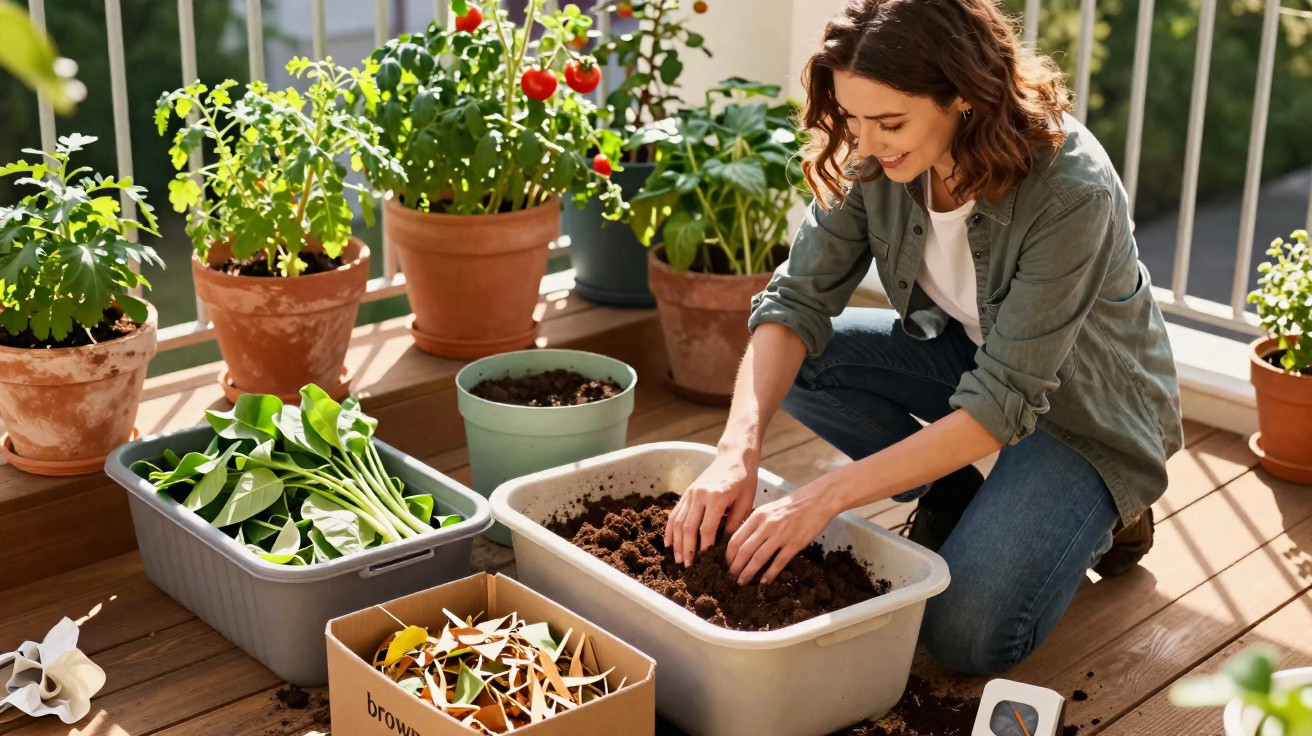
By putting all her prunings, kitchen peelings, and grass clippings in one spot, she was soon able to spread a light layer across the borders every few months. By autumn she noticed something unexpected: water was soaking in rather than sitting on the surface.
In one small raised bed where she’d used nothing but compost and leaf mould for a year, she counted three times more earthworms than in the fertilised strip along the hedge. Those were her words, not a lab’s. A kitchen-scale experiment-but one she could literally feel with her hands.
There’s a clear reason this sort of recovery happens. When you stop dosing the ground with fast salts, you ease the osmotic stress on microbes and on roots.
Bacteria and fungi can rebuild without repeated chemical jolts. Worms come back because there’s real food again-decomposing plant material-rather than just mineral nutrients dissolved in water.
Over a few seasons, the physical structure of the soil changes. Aggregates develop, creating pore spaces for air and water. Roots push deeper, following moisture through a looser, more welcoming matrix. The knock-on effects are familiar: less watering, fewer disease flare-ups, and plants that don’t collapse at the first hint of stress.
Let’s be honest: nobody maintains this perfectly every day. But gardeners who stick with it-even messily-often end up saying the same thing: “My soil feels alive again.”
How to gently break up with synthetic fertilisers
Stopping doesn’t have to mean quitting overnight if that idea makes you panic.
A more realistic approach is to taper, the way you might cut back on coffee: extend the time between applications, reduce the dose by half, and reserve it only for places you really can’t bear to lose-such as prized containers.
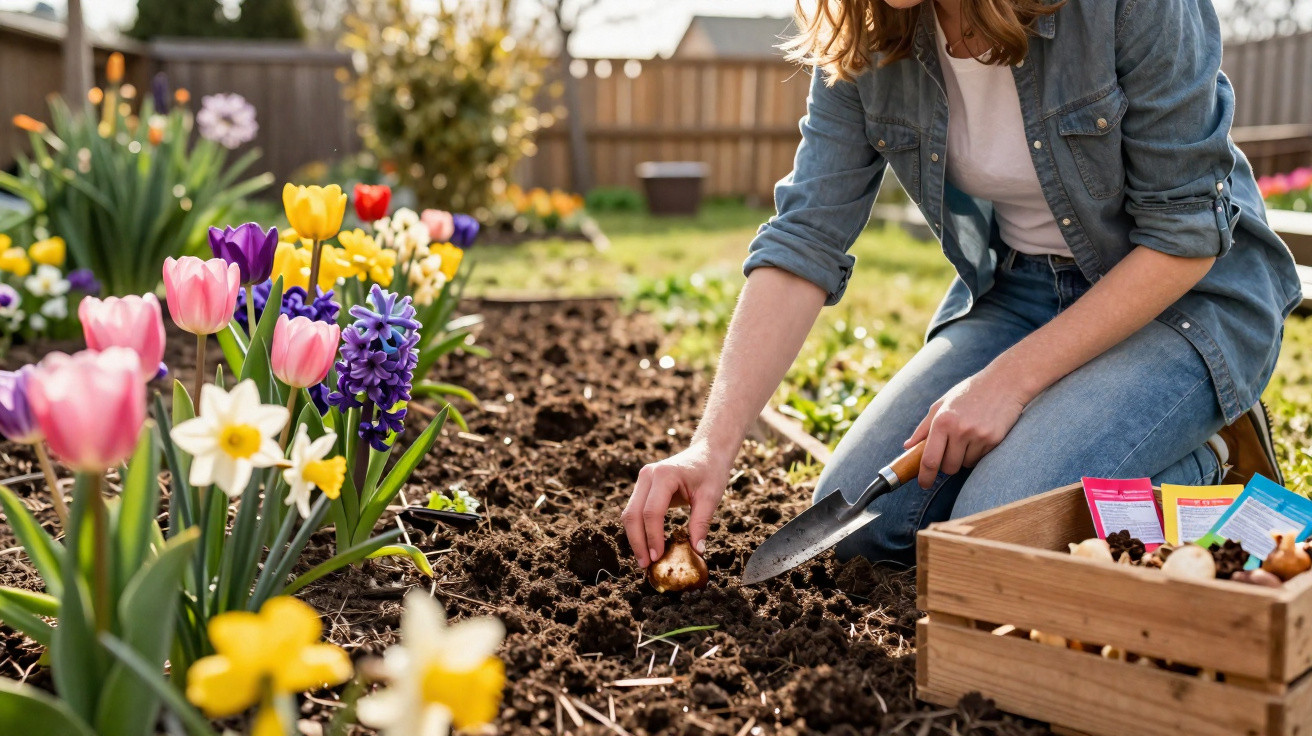
Where you do make space, introduce organic habits. Top-dress beds twice yearly with 1–2 cm of compost. Scatter grass clippings in thin layers beneath shrubs as a living mulch. Gather autumn leaves, shred them with the mower, and spread them anywhere the soil looks worn out.
Every small action is a vote for the underground community you’re trying to restore.
A common pitfall is expecting immediate fireworks. People ditch synthetic feed in April and want overflowing borders by June.
When that doesn’t happen, the temptation is powerful: “This isn’t working. I’ll just give it one more chemical boost.”
But soil biology runs on a slower timetable than marketing copy.
Some beds respond within a season. Others-particularly those that are compacted or have been overfed-may need two or three years of gentle, consistent care. In the meantime you can get awkward transitional periods where certain plants look leggy or slightly pale. That’s not proof you’ve messed it up.
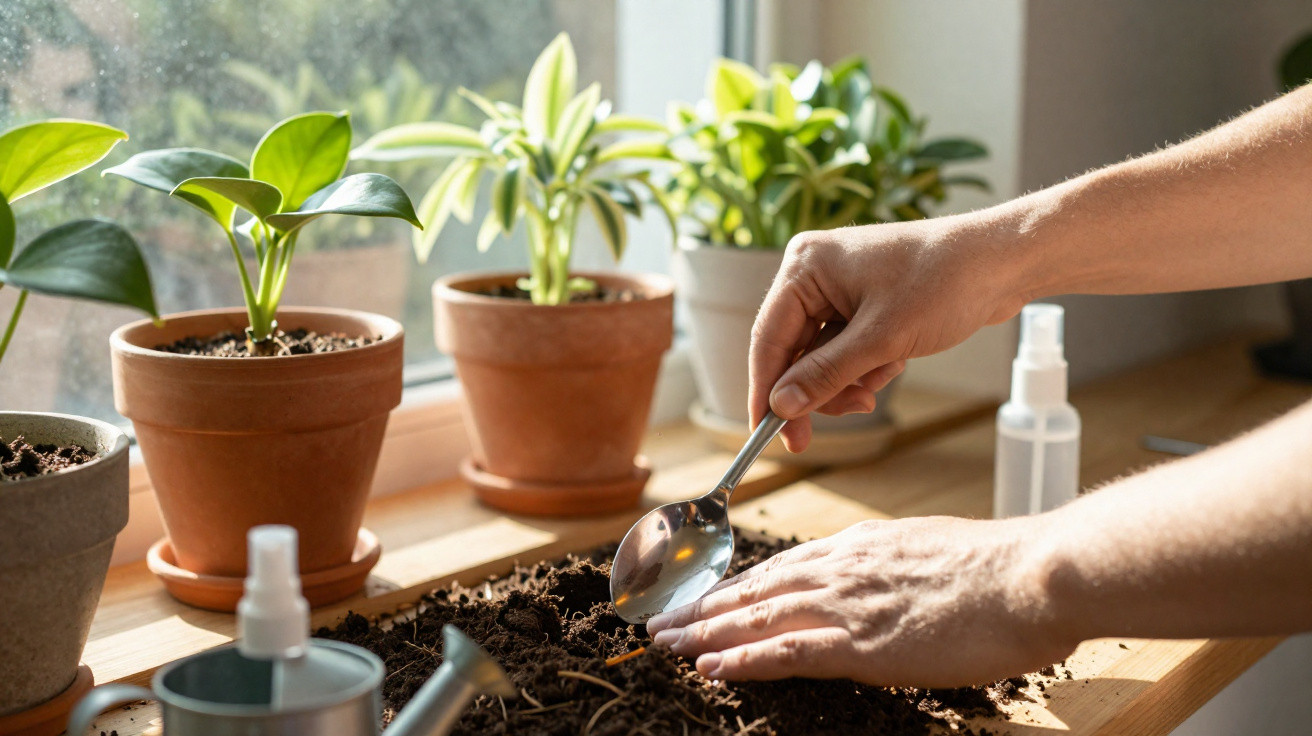
Stay observant. Dig a few small test holes. Smell the earth. If it shifts from grey and lifeless to darker, crumbly, and properly earthy, you’re moving in the right direction-even if your photos lag behind.
“Once I stopped pouring the quick-fix stuff on and started layering compost, it was like changing from fast food to home cooking,” says Lena, who manages a tiny city garden behind a brick terrace. “The first year felt slow. By the third year, I was finding mushrooms in the mulch and worms curled around every root. The plants just… stopped needing me every minute.”
- Simple swaps
Swap liquid feed for diluted compost tea, granular fertiliser for spring compost, and bare soil for leaf mulch. - New habits
Add organic matter little and often, from kitchen scraps in a compost bin to shredded prunings used as surface mulch. - Watching for signs
Look for more worms, easier digging, fewer crusted surfaces, better water absorption-these are your real “before and after” photos.
A quieter kind of gardening success
There’s a moment-often on a wet morning-when it suddenly makes sense.
You sink a trowel into a bed you’ve managed without chemical feed for a couple of years. Instead of resistance, there’s a soft yield, and a smell somewhere between woodland floor and strong tea. Fine roots weave through small crumbs of soil as if they truly belong there.
No one scrolling on social media can see that. It doesn’t arrive in a branded bottle.
But that is where durability lives. When heatwaves roll in, or when a storm drops a month’s rain overnight, it’s the hidden structure-rather than the last dose of fertiliser-that keeps plants standing and stops beds turning to dust or slime.
Moving away from synthetic fertilisers isn’t about chasing perfection or proving moral purity.
Plenty of capable gardeners still use them sparingly and with care. What many people are shifting towards is subtler: less micromanaging every leaf, more working with the ecosystem beneath their boots.
Once you’ve felt soil bounce back, it’s difficult to forget it. You start spotting tiny orange beetles, millipedes under stones, and the way birds fuss through the mulch, hunting the breakfast you helped provide.
You also realise that what once looked “perfect” was, in its own way, anaesthetised.
A living garden is a bit rough around the edges-and that’s the point.
We’ve all had that aisle moment: standing with a bottle in hand, wondering whether you’re making things harder than they need to be, or whether this is simply what responsible gardeners do.
But beyond that shelf, there’s another route quietly opening up-one that smells of compost heaps and wet leaves, and asks for patience rather than a measuring cap.
You don’t have to go off-grid or turn your lawn into a wild meadow overnight.
You only need to choose where your loyalty sits: with the quick jolt in the foliage, or with the slow, deep pulse of the soil. Gardeners stepping back from synthetic feeds are finding that as the ground comes back to life, they do too-more attentive, less hurried, and more tuned in to the quiet drama that unfolds whenever a hand presses into the earth.
| Key point | Detail | Value for the reader |
|---|---|---|
| Cut back synthetic fertilisers | Reduce frequency and dose instead of stopping overnight | Limits plant shock while soil biology recovers |
| Feed the soil, not just the plant | Use compost, leaf mould, and organic mulches regularly | Builds structure, boosts microbes, supports long-term fertility |
| Watch living indicators | More worms, easier digging, better water absorption | Gives you real feedback that your new approach is working |
FAQ:
- Question 1 Can I ever use synthetic fertiliser again once I stop?
- Question 2 How long before I see improvements in soil life?
- Question 3 Will my lawn look worse if I quit chemical feeds?
- Question 4 What’s the easiest first step for a busy gardener?
- Question 5 Is compost alone enough to feed a productive vegetable garden?

Comments
No comments yet. Be the first to comment!
Leave a Comment