
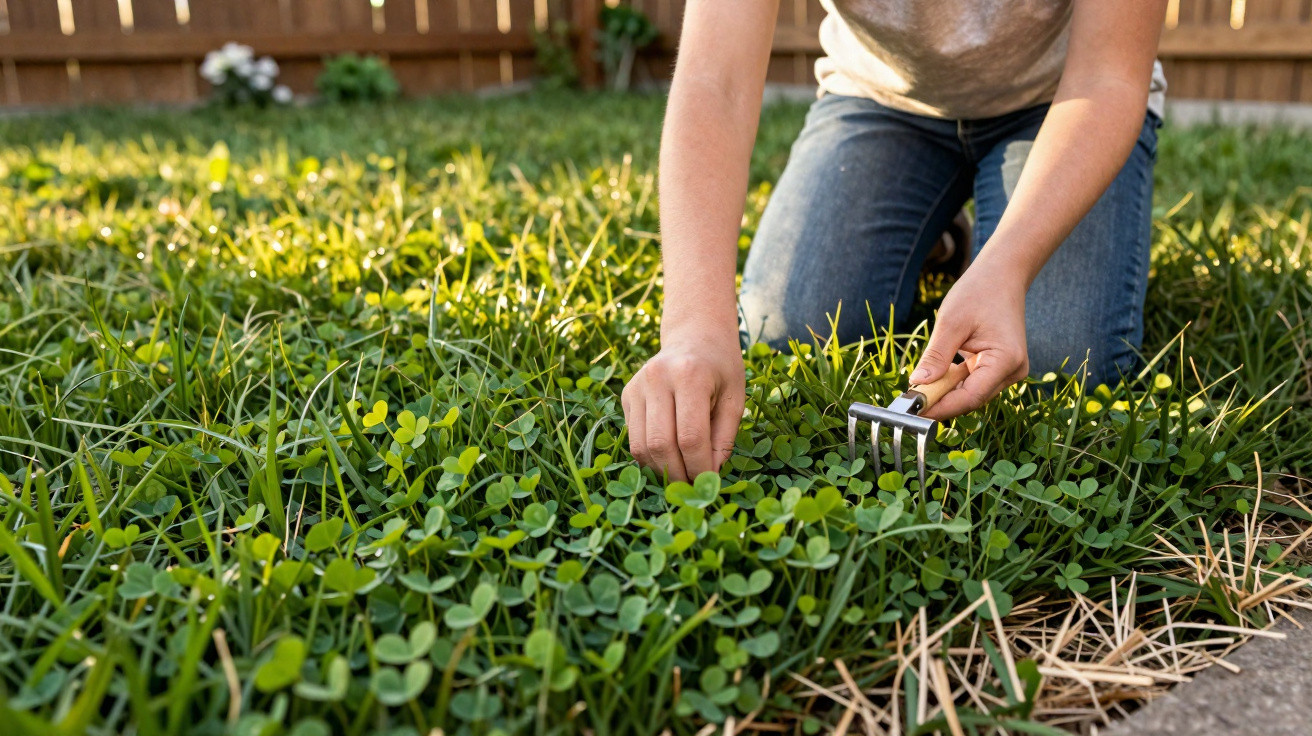
Walking through the garden now, it’s obvious straight away: winter has left its mark. Instead of a thick, rich-green carpet, you’re met with patchy areas, scorched-looking spots and dry islands. The good news is that you don’t need to rip everything out and start again. There’s an unassuming helper that can make gaps in the grass seem to disappear in a short time - while also making your lawn tougher in heat and dry spells.
Why your lawn ends up with bare patches
Dry, yellow or bald areas in a lawn usually come from several causes that often combine and make each other worse:
- Winter frost and waterlogging damage grass roots.
- Summer heat and periods of drought scorch the turf.
- Heavy use from children, sport or dogs compacts the soil.
- A lack of nutrients weakens the grasses, so they recover more slowly.
- Moss and weeds push out lawn grasses where the sward is already struggling.
Many hobby gardeners respond by simply overseeding with lawn seed. That can help in the short term, but it often doesn’t address the underlying issue: the soil remains low in nutrients, and the area stays vulnerable to drought. This is exactly where a small but highly effective planting trick comes in.
Micro clover closes lawn damage, strengthens the turf and brings nutrients into the soil - without constant fertiliser applications.
Micro clover: small plant, big impact
Micro clover is a specially selected, very low-growing form of white clover. Unlike ordinary clover, it spreads more finely and densely, and it blends visually into the lawn.
Typical features of micro clover:
- A growth height of only about 3 to 8 centimetres - it doesn’t take over the lawn.
- Fine, small leaves that sit neatly within the grass.
- High tolerance of foot traffic - ideal for family gardens.
- Adaptable to many soils, from sandy to loamy.
- Fixes nitrogen from the air and feeds it back into the soil.
These traits make micro clover ideal for filling bare patches and improving the resilience of the whole lawn. It works like a natural “living fertiliser” woven through the grass.
How to prepare bare patches properly
Before you sow micro clover, the area needs a bit of groundwork. Skip this and germination and coverage often fall short of what you hoped for.
- Clear the area: Remove old grass remnants, moss and weeds thoroughly. Where possible, dig out weed roots as completely as you can.
- Loosen the soil: Use a rake or cultivator to break up the top 3–5 centimetres of soil. Compacted ground slows establishment.
- Level the surface: Fill small holes with soil and rake down little mounds so the patch is fairly even.
- Create a fine, crumbly seedbed: Lightly rake over the soil and break up large clods.
The better the soil preparation, the faster micro clover will knit those unsightly gaps together.
Sowing micro clover: the step-by-step trick
Sowing itself is straightforward, but a few simple rules make the difference between an average result and a genuinely impressive one.
The best time of year
The sweet spot is spring, once there’s no longer a risk of night frosts. The ground is starting to warm up, and seeds germinate quickly. Early autumn can also work well, because the soil is still warm and rain is more frequent.
Choosing the right seed mix
You can buy micro clover as pure seed or in mixes with lawn grass seed. Either option works for bare spots. In an established lawn, a light additional sowing of clover is often enough.
A practical tip for spreading it evenly:
- Mix the seed with a little dry soil or dry grass clippings.
- This helps distribute the tiny seeds more uniformly.
- Scatter the mixture loosely by hand or with a spreader over the prepared area.
After sowing: press in and water
Once spread, lightly roll the area - or simply press it down using boards or the soles of your shoes. This improves seed-to-soil contact.
For the first few weeks:
- Keep the soil evenly moist, but don’t saturate it.
- Water little and often rather than rarely and heavily.
- Avoid walking on freshly sown patches until the plants are clearly established.
If you use micro clover in early spring, you give it enough time to build a strong root system before the first heatwaves arrive.
How your lawn changes with micro clover
After a few weeks, the effect becomes visible: bare areas close up, and the lawn looks greener and denser overall. Many garden owners report that their grass stays fresh-looking for noticeably longer during dry periods.
That’s down to an interesting biological process. Micro clover is a legume. Its roots host bacteria that fix nitrogen from the air and release it into the soil in a form plants can use. Your lawn therefore receives natural fertiliser from below the surface.
| Feature | Lawn grass on its own | Lawn with micro clover |
|---|---|---|
| Nutrient requirement | Regular feeding needed | Less fertiliser needed |
| Drought resistance | Turns yellow quickly in heat | Stays green longer, recovers faster |
| Wear tolerance | Sensitive under heavy use | Very robust with children and pets |
| Bare patches | Often remain visible for a long time | Close up quickly |
Watering, mowing, feeding: care tips for a lawn with micro clover
A common question is whether a lawn containing micro clover needs completely different maintenance. In practice, the basic approach stays the same - but you can save yourself a fair bit of work.
Watering without the hassle
Because it roots well and uses the soil more effectively, a lawn with micro clover dries out less quickly. You don’t need to keep sprinkling it constantly. During hot spells it’s often enough to water deeply once or twice a week, rather than giving the surface a light daily splash.
Mow as usual
Micro clover stays naturally low. You can keep mowing as you always have. Cutting heights of 4 to 5 centimetres work well: the grass cover shades the soil against drying out, and the clover remains comfortable.
Less fertiliser, lower costs
Because micro clover supplies nutrients itself, your need for lawn feed drops significantly. Many gardeners cut back to one light fertiliser application per year, or manage without mineral fertiliser altogether. That’s kinder to your budget and to the environment.
With micro clover in the lawn, you’re essentially getting a natural fertiliser service - free and continuously available.
Where micro clover works best - and where it doesn’t
Micro clover really shows its strengths where the lawn takes a hammering or where the soil is on the poor side. Typical places it performs well include:
- Family gardens with children playing
- Areas where dogs are frequently running about
- Sunny to partially shaded lawn sections
- Gardens in regions that regularly experience summer drought periods
Micro clover is less suitable in very heavily shaded spots, or in showpiece ornamental lawns that are meant to be perfectly uniform and grass-only. For a classic, practical everyday lawn, it’s an excellent fit.
Risks, misconceptions and common questions
There are plenty of reservations about clover in lawns - and not all of them apply to micro clover.
- “Then my whole lawn will soon be nothing but clover”: Micro clover usually stays understated and mixes into the grass. It can spread, but with normal care it doesn’t typically crowd everything else out.
- “Clover attracts loads of insects, and I don’t want to step on them”: Because it grows low, micro clover flowers much less than regular clover. In frequently mown lawns, flowers are uncommon.
- “Clover looks messy”: With micro clover, the classic ‘clover patch’ look is barely noticeable. Many people simply see an especially lush, green lawn.
If you’re unsure, start with a small trial area - for instance, on a trouble spot in the garden. That way you can see in real time how the grass and clover develop together.
Practical additions for a more resilient lawn
Bare spots close particularly quickly with micro clover if you also keep two additional points in mind. First, it’s worth doing the occasional soil test to get a rough idea of the pH. Very acidic soils can benefit from a little garden lime. Second, periodic scarifying helps remove moss and thatch so air and water reach the roots more easily.
If you’re thinking long term, combine micro clover with adjusted watering and the lowest sensible fertiliser dose. Over time, you’ll build a robust, low-maintenance, attractive lawn that no longer fears bare patches - even after a hard winter or extreme summer days.



Comments
No comments yet. Be the first to comment!
Leave a Comment