
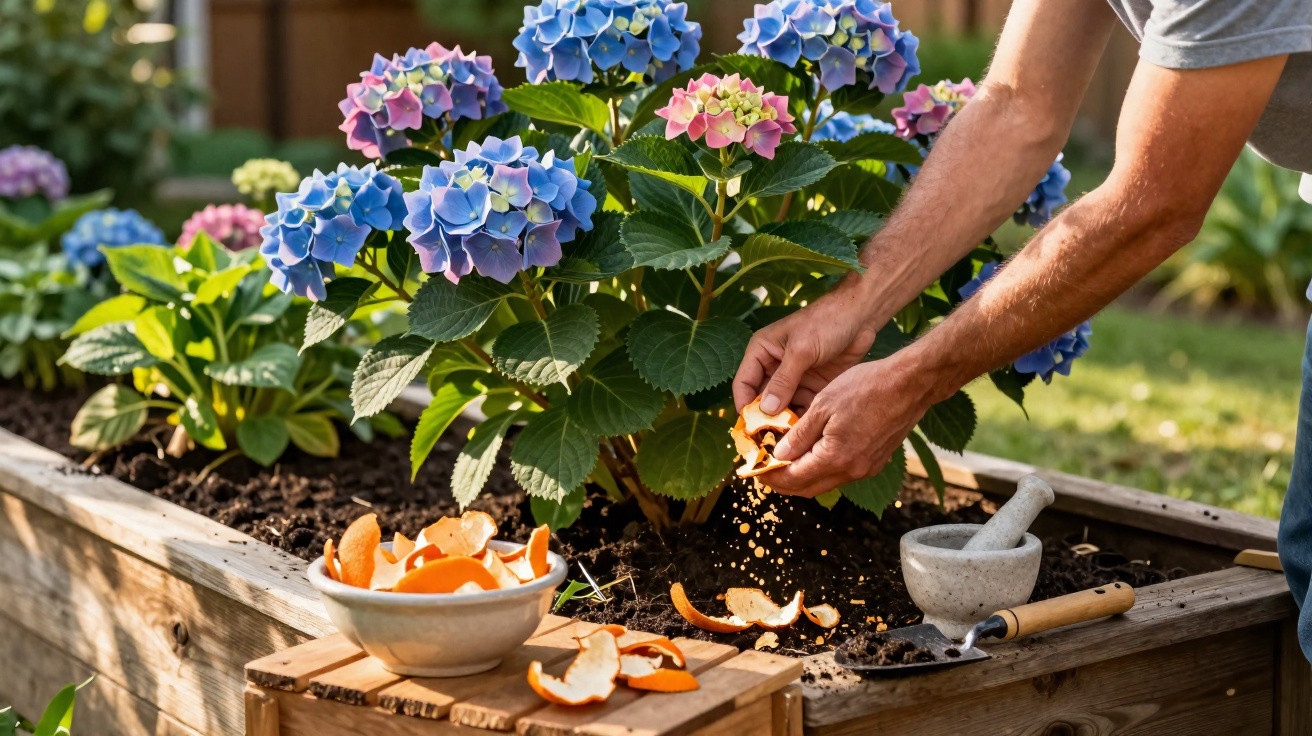
Rather than spending money on specialist fertilisers, you can use a simple everyday leftover to perk up your shrubs. One particular kitchen waste product can help hydrangeas produce stronger foliage, larger flower heads and more vivid colour - yet it usually ends up in the food-waste bin without a second thought.
Why hydrangeas so often struggle
Hydrangeas are often described as easy to look after, but they can be surprisingly sensitive to the wrong soil conditions. As classic ericaceous plants, they grow best in slightly acidic soil - while many gardens end up with soil that is more chalky or lime-rich.
You can usually spot the problem on the plant itself:
- Leaves turn pale green to yellowish
- Flower heads stay smaller than expected
- New growth remains thin and short
- The plant looks generally “tired”
The underlying issue is the pH level. When soil becomes too alkaline, the roots struggle to take up key nutrients such as iron and potassium. Watering habits and weather do play a part, but in many cases it’s simply the lime content that blocks proper nutrition.
"If you lower the pH around your hydrangeas slightly, you literally open up access to the nutrient buffet for the plants."
The underrated miracle remedy: dried orange peel
This long-standing household tip catches many people off guard: dried, crushed orange peel can act as a gentle, natural fertiliser for hydrangeas. It combines three benefits in one:
- It makes the soil slightly more acidic.
- It provides useful nutrients.
- Its scent can deter certain pests.
Orange peel contains, among other things, potassium, nitrogen, magnesium and calcium. Potassium supports sturdy shoots and strong flowering, nitrogen encourages leafy growth, and magnesium is essential for healthy green pigmentation in the leaves.
The mild acidity in the peel helps nudge overly limy soil back towards the slightly acidic range - exactly where hydrangeas perform best. That, in turn, improves the plant’s ability to absorb nutrients already in the ground, without the risk of overfeeding with chemical fertiliser.
How to prepare orange peel properly for hydrangeas
Throwing fresh peel onto the soil in big chunks isn’t a great idea. It can go mouldy quickly, attract fruit flies, and in the worst case draw in mice or other rodents. A small amount of preparation avoids these problems.
Step 1: Dry the peel completely
The peel needs to dry out fully until it becomes hard and snaps easily. There are two straightforward options:
- In the sun: Spread the peel on a tray and place it somewhere warm and well ventilated. Depending on the weather, this can take several days.
- In the oven: Dry at a low temperature (around 50–70 °C with a fan) for several hours, until there are no soft pieces left.
Turn the peel occasionally while it dries so it doesn’t stick and all sides dry evenly.
Step 2: Crush it for a faster effect
The finer the pieces, the quicker the active components can work their way into the soil. Good approaches include:
- a fine powder made in a coffee grinder
- very small crumbs chopped with a knife
- peel briefly pulsed in a blender
Larger torn pieces will rot down too, but it takes much longer. If you want to see a quicker improvement in leaves and blooms, the finer option is the better choice.
Applying it to the shrub: how often hydrangeas need an orange-peel boost
Once prepared, the peel mix goes straight around the base of the shrub. A simple routine makes it easy to slot into normal garden care.
- Sprinkle the powder or crumbs in a loose ring around the root zone, without pressing it right up against the stem.
- Lightly work it into the top few centimetres of soil using a hand rake or your fingers.
- Water thoroughly afterwards so the nutrients move down towards the roots.
A schedule of roughly once a month during the growing season tends to work well. In Central Europe, that’s broadly from March to the end of August. Applying it more often brings little extra benefit and can shift the soil balance too far.
"One tablespoon of finely ground orange peel per medium-sized bush per month is usually enough."
Double benefit: feeding and a natural deterrent for pests
Orange peel contains aromatic compounds such as d-limonene, which many people find pleasantly fresh. Some insects find the smell far less appealing - and that can be useful in the garden.
Around hydrangeas, orange-peel powder creates a light scent barrier that can bother certain ant species and some aphids. It won’t replace full pest control, but it can support other steps such as checking new shoots regularly or blasting pests off with a jet of water.
Because the effect only lasts while the fragrance remains, each fresh monthly application also renews the deterrent. That means leaves and flowers benefit in two ways.
Which other plants can benefit from orange peel
Hydrangeas aren’t the only plants that appreciate a slightly more acidic soil. Other typical ericaceous plants can be cared for in much the same way, including:
- Rhododendron
- Azaleas
- Camellias
- Skimmias
- Blueberries grown in the garden or in pots
With container plants, results are often quicker because there is less compost volume. That also means it’s especially important to dose sparingly and keep an eye on the plant. If you notice very dark, soft shoots or leaf scorch, the mix was too strong.
When to be cautious
If you rely on very hard, lime-heavy tap water, orange peel has its limits. Regular watering can keep adding lime and partly cancel out the peel’s acidifying effect. In those situations, rainwater is a clear improvement.
If you’re unsure, it’s worth doing a quick pH check with a simple soil-test kit from a garden centre. Hydrangeas do best at a reading between 5 and 6. If your soil is well above that, additional measures may be needed, such as using specialist ericaceous compost.
It’s also sensible to be mindful of animals in the garden. Dogs shouldn’t chew on larger pieces of orange peel, as essential oils in higher amounts can upset their stomach. When the peel is finely ground and lightly worked into the soil, the risk is minimal.
Practical, everyday tips
If you eat citrus regularly, you can build up a small winter stash for the next gardening season. Simply save the peel, dry it, and store it out of the light in a jar or screw-top container. That way, you’ll have enough ready to go when spring arrives.
Many gardeners combine orange peel with traditional compost or a little bark mulch. Compost contributes a broad range of nutrients, while bark mulch helps the soil retain moisture for longer and protects beneficial micro-organisms. Together they create a fairly stable, slightly acidic environment in which hydrangeas often look noticeably more vigorous.
If you’re trying orange peel for the first time, start deliberately with just one bed or one section. That makes it easier to compare how leaf colour and flower size develop over the summer versus untreated plants. In many cases, the difference is visible within a few weeks.
Comments
No comments yet. Be the first to comment!
Leave a Comment