
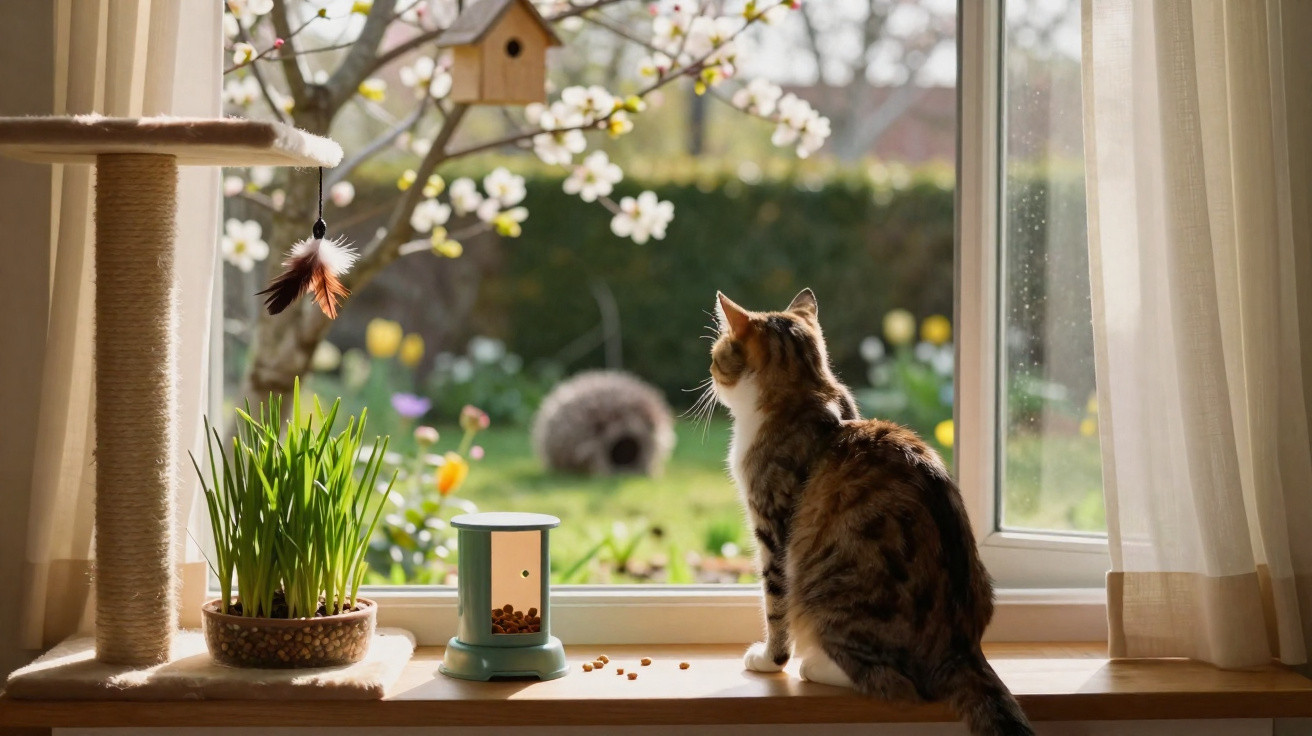
The first warm days arrive, you glance out of the window - and many cats are already purring at the door, ready to slip into the garden. For lots of owners it feels only natural to allow that urge for freedom. Yet in March and April, there is so much going on - unseen - in hedges, trees and on the ground that what looks like a harmless wander can have serious consequences.
Why spring is particularly sensitive
Between March and April, the peak breeding season begins in our gardens. Birds pair up, build nests, lay eggs and feed hungry chicks around the clock. Many fledglings leave the nest before they can fly properly. They then sit in the lawn, in scrub or beneath shrubs - often just a few metres from patios and garden paths.
To human eyes, these little bundles of feathers can quickly look “lost” or “fallen from the nest”. In reality, they are usually exactly where the adult birds want them: tucked into ground cover, behind pots, among perennials. The parents keep watch nearby and fly in regularly to feed them.
“These seemingly helpless young birds are not orphans - they are the weakest link in a bird world that is already under pressure.”
At the same time, figures from European countries show how strained the situation is. Over just a few decades, populations of many common species have dropped sharply. In some major cities, numbers of classic urban birds such as sparrows have collapsed. When whole habitats are under pressure, every extra risk in the garden suddenly matters - including the well-fed family cat.
What cats actually do outside in spring
A cat may look soft and cosy, but under the fur is still a highly specialised predator. Even the laziest sofa cat switches instantly when leaves rustle or a bird-like shadow moves: crouched posture, fixed stare, slow stalk, then the pounce.
Studies on what pet cats catch show a fairly clear pattern:
- around two thirds of captured animals are small mammals (for example mice and voles)
- around one fifth are birds - with a striking number of young birds among them
- the remainder is spread across reptiles, amphibians and insects
Those figures can seem small if you only think about your own pet. If one animal catches “only” five to ten birds a year, it doesn’t sound like much. But multiply that by the millions of pet cats in a country and it becomes tens of millions of birds killed every year - on top of other pressures such as pesticides, glass façades, traffic and habitat loss.
For birds, the typical domestic garden has become an important refuge. People who maintain their garden, put food out or keep it wildlife-friendly often feel they are already doing their bit for biodiversity. But once a hunting cat is moving through that space, what should be a safe haven can quickly turn into a trap for fledglings.
“The garden many people see as a ‘nature paradise’ can, during breeding season, become a death zone - invisible, quiet, but with noticeable consequences for bird populations.”
Outdoor access brings more springtime risks for cats too
Looking only at the birds would be missing part of the picture. In the busy spring period, the risks to the cat itself rise as well. There is more traffic, more cyclists, more walkers - and more territorial disputes with other cats. Tomcats defend their areas, cats cross paths more often, and injuries from bites and scratches become more common.
Then there are parasites such as ticks and fleas, which become active again as the weather warms, plus infectious diseases that spread through contact between roaming cats. Keeping a cat indoors for a few extra weeks is therefore not only protection for birdlife, but also a kind of seatbelt for your pet.
How to keep a “spring indoors” interesting for cats
Many owners worry their cat will be unhappy if it cannot go out in spring. The good news is that, with a little planning, you can put together an engaging indoor routine that taps into hunting instincts and prevents boredom.
Better views: turn windows into a “cat TV” zone
Cats love height. A sturdy spot on a windowsill, or a fixed bed mounted by the window, lets them watch birds, clouds and the neighbourhood. It is no substitute for woodland, but it can feel like live television with scent and sound.
- wide windowsills or shelf boards as viewing platforms
- a scratching post placed directly by the window
- secure window guards so accidents cannot happen
Play like a hunter, not like a child
Many cat toys end up abandoned in a corner because they are used in the wrong way. What matters is mimicking real hunting sequences: stalking, chase, capture, “kill”.
Suitable options include:
- teaser wands with feathers or fabric mice that move like prey
- balls that roll or bounce unpredictably
- food puzzles or intelligence toys where the cat has to work for its meal
“Several short play sessions a day often work better than one long one. Five to ten minutes of intense chasing, then a break - that matches the natural rhythm.”
Daily structure: set routines instead of constant entertainment
Cats benefit greatly from a predictable day. If feeding, play and rest happen at roughly similar times, it creates a sense of security. Giving up outdoor access then becomes much easier because other needs are being met reliably.
If outdoor access cannot be avoided: how to make it less harmful
Some cats have been used to roaming for years, live in rural areas, or simply will not accept staying indoors. In those cases, the goal becomes damage limitation and reducing risk.
Helpful measures can include:
- Control timing: avoid outdoor access in the early morning and at dusk, when birds are particularly active
- Bell collar: a light, elastic safety collar with a bell can warn some prey - and it should open by itself in an emergency
- Restricted outdoor space: enclosed runs or secured terraces provide fresh air with a much lower hunting success rate
None of these options will ever be perfect, but they reduce the pressure on bird populations and also lower the accident risk for the cat.
How garden owners can protect nesting sites
If you have a garden, you can do more than simply keeping the cat inside. A few straightforward changes can noticeably reduce the danger for fledglings:
- avoid heavy cutting back of hedges and shrubs in March and April
- deliberately leave some areas of lawn longer so young birds can hide
- plant dense shrubs or thorny bushes as safer nesting spots
- place bird tables and nest boxes so cats cannot jump directly onto them
It is especially useful to spot potential “flight lanes”. If birds often perch on a particular wall or post, there should not be an easy launching point underneath for a cat to spring up from.
Why small changes make such a big difference
Many owners feel torn: on one side, the desire to let their cat roam freely; on the other, responsibility for protected species in their own garden. There is no single simple tip that resolves that tension. But small steps make a bigger difference than most people expect.
Biologists often talk about “cumulative effects”. One fewer bird hardly seems significant; millions of small losses are. Any population that is already under pressure reacts especially sensitively to additional deaths - even when they are spread across many gardens and many cats.
“Anyone who restricts their cat a little more during the critical spring weeks is making an invisible but measurable decision in favour of biodiversity.”
For cats, this period does not mean a lower quality of life if people take their role seriously as play partner, organiser and safety net. And for the unobtrusive residents of hedges, trees and meadows, a few closed doors can decide between life and death.





Comments
No comments yet. Be the first to comment!
Leave a Comment