
The first mild day arrives, the sun sits a little higher, and many people feel the familiar urge: at last, time to dig over the vegetable patch. It is a classic spring ritual. Yet it fits less and less with what soil science now understands about the busy, delicate world beneath our feet-and about which spring jobs truly help a garden.
Why vigorous digging weakens the soil for the long term
In the top 20 centimetres of a healthy garden soil, life is everywhere. In a single gram of earth there may be 100 million to one billion bacteria, alongside fungi, nematodes, tiny arthropods and earthworms. All of them quietly contribute to what we harvest.
When you turn that soil over completely with a spade, you disrupt this system in a major way. Each layer has its own conditions: more light and oxygen near the surface, far less below, with different moisture levels and temperatures. Many microbes are adapted to exactly these niches.
"When the soil is fully flipped over, large parts of the soil life die off at precisely the time young plants need them most."
Organisms that require low-oxygen conditions suddenly end up exposed to air and cannot survive for long. Meanwhile, creatures from the surface are buried into depths where they cannot function. The balance collapses, and the soil often needs weeks-sometimes months-to stabilise again.
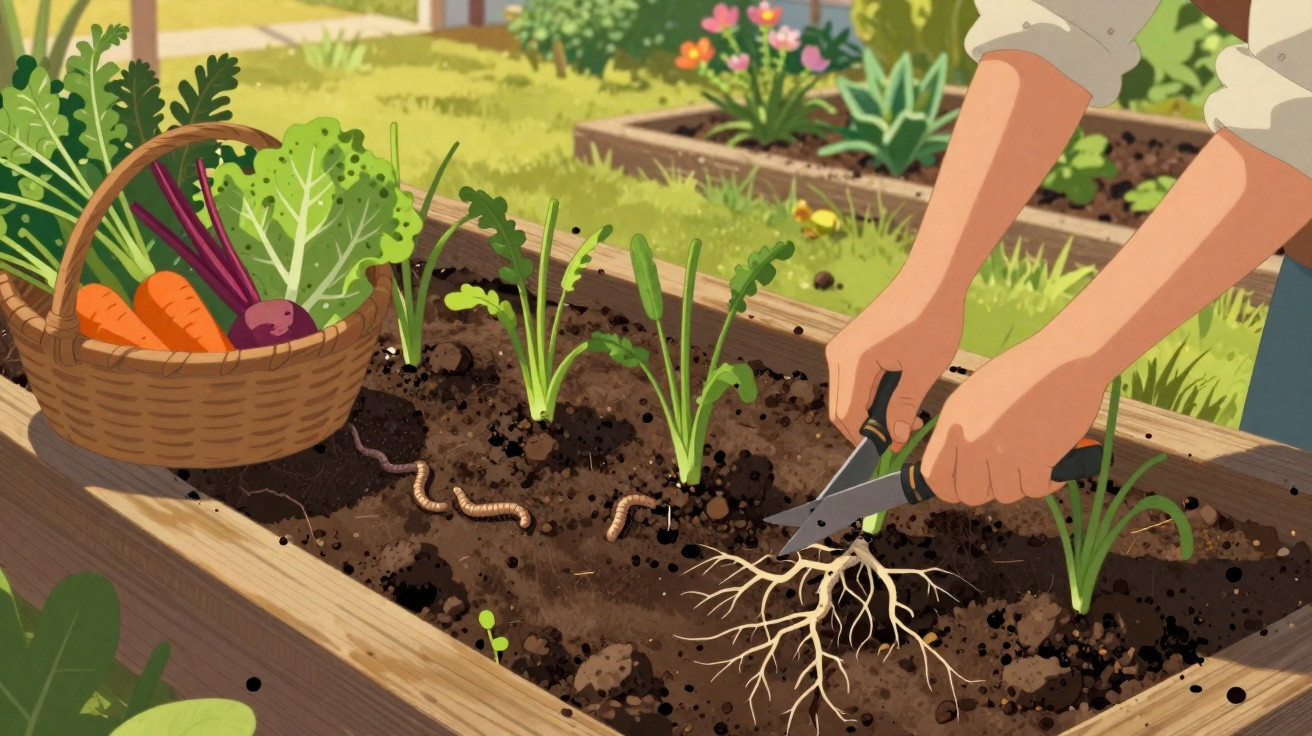
There is also a second issue that is frequently overlooked: intensive digging tears apart the fine threads of mycorrhizal fungi. These fungi form a kind of partnership with plant roots. They multiply the effective absorption area of the root system and unlock nutrients that plants could never reach on their own.
If this fungal network is broken every spring, seedlings begin the season at a clear disadvantage. They develop more slowly, cope less well with dry spells, and demand more attention-more watering and more fertiliser.
Gentle soil loosening: why a fork tool replaces the spade
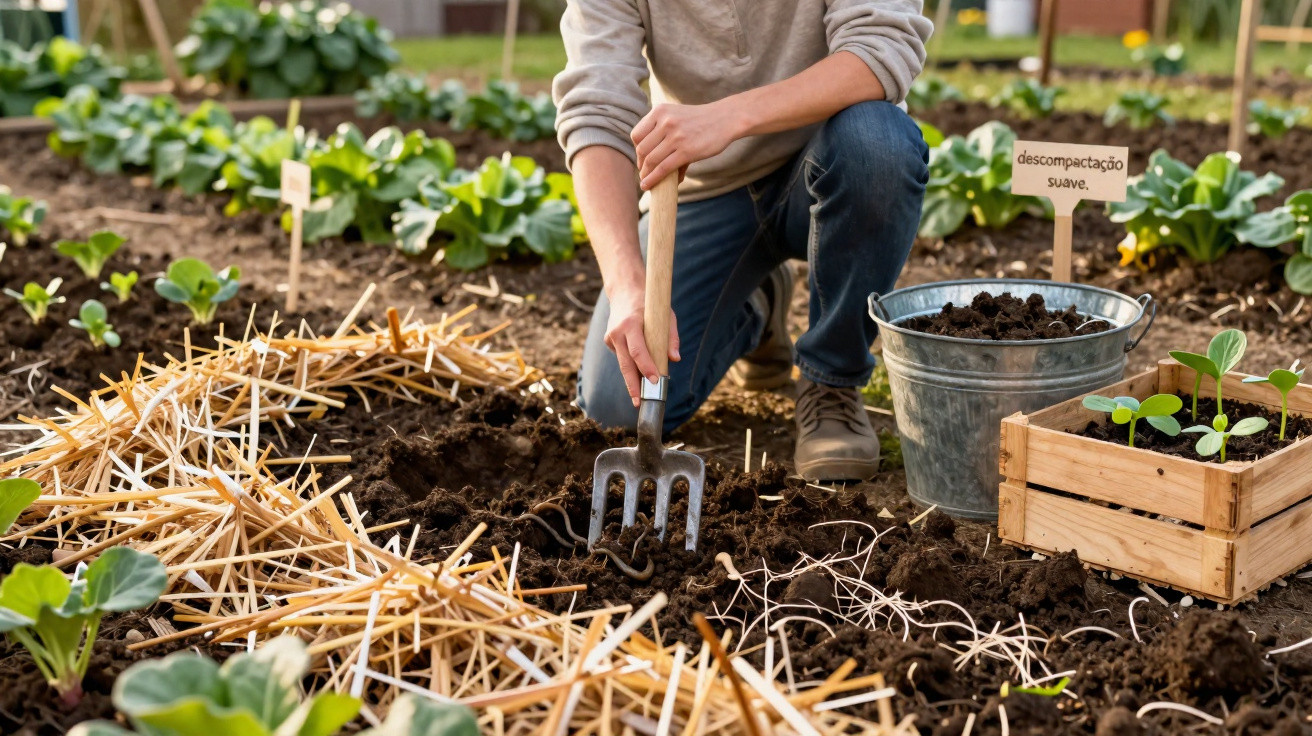
If you want to prepare soil without wrecking what is happening inside it, a multi-tined fork tool is the better choice: it loosens the ground without turning it over. The method is straightforward. Push the tines vertically into the soil, then ease the handle back slightly so the earth is lifted and cracked open, but not inverted.
This creates small fissures and air spaces. Air and water can move through the soil again, waterlogging reduces, roots can travel downwards more easily-while the soil layers remain where they belong.
For older gardeners, there is another clear benefit: it is far kinder on the back than traditional digging. You are levering with your body weight rather than repeatedly lifting and straining the lower back. Anyone who has spent an afternoon digging “the old-fashioned way” knows how much it can be felt in the lumbar area.
How to get the best results from soil loosening
- Work when the soil is slightly damp: neither dusty-dry nor wet and sticky.
- Avoid going out immediately after prolonged rain, otherwise the soil can compact again underfoot.
- Move along in strips so you are not constantly stepping onto the loosened area.
- After loosening, spread organic matter on the surface-do not dig it in.
A day after a decent spring shower is ideal: the soil yields without smearing, and the tines slide in smoothly.
Mulching instead of hoeing: how a simple layer transforms the garden
While the fork tool takes over from digging, another approach becomes the real centrepiece of a modern vegetable garden: mulching. This means covering the soil with organic material-such as straw, shredded leaves, dried grass clippings or woodchips.
"A consistent mulch layer copies what happens naturally in woodland: the ground is never bare, but always covered and continuously fed."
The benefits are easy to notice:
- Saving water: moisture evaporates far less under mulch. Measurements suggest that 30 to 50 per cent less watering is realistic.
- Keeping temperatures steady: in summer the soil heats up less and cools down less at night. Microorganisms can work more consistently.
- Preventing crusting: after rainfall, bare soil often forms a hard surface that water struggles to penetrate. Mulch stops this ‘sealing’ effect.
- A long-term nutrient source: earthworms and microbes gradually pull the material down, break it apart and release valuable nutrients.
Especially for anyone who no longer wants to spend hours weeding and hauling, mulching brings a welcome side effect: fewer weeds, fewer trips with a watering can, and less hoeing. Much of the work happens quietly in the background, without constant effort from the gardener.
Soil as an ally: what really happens in the microcosm
Research over recent decades has made it clear just how dependent plants are on soil organisms. In the past, plants were often imagined as little pumps that simply sucked nutrient salts and water out of the ground. Today we understand that, without bacteria and fungi around the roots, the system can quickly fail.
One example is bacteria that fix nitrogen from the air. They convert the surrounding gas into forms plants can use. Without them, a large share of nitrogen would remain unavailable. Other bacteria free up phosphorus that is otherwise locked in the soil.
The fungal networks at roots-mentioned earlier-multiply the reach of the root system many times over. They access water in the finest pores, spaces a normal root could never grow into. In return, the fungi receive sugars produced by the plant through photosynthesis: a trade that benefits both sides.
"A garden whose soil is disturbed as little as possible strengthens these partnerships year after year-and is rewarded with more vigorous, more stable plants."
Earthworms do the most visible share of the work. They drag leaf litter and mulch into their tunnels, shred it, and excrete it again as nutrient-rich crumbs. These worm-cast pellets are considered especially fertile because they hold nutrients in forms plants can take up readily.
Practical steps: what to do differently in spring
If you want to move away from the spade tradition, you do not need to change the whole garden overnight. A sensible approach is to trial a test area-one bed that you manage differently this season.
- Instead of digging, loosen the soil with a fork tool.
- Spread a 3–5 centimetre layer of mature compost over the surface.
- Mulch any areas that will remain unplanted for now.
- Plant through the mulch where possible, without working it in deeply.
If you have very heavy, compacted clay soil, a one-off deeper intervention may sometimes be necessary to break through a compaction layer. The key is to treat this as an exception, not a yearly routine. Each year you keep compost and mulch on the surface, the structure improves on its own.
How humus-rich soil shows up in everyday gardening
Many hobby gardeners only notice the scale of the change after some time. Well-fed soil that is handled gently feels crumbly, is less sticky, and dries out faster after rain without turning hard. When you scoop with your hand you tend to see more earthworms, fine root remnants and a darker colour-signs of higher humus levels.
In midsummer, vegetables stay juicy for longer even if you miss a watering day. Tomatoes and lettuces do not immediately wilt because deeper layers hold moisture for longer. At the same time, fungal diseases often appear less frequently, as plants are better supplied through their microbial network and experience less stress.
Common misconceptions about digging
- “Only digging makes soil loose”: earthworms, roots and frost action do much of the loosening over time-provided the soil is regularly ‘fed’ with mulch.
- “Digging gets rid of weeds”: many perennial weeds spread more, because root pieces are chopped up, dispersed and then regrow.
- “Without digging, the soil freezes harder”: a mulch layer acts like a blanket and buffers frost far better than bare soil.
What terms like mulch and soil life really mean
Mulch does not mean covering the soil with just anything. Fresh, thick grass clippings, for instance, can rot and smell if laid on too deeply. It is better to let them dry a little first and apply only thin layers. Coarser material such as chipped branches breaks down more slowly and suits paths or perennial crops.
The term “soil life” can also sound vague, but it is surprisingly tangible. After a rain shower, take a handful of soil from a mulched bed and you will often notice a fresh, earthy, almost sweet smell-an indicator of active microorganisms. If the soil smells musty, rotten, or of nothing at all, it often lacks air or organic matter.
Switching to gentler cultivation requires a change in mindset, but over time it replaces brute-force jobs with observation and a lighter touch. If you leave the spade standing more often in spring and rely instead on soil life, mulch and a fork tool, you build a vegetable garden year after year that is more dependable and more resistant to stress-one that keeps producing even when the weather is challenging.
Comments
No comments yet. Be the first to comment!
Leave a Comment