
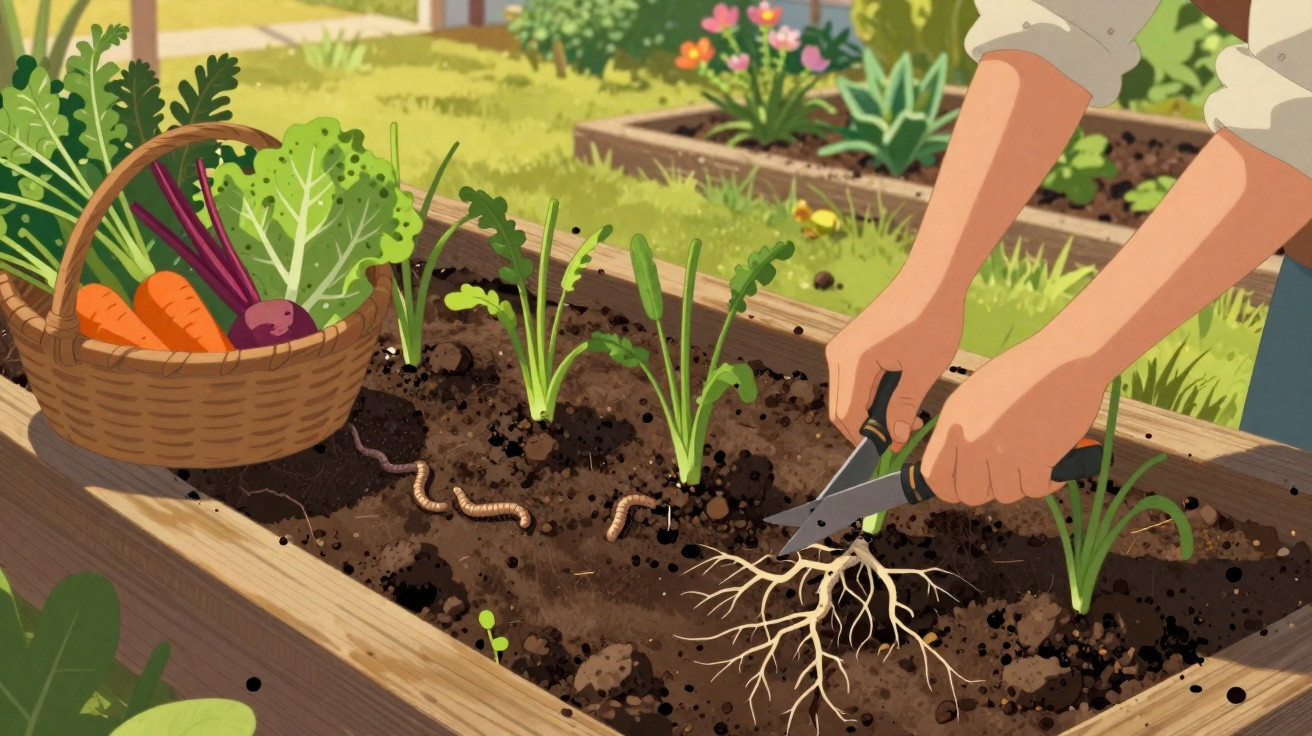
The first time I left a line of dead bean plants standing, my neighbour assumed I’d abandoned the plot. The pods were crisp and papery, the leaves had dropped, and all that was left was a knot of dry stems and a few overlooked canes. After harvesting I was worn out and, if I’m honest, I couldn’t face hauling everything out. I snipped off the tops, added them to the compost, and called it a day-leaving the roots buried, out of sight.
Then winter rolled in. Rain hammered the beds, boots tramped the paths, and I prepared myself for the usual spring misery: lumpy clods, compacted ground, and those stubborn slabs of soil that test both tools and patience.
But this time, something unexpected happened.
When I stopped ripping roots out of the ground
When spring arrived, I pushed my hand into the bed where the beans had grown. The soil yielded gently, springy under my palm. The hard, dead-looking mass I’d battled in previous years had disappeared. Instead, it broke apart easily between my fingers-dark, moist, almost velvety. In every handful, earthworms wriggled away from the light. Standing there with soil on my hand, I felt strangely pleased about something I hadn’t intentionally set out to do.
The one real change? Those roots were still in the ground, quietly breaking down.
A few weeks later I drilled carrots into that same bed. Usually I’m battling for neat, even lines, but this time the seeds dropped into a fine, loose surface with hardly any effort. They came up quickly and grew on steadily, with thick, unapologetic foliage. At harvest, the orange taproots slid out with little more than a light pull.
In the bed next door-where I’d “done things properly” the previous autumn and pulled out every last root-I saw the opposite. Germination was patchy, the carrots forked more, and the soil was tougher. Same seed packet, same gardener, completely different result beneath the surface.
What I’d stumbled across is straightforward once you see it. Roots don’t merely hold a plant upright; they shape the ground around them. As they expand, they force their way through tiny gaps, creating routes for air and water. When the plant dies, those roots don’t disappear overnight-they rot gradually, leaving behind fine channels like miniature tubes, edged with organic matter. Microbes move in. Fungi take hold. Earthworms travel those passages like underground motorways.
The outcome is a living web of pores and tunnels that no spade can truly copy. My lazy autumn had, by accident, set up a whole team of quiet workers to improve the soil all winter.
How to leave roots in place without wrecking your beds
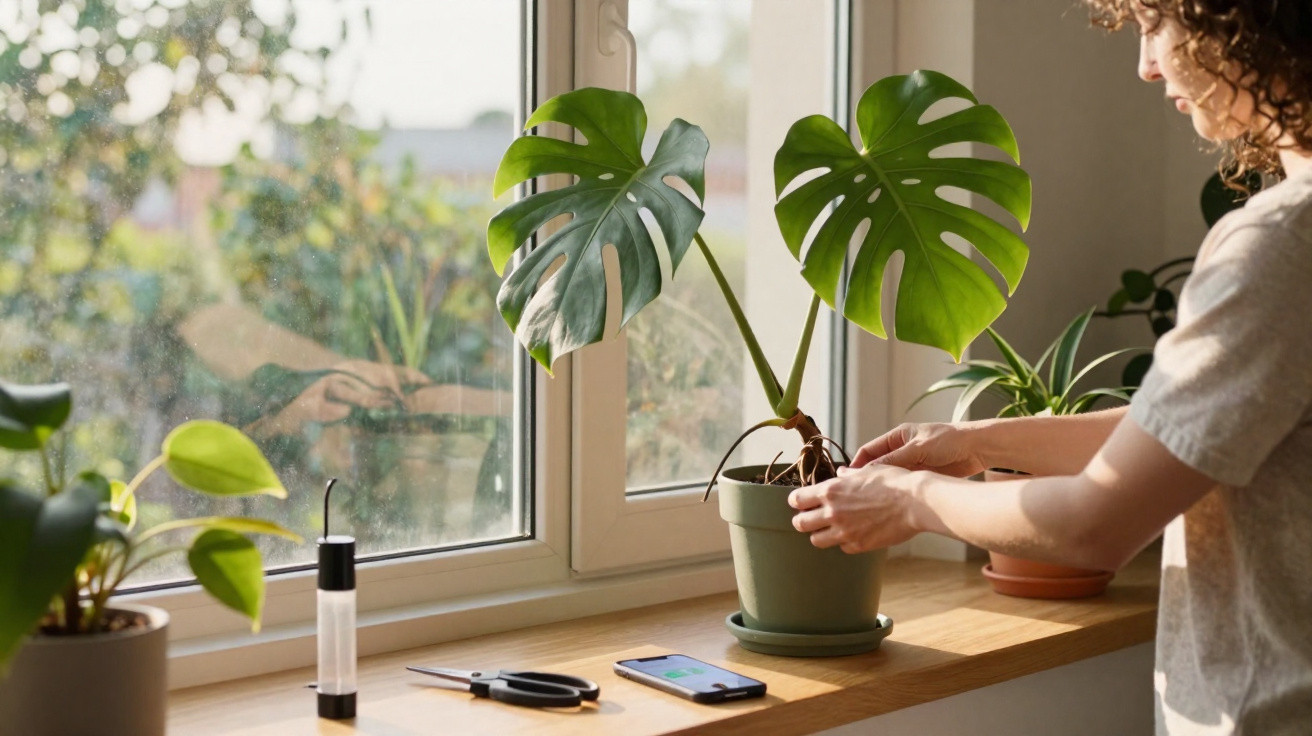
The technique is almost laughably simple: rather than grabbing a plant and yanking the lot out, cut it off at the base and leave the root system where it is. I use sharp secateurs or a serrated knife and slice the stem just above the soil surface. Everything above ground goes into the compost (or into a separate heap). Everything below ground stays put-hidden, but active in its own way.
For sturdier plants such as sunflowers or brassicas, I’ll sometimes wobble the stem gently to loosen it a touch, then cut as low as possible. The point is to avoid disturbing the bed. Think of it as shutting a door softly, not slamming it.
That said, I do set a few clear boundaries. If a plant is clearly diseased-clubroot on cabbages, tomatoes scorched by blight, anything that looks like a problem-I don’t leave those roots behind. They get removed well away from the beds or taken to the council green-waste collection. And I always dig out perennial weeds with spreading rhizomes-couch grass, bindweed, thistle-because those are exactly the roots you don’t want to nurture underground.
We’ve all had that moment of wanting to walk away and hope it all sorts itself out. This method is not that kind of neglect. It’s a deliberate, selective laziness: letting the right roots do slow, subterranean work on your behalf.
“Once I stopped obsessively ‘cleaning’ my beds, the soil did what it had been trying to do all along: heal itself,” a market gardener friend told me. “I just had to get out of the way.”
- Cut annual vegetable plants at the base at the end of the season and leave their roots in the soil.
- Remove and discard roots from obviously diseased plants so you don’t carry issues into the following year.
- Pull invasive perennial weeds completely-roots included-so they can’t spread beneath the surface.
- Add a thin layer of mulch over the top to protect the bed and feed the soil community.
- Compare the feel and biology of “root-kept” beds versus fully cleared beds across one or two seasons.
The quiet revolution happening under your feet
Once you’ve watched your soil become softer without you double-digging it into submission, you can’t really forget it. You begin to notice how rainwater soaks in rather than sitting in puddles. You see plants coping with dry spells for a little longer. You feel how your fork goes in more easily. None of that is magic-it’s structure: thousands of tiny spaces left behind by decayed roots, now filled with air and life instead of compaction and aggravation.
And, honestly, nobody manages this perfectly all the time. Some years are frantic, some beds get cleared in a rush, and some habits repeat on autopilot. But the moment you choose-deliberately-to leave roots in the ground even once, even in just a single row, you step into a different style of gardening: one that leans on biology instead of brute force.
You might even find yourself saying exactly what I did: “I left plant roots in the ground after harvest… and my soil quietly took care of the rest.”
| Key point | Detail | Value for the reader |
|---|---|---|
| Leaving roots in place | Cut plants at soil level and let roots decompose underground | Improves soil structure naturally without heavy digging |
| Selective removal | Pull diseased plants and invasive perennials, keep healthy annual roots | Reduces disease risk while boosting soil life |
| Support with mulch | Add a light organic cover over dead roots | Enhances moisture retention and feeds soil organisms |
FAQ:
- Question 1 Can I leave tomato roots in the ground after harvest? Yes-provided the plants were healthy and showed no blight or other serious disease. If disease was present, remove the whole plant (roots included) and don’t put it in a home compost heap.
- Question 2 Will leaving roots cause more pests? In most cases, no. Most pests focus on leaves and fruit rather than dead roots. Rotting roots mainly feed microbes and earthworms, which strengthens soil health and can help plants cope better with pests.
- Question 3 Does this work in clay soils? Yes, and it can be especially useful in heavy clay. Roots form channels that gradually loosen dense layers, allowing air and water to move through more freely.
- Question 4 How long do roots take to decompose? Fine roots can break down in a few months. Thicker roots may take a year or longer, but as they decay they steadily become part of the soil’s structure.
- Question 5 Can I direct sow into a bed with old roots inside? Usually, yes. Most decomposing roots won’t get in the way of sowing. If you hit a thicker root while making a drill, simply nudge it aside with your fingers or a small tool and carry on.
Comments
No comments yet. Be the first to comment!
Leave a Comment